
Kashif Bangash
On 31st January , the UN Secretary-General António Guterres warned Pakistan about threats similar to those emanating from Afghanistan. Speaking in New York, he said the United Nations remains committed to four key objectives in Afghanistan, while expressing frustration over the Taliban’s failure to make progress on inclusive governance, human rights, and regional security.
He stressed the need to ensure that Afghanistan’s institutions are genuinely inclusive, with representation of all ethnic groups and all segments of society, calling this a basic condition for the consolidation of peace.
Pakistan figured prominently in warnings sounded at the United Nations this week about the growing spillover of terrorist threats from Afghanistan, with both China and the UN chief expressing concern over militant violence affecting the country.
Turning to security, Guterres highlighted the threat posed by groups operating from Afghan soil. “Another aspect is the need to make sure that no terrorist organizations can operate from Afghanistan into other countries. We are particularly concerned about what has happened with the Pakistani Taliban [Tehreek-e-Taliban Pakistan] and the support they might receive.”
He added that the UN had seen meaningful progress on drug trafficking since the Taliban’s return, but lamented the lack of improvement on other fronts. “In relation to the three other aspects, we have frustration, because we do not see our legitimate concerns making the progress that is essential.”
Addressing a high-level briefing on the Counter-Terrorism Early Warning Network for Central Asia on 30 Jan (Friday), Chinese Ambassador to the UN Sun Lei said that while the Central Asia region remained broadly stable, it continued to be affected by cross-border terrorism.
Currently, the Central Asia region remains generally stable, yet is still deeply affected by the spillover effect of terrorist threats,” he said, citing recent attacks in Syria, Afghanistan and Pakistan that “deserve our high vigilance”.
Emphasizing Pakistan’s long-standing concerns, the Chinese envoy called for closer cooperation with Kabul. “We need to strengthen engagement and cooperation with Afghanistan to prevent it from once again becoming a safe haven for terrorist organizations, and to jointly prevent and address the return of foreign terrorist fighters,
Ambassador Sun also underlined the importance of development in countering extremism. “At the same time, it is imperative to accelerate the implementation of the UN 2030 Agenda for Sustainable Development to eliminate the root causes of terrorism,
Pakistan has witnessed a sharp rise in terrorist incidents in recent years, particularly in Khyber Pakhtunkhwa and Baluchistan, with officials linking much of the violence to cross-border infiltration from Afghanistan since the Taliban’s takeover in August 2021.
In 2024, the BLA emerged as a key perpetrator of terrorist violence in Pakistan. However, in August 2025, the US also designated the BLA and its Majeed Brigade squad as foreign terrorist organizations (FTOs).
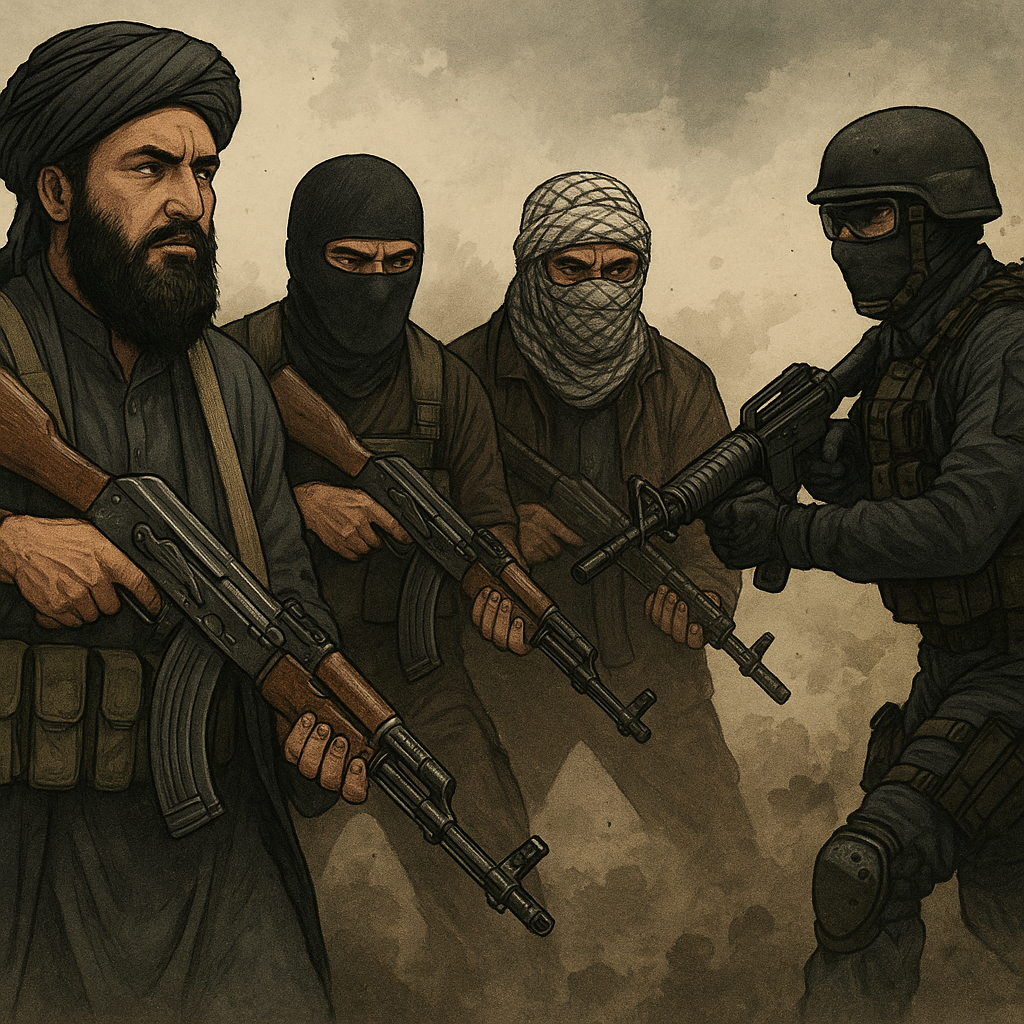
The resurgent TTP and allied groups have increased attacks inside Pakistan while allegedly enjoying safe havens across the Afghan border.
Islamabad has consistently urged the international community to press Kabul to prevent its territory from being used by militants targeting Pakistan, arguing that regional and global security remain directly tied to stability in Afghanistan.
30 Jan 2026, the coordinated attacks and subsequent counter-terrorism operations in Baluchistan reflect a significant deterioration in the security environment, underscoring the operational capability, intent, and coordination of militant groups operating in the province.
The scale and simultaneity of the attacks across multiple districts demonstrate an evolving threat posture, with militants seeking to overwhelm security forces, challenge state authority, and generate psychological impact beyond the immediate tactical gains.
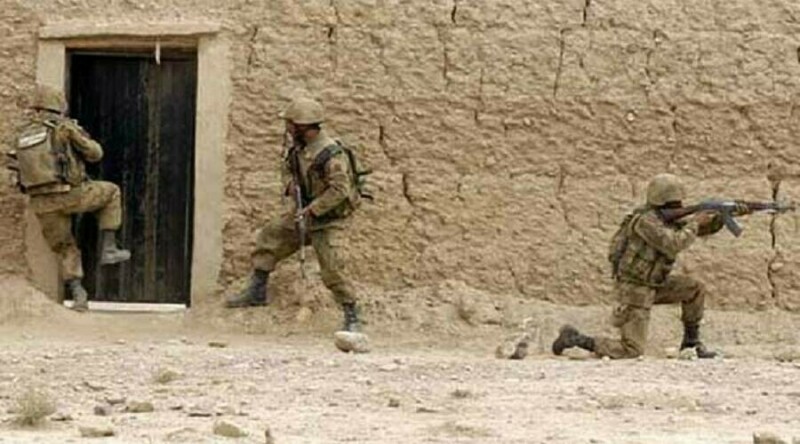
While the successful neutralization of 145 militants including three suicide bombers over a two-day (40 hours) period indicates a robust and effective security response, the loss of 17 personnel from the Baluchistan Police, Frontier Corps and Counter-Terrorism Department along with one navy official, highlights the high operational cost of ongoing counter-insurgency efforts. These casualties risk further stretching already burdened security institutions and may impact force morale and sustainability over time.
Chief Minister Baluchistan Bugti said intelligence agencies had advance information about the planned assaults, prompting pre-emptive operations a day earlier in areas including north-eastern Quetta, Panjgur and Sherani.
The Baluchistan government had intelligence reports that this was being planned, so we started operations a day before. They wanted to carry out similar attacks, particularly in Quetta’s north-eastern areas, which is why no such attack happened there.
Baluchistan Liberation Army claimed responsibility for the attacks in a social media post, describing them as the second phase of “Operation Herof“,signals an intent to sustain violence and project strategic momentum. This trend, combined with the continued activity of Fitna al-Hindustan, Fitna al-Khwarij, and TTP-aligned networks, reinforces concerns about multi-actor militancy operating with overlapping objectives and tactics.
The word Herof is derived from Balochi and Brahui languages, meaning “BLACK STORM”, refers to a series of large-scale, coordinated militant attacks launched by the Baluchistan Liberation Army (BLA), a separatist group fighting for the independence of Baluchistan from Pakistan.
The BLA initiated this operation to target Pakistani military and security installations, as well as to challenge the state’s authority in the province. It involves coordinated strikes across multiple locations in Baluchistan, often utilizing suicide bombers from the BLA’s specialized “Majeed Brigade,” along with special tactical squads (STOS).
Significant Attacks:
August 2024: The first phase involved attacking highway security, police stations, and army camps, resulting in significant casualties.
May 2025 (Operation Herof 2.0): A second, even more intensified phase was announced, involving dozens of coordinated attacks and high-profile targets.
The persistence of cross-border militant dynamics, particularly allegations of safe havens in Afghanistan, continues to complicate Pakistan’s internal security landscape. The convergence of domestic insurgency and regional instability increases the risk of protracted violence, with potential spillover effects on civilian safety, humanitarian access, development activities, and broader regional security.
THE WORLD CONDEMNATION THE BALOCHISTAN ATTACK.
- US Charge de’ Affaires Natalie Baker strongly condemned the recent terrorist attacks in Baluchistan and affirmed that the United States remained a “steadfast partner” of Pakistan in efforts to ensure peace.
- The United Arab Emirates strongly condemned the terrorist attacks carried out in Balochistan on January 31, expressing solidarity with Pakistan.
- The British High Commission said, “Our thoughts are with the families of those who lost their lives and all those affected. We stand with Pakistan in rejecting terrorism and in our shared commitment to peace and security.”
- Saudi Arabia’s Ministry of Foreign Affairs said the Kingdom “condemns and denounces the terrorist attacks carried out by separatists in various parts of Baluchistan province.”
- The Turkish embassy said, “We will continue to stand by brotherly Pakistan in its fight against all forms of terrorism.
- Qatar has condemned the attacks in Pakistan’s Balochistan province that killed and wounded several people, reiterating its firm opposition to violence, terrorism and criminal acts in all forms, regardless of motive or justification.
- The Muslim World League (MWL), In a statement issued by the MWL General Secretariat, the league condemned this heinous act of terror that led to the loss of many lives, and reiterated its rejection and condemnation of violence and terrorism in all their manifestations.
Despite record militant deaths, Pakistan saw a sharp escalation in militant violence in 2025, with terrorist attacks rising by 34 per cent. An upward trend, with fatalities increasing from 787 to 956, an additional 169 deaths, which are nearly 22pc higher than the previous 2024 year’s figures.
The IMPACT on Regional violence remained heavily concentrated in KP and southwestern Balochistan provinces, with both accounting for over 96pc of all fatalities and almost 93pc of violent incidents recorded during the entire 2025.
Reported security incidents and attempted attacks in Gwadar, Quetta, Kalat, Kharan, Noshki, Bagh, Jhal Magsi, Panjgur, Tasp, Nag, and Mashkeel indicate that militant operational capability remains intact, particularly in peripheral and rural districts. Despite sustained counter-terrorism operations, institutional reforms, and ongoing capacity-building efforts in Baluchistan, vulnerabilities persist in effectively reducing the scale and frequency of large-scale attacks, especially in major urban centres such as Quetta and Gwadar. These gaps were underscored by the recent simultaneous attacks across ten locations in Balochistan, referred to by the perpetrators as “Operation Hereof 2.0.”
IMPACT / CONCLUSION.
The recent wave of attacks and subsequent security operations in Balochistan underscores a critical inflection point in Pakistan’s counter-terrorism landscape, with direct implications for the next phase of the China–Pakistan Economic Corridor (CPEC), broader foreign investment, and humanitarian engagement. While security forces have demonstrated operational effectiveness and resolve, the scale, coordination, and geographic spread of militant activity highlight a resilient and adaptive threat that cannot be mitigated through kinetic measures alone.
Persistent insecurity particularly in and around key economic nodes such as Gwadar poses a material risk to CPEC Phase-II implementation, potentially affecting investor confidence, project timelines, and the willingness of international partners to expand long-term commitments. Recurrent attacks also raise operational and duty-of-care concerns for international investors, contractors, and development actors, reinforcing perceptions of elevated risk in the province.
For humanitarian agencies and development partners, the volatile security environment constrains access, limits programme reach, and increases reliance on remote management modalities. This risks undermining humanitarian assistance, early recovery, and stabilization efforts, particularly in underserved and conflict-affected districts where development deficits contribute to continued fragility.
Sustained improvements in the security situation will require a comprehensive, overall government approach, integrating targeted security operations with enhanced intelligence coordination, effective border management, and community-based stabilization initiatives.
Equally critical is the need for inclusive and sustained political dialogue with Baloch leaders and communities to address long-standing grievances related to governance, resource distribution, political representation, and socio-economic marginalization. Progress in these areas is essential to reducing local support for militancy and building durable stability.
At the regional level, stability in Afghanistan remains a key determinant of Pakistan’s internal security dynamics. Strengthened international engagement to encourage effective counter-terrorism commitments by Afghan authorities is vital to mitigating cross-border threats.
Absent parallel progress on regional cooperation, internal resilience, and political reconciliation, the risk of recurring high-impact attacks in Balochistan and Khyber Pakhtunkhwa is likely to persist, with continued adverse effects on economic development, humanitarian operations, and investor confidence.
Balochistan, which borders Iran and Afghanistan, has faced a decades-long insurgency by separatist militant groups, with Pakistani authorities frequently accusing foreign actors of backing the violence. India has repeatedly denied such allegations.
The author is a security analyst