
Naveed Elahi
Pakistan is once again witnessing a troubling surge in terrorist violence, which started since August 2021 when Afghan Taliban grabbed power in Afghanistan. The recent spate of attacks across Khyber Pakhtunkhwa, Balochistan, Islamabad, and other regions signals not isolated incidents but a coordinated resurgence of militant activity. The scale, frequency, and geographic spread of these attacks demand not just tactical responses but a comprehensive national counterterrorism (CT) strategy.
A Disturbing Pattern of Violence
The latest atrocity in Bajaur (16 Feb) underscores the severity of the threat. A suicide bomber reportedly targeted a check post, martyring 12 individuals — including 11 security personnel and a minor girl. On the same day, a motorcycle rigged with explosives detonated outside a police station in Bannu, killing two people. Shortly thereafter, terrorists attacked a police station and a customs office in Dera Ismail Khan, martyring a policeman and a customs officer while also firing upon passenger buses in the area.
These incidents are not isolated. Khyber Pakhtunkhwa, particularly its southern districts, has endured repeated attacks in recent weeks. Earlier this month, an imambargah in Islamabad was targeted, causing major casualties. Only days before the Islamabad attack, coordinated assaults were carried out in Balochistan, further underscoring the multi-front nature of the threat. The violence spans ideological terrorism in KP, sectarian attacks in the capital, and separatist militancy in Balochistan — demonstrating that Pakistan faces a layered and adaptive insurgency.
During the last fortnight a manifest decrease in the number of terrorist activities in Balochistan was noticed. It was the result of military operation against the BLA terrorists. Nevertheless, the situation in KP has not improved. Despite intelligence-based operations and targeted strikes, there has been little decrease in relentless terrorist attacks resulting in persistent loss of security personnel and civilians. If current trends continue, 2026 risks mirroring 2025 — widely described as the bloodiest year in over a decade.
The Cross-Border Dimension and Escalating Rhetoric
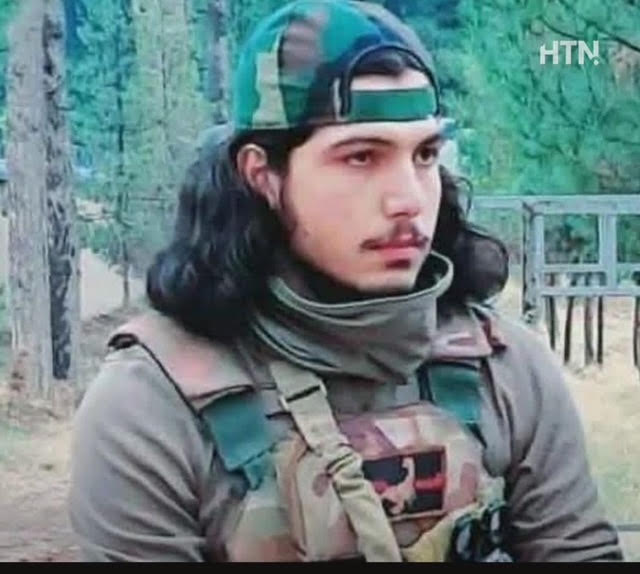
It is quite perplexing that as per intelligence agencies the Bajaur suicide bomber was an Afghan national.His name is Syed Ahmad alias Qari Abdullah (Abu Zar). He belonged to Balkh province of Afghanistan. He remained part of ‘Special forces’ of Afghan Taliban. He had been performing official duties in Afghanistan. This revelation will create further dent in the sour Pak-Afghan relations. Pakistan is losing patience over the Afghan Taliban’s temerity.
Defence Minister Khawaja Asif, during a visit to Berlin, warned that Pakistan would not hesitate to launch air operations inside Afghanistan if necessary to neutralise militant threats. Speaking to Deutsche Welle and France24, he accused the Afghan Taliban regime of allowing the banned TTP to operate from Afghan soil and even characterised Kabul’s posture as part of a “proxy war” alongside India against Pakistani interests.
His remarks reflect growing frustration within Islamabad. According to Asif, militants targeting Pakistan’s western border are being sponsored and facilitated externally, while Kabul has failed to provide meaningful “assurances of peace.” He emphasised that cross-border military options remain viable until security guarantees are delivered.
At the same time, the defence minister acknowledged a deeper historical context, noting that the current instability is partly “the price we are paying” for policies adopted during the 1980s Afghan jihad and the post-9/11 security environment. This admission highlights a critical reality: Pakistan’s present security challenges are intertwined with decades of regional conflict, strategic miscalculations, and shifting alliances.
However, the threat of cross-border strikes carries serious diplomatic and regional implications. While targeted operations may offer short-term tactical relief, they risk escalating tensions with Kabul and further destabilising an already volatile region. Any such decision would need to be weighed against broader geopolitical consequences.
The Need for a Comprehensive Counterterrorism Strategy
The evolving threat environment makes clear that Pakistan requires a renewed, integrated counterterrorism framework — one that goes beyond reactive measures. National Action Plan (NAP), which is referred to whenever there is a surge in terrorism, is not a strategy. The how part is conspicuously missing.
A whole-of-nation approach is imperative. This includes:
- Sustained Kinetic Operations: Intelligence-based operations must continue to dismantle militant networks and deny them operational space.
- Border Management and Regional Diplomacy: Enhanced border surveillance, fencing, and coordinated intelligence-sharing mechanisms are essential. Diplomatic engagement with Kabul must persist alongside pressure tactics.
- Provincial-Federal Coordination: Khyber Pakhtunkhwa remains the hardest-hit province, and recent cooperation between the provincial government and the federal centre is encouraging. This coordination must be institutionalised and strengthened.
- Socio-Political Interventions: Counterterrorism cannot rely solely on force. Addressing governance deficits, economic deprivation, radicalisation pathways, and sectarian narratives is crucial for long-term stability.
- Strategic Communication: The state must reclaim the narrative space, counter extremist propaganda, and reinforce public resilience against militant intimidation.
Pakistan’s security apparatus has demonstrated capability and resolve in previous counterterrorism campaigns. Yet the resurgence of violence indicates that the threat has adapted. Fragmented responses will not suffice against decentralised and externally enabled militant networks. The imperative for an officially articulated, comprehensive, forward-looking national counterterrorism strategy has never been greater.
The author is Chief Editor of The Strategic Brief

Continous Militancy in KP & Baluchistan has unique diadectic synergy of local grievances and state sponsored interventions by force. The course correction is not optional rather only way to pacify these areas for moving resources from security to prosperity; for that to occur you need strong & independent civilan dispensation which don’t suits the Centre.