
Dr. Naveed Elahi
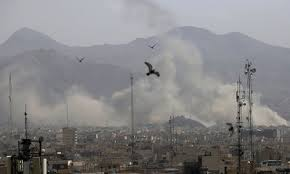
The nonsensical and brutal war unleashed by Trump-Netanyahu duo on Iran has brought enormous mayhem in Iran, brewing destruction in at least twelve countries the region and waves of destabilization throughout the entire world.
What was presented as a decisive strike to neutralize threats to Israel’s security has instead triggered a widening regional crisis, raising serious questions about the strategic wisdom and long-term consequences of the operation.
At the core of the justification for the strikes lies the argument that Iran posed an immediate and existential threat to Israel. Yet this premise remains contested. While Iran’s nuclear program has long been controversial and subject to international scrutiny, there was no confirmed evidence that Iran possessed deployable nuclear weapons at the time the attacks were launched. International monitoring bodies had repeatedly warned about enrichment levels and transparency concerns, but none had verified the existence of operational nuclear warheads.
If nuclear weapons were not present, the rationale for launching a large-scale military campaign becomes less about preventing an imminent nuclear attack and more about reshaping the strategic balance of power in the Middle East.
The Regime Change Assumption
An implicit objective of the campaign appears to have been political destabilization within Iran. The operation reportedly targeted senior figures in Iran’s political and military hierarchy, including the killing of Supreme Leader Ayatollah Ali Khamenei and numerous high-ranking officials.
Historically, however, leadership decapitation has rarely resulted in immediate regime collapse, particularly in highly centralized revolutionary systems.
Iran appears to be following this pattern. Within days, a new leadership structure began to take shape. Mojtaba Khamenei, the son of the slain Supreme Leader, is widely expected to assume the role of Iran’s next Supreme Leader, while Ahmad Vahidi has reportedly taken charge of the Islamic Revolutionary Guard Corps (IRGC).
Iran’s command structure had anticipated such contingencies. Defense analysts note that senior Iranian commanders had designated multiple successors several levels down the chain of command to ensure continuity in the event of targeted strikes. Rather than collapsing, the Iranian state appears to have adapted quickly.
In many ways, the attacks may have strengthened elite cohesion within the Iranian political system rather than weakening it.
The Limits of “Shock and Awe”
The operational logic behind the campaign appears to have relied heavily on the doctrine of “shock and awe” — overwhelming military force designed to paralyze the adversary’s command structure and compel rapid surrender.
Yet the Iranian response suggests that this doctrine may be less effective against resilient state actors with decentralized command structures.
Iran has continued to retaliate with ballistic missile launches and proxy responses across multiple theatres. Israeli officials have already indicated that military operations may extend for several additional weeks, suggesting that expectations of a short and decisive campaign were overly optimistic.
Rather than ending quickly, the conflict now risks becoming prolonged and unpredictable.
A Region on the Edge
The confrontation is already spreading beyond Iran’s borders. Israeli strikes against Hezbollah-linked targets in Lebanon have intensified, producing significant civilian casualties and raising fears of a second front.
Hezbollah has responded with drone and missile attacks targeting Israeli military and industrial facilities near Tel Aviv and a naval base in Haifa.
Meanwhile, Iran has demonstrated its ability to sustain retaliatory pressure. Reports indicate that dozens of ballistic missiles were launched toward Israeli territory within a short time frame — a signal that Tehran retains considerable strike capacity.
The cumulative effect is the emergence of a multi-theatre confrontation stretching from Iran to Lebanon and potentially across the wider region.
The Strait of Hormuz and Global Economic Risk
Perhaps the most dangerous strategic variable is the Strait of Hormuz, the narrow maritime passage through which roughly one-fifth of global oil supply flows.
Iran has repeatedly warned that continued attacks could prompt disruption of the strait. Even the credible threat of such disruption can send shockwaves through global energy markets.
For energy-importing countries such as Pakistan, the consequences would be immediate. A significant rise in oil prices could push domestic fuel prices sharply upward, placing additional pressure on economies already struggling with inflation and fiscal instability.
The ripple effects would not be confined to the Middle East. Energy markets, shipping routes, and financial systems across the world could feel the impact.
Pakistan’s Strategic Concerns
For Pakistan, the conflict presents a complex mix of security, economic, and humanitarian risks.
First, geopolitical alignments appear to be shifting. Washington’s expanding strategic cooperation with India — including increased naval coordination in the region — has raised concerns about the evolving balance of power in South Asia.
Indian PM Modi visited Israel last week where he met Netanyahu and addressed the Israeli parliament two days before US-Israel attacked Iran. The Indian government was accused of complicity which was evident from his failure to condemn the US-Israel air strikes on Iran. The Iranian ship was also torpedoed by the US submarine which was heading back from India. The connivance is established beyond a grain of doubt.
Second, the humanitarian dimension cannot be overlooked. The United Nations has warned that an escalation of the conflict could trigger refugee flows from Iran. Pakistan already hosts around 1.3 million registered Afghan refugees, and its capacity to absorb additional displaced populations is limited.
Any large-scale refugee influx into Balochistan would create significant logistical, economic, and security challenges.
The Perils of Escalation
History offers sobering lessons about military interventions aimed at reshaping political systems. Iraq, Libya, and Afghanistan demonstrate how externally driven regime-change strategies often produce prolonged instability rather than sustainable peace.
Operation Epic Fury risks following a similar trajectory.
Instead of eliminating Iran’s influence, the campaign could reinforce Tehran’s strategic resolve, deepen regional polarization, and accelerate the militarization of the Middle East.
In a geopolitical environment already marked by great-power rivalry, proxy conflicts, and economic uncertainty, further escalation could carry global consequences.
A Moment of Strategic Choice
The international community now faces a critical choice: allow the conflict to expand into a broader regional war or pursue urgent diplomatic efforts to contain the crisis.
Military superiority can destroy infrastructure, eliminate leaders, and temporarily disrupt adversaries. But history shows that it rarely produces durable political outcomes when the underlying political dynamics remain unresolved.
The Middle East has seen too many wars launched with promises of quick victory and strategic transformation, only to leave behind deeper instability.
Operation Epic Fury was intended to deliver decisive results. Instead, it risks becoming another reminder that military power, however overwhelming, cannot easily reorder complex political realities.
If cooler heads do not prevail soon, the operation may ultimately be remembered not as a demonstration of strategic strength, but as a costly miscalculation whose consequences extended far beyond the battlefield — reshaping regional security, destabilizing global markets, and pushing an already fragile world closer to a wider conflict.
Overall escalation is terrifying which could be the beginning of Armageddon as per the biblical predictions. Muslims call it ‘Malhamatal Kubra’, the great war.
The author is the Chief Editor of The Strategic Brief

