
Regional Security Implications & Strategic Response Options
Dr. Naveed Elahi
Kabul under the Taliban group has entrenched itself as a sanctuary and ideological hub for transnational terrorist organisations — most critically, the Tehreek-e-Taliban Pakistan (TTP), al-Qaeda, and the Islamic State Khorasan Province (ISKP/Daesh). There are some other smaller groups like ETIM, IMU etc.
The recent provocative statements by Afghanistan’s Acting Defence Minister Mohammad Yaqoob Mujahid, son of former Taliban leader Mullah Omer— openly threatening Islamabad with attacks and refusing to designate the TTP as a terrorist organisation — lay bare a strategic posture that conflates governance with militant patronage.
Yaqoob’s Threat — Political Posturing or Strategic Escalation?
“The demand for us to label the TTP a terrorist organisation is based on passionate imagination.” — Mohammad Yaqoob Mujahid, Acting Afghan Defence Minister
He also added that “if Kabul is attacked the response will be in Islamabad” constitutes a de facto declaration of hostilities. It is worth contextualising this threat carefully, but also worth taking seriously.
Yaqoob — the son of Taliban founder Mullah Omar and a product of Karachi madrassas — knows that Pakistan was among the Taliban movement’s most critical supporters for decades. His open threat against Islamabad signals a dramatic inversion of that relationship and reflects the Taliban’s growing confidence in their consolidation of power, underpinned by a belief that the international community has run out of tools to pressure them.
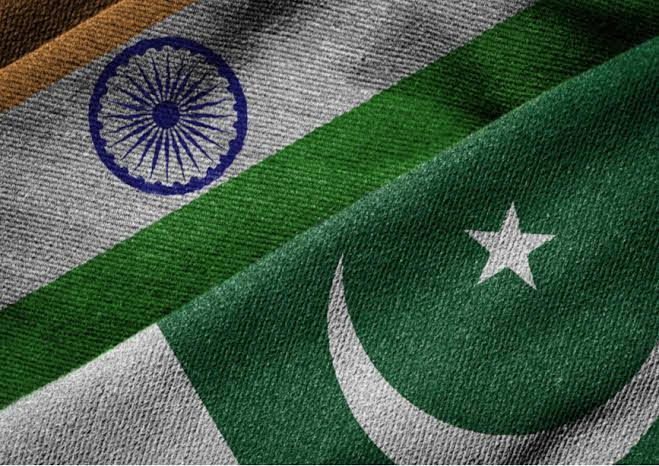
The framing of the Durand Line as the primary tension point is a deliberate obfuscation. The Durand Line dispute is a legitimate and unresolved historical grievance, but it cannot explain or excuse the Taliban’s active hosting of the TTP — an organisation explicitly committed to the violent overthrow of the Pakistani state. Pakistan’s demand is precise and reasonable: stop sheltering those who kill Pakistanis. The Taliban’s response has been evasion, deflection, and now outright intimidation.
Yaqoob Mujahid’s dismissal of Pakistan’s core demand — that Afghanistan designate the TTP a terrorist organisation — is not a slip of the tongue. It is deliberate state policy. By declaring Pakistan’s concerns “imaginary and unrealistic,” Kabul is not merely expressing diplomatic disagreement. It is conferring implicit legitimacy on an organisation that has killed tens of thousands of Pakistani civilians, soldiers, and officials.
The TTP operates out of eastern Afghan provinces — Kunar, Nuristan, Nangarhar, and Khost — with a degree of freedom that is impossible without Taliban acquiescence. Safe houses, training camps, command-and-control infrastructure, and cross-border infiltration routes have all been documented. The Afghan Taliban and TTP share common ideological DNA, battlefield history, and inter-marriage ties forged during two decades of joint resistance to NATO forces. The claim that Kabul cannot rein in the TTP is, therefore, less a confession of impotence and more a statement of political will — or rather, the lack thereof.
Taliban are getting a battering from Pakistan not only because of this group’s refusal to rein in TTP but also because of the provocative postures and toxic misleading statements given by their senior leadership as one is given by Mullah Yaqoob. When Yaqoob says TTP is just Pakistani smokescreen (it is not a terrorist org), thorn in Pakistan’s side is Durand Line, not TTP, this is his own fig of imagination because Pakistan has made just one clear demand i.e stop TTP support and protection.
After this statement, Pakistan’s retaliatory strikes on Kandahar, including the destruction of the Al-Badar camp and a Taliban police headquarters, represent an important signal — that Islamabad will not absorb punishment without response.
Pakistan views the other terrorist groups operating from Afghanistan, with tacit approval or active support of Afghan Taliban group, as a threat to Pakistan and the region
Al-Qaeda: The Enduring Covenant
The Taliban’s relationship with al-Qaeda predates 9/11 and has survived two decades of intensive global counter-terrorism pressure. The UN Monitoring Team and multiple intelligence assessments confirm that al-Qaeda retains a presence in Afghanistan, enjoying protection under Taliban rule. The killing of al-Qaeda chief Ayman al-Zawahiri in a Kabul safe house in July 2022 — located in an upscale neighbourhood under Taliban administrative control — was itself a smoking gun. Rather than evidence that the Taliban were unaware of his presence, it revealed the depth of co-habitation between the two organisations.
Taliban leaders have repeatedly refused to condemn al-Qaeda or acknowledge the group’s continued Afghan presence, honouring the ideological pledge articulated in their foundational alliance of the 1990s. This is not passive tolerance; it is active protection. Al Qaeda has stated strategy to create unrest in Pakistan to attract more recruits for militancy and safe havens for them.
ISKP (Daesh): A Complex Rivalry with Shared Infrastructure
The Taliban’s relationship with Daesh (ISKP) is more complex — the two groups compete for territory and recruits, and there have been genuine clashes between them. However, independent analysts and Western intelligence agencies have noted that the Taliban’s counter-ISKP operations are selective and inconsistent. ISKP continues to recruit in Afghanistan and uses the ungoverned spaces that Taliban administration has failed — or chosen not — to close. There are also credible reports of former Taliban-affiliated fighters defecting to ISKP and, in some cases, the Taliban tactically tolerating ISKP operations directed outward at Pakistan and Central Asian states. The first chief of ISKP Hafiz Saeed ywas from Orakzai Agency.
Why the Taliban Will Not Change Voluntarily
Ideological Continuity
The Afghan Taliban are not a reformed movement that has grown more moderate since 2001 — they are the same organisation with more sophisticated messaging. Their ideology is fundamentally indistinguishable from that of the TTP or al-Qaeda on the core questions of global jihad, resistance to “apostate” states, and the illegitimacy of national borders drawn by colonial powers. Demanding that they designate fellow jihadists as terrorists is, from their theological framework, asking them to condemn themselves.
Structural Dependency
The TTP and affiliated groups provide the Taliban with battlefield-hardened fighters who can be deployed in internal suppression of rivals, especially the Islamic State Khorasan. The Taliban’s security architecture is partly dependent on TTP manpower. Severing this relationship would require dismantling a network that provides the Taliban military utility.
Absence of International Accountability
The Taliban have faced no meaningful consequences for their harboring of terrorist groups. They remain internationally isolated but not economically strangled to the point of capitulation. Humanitarian aid continues to flow into Afghanistan, providing the Taliban with indirect fiscal relief. Without a credible international enforcement mechanism, the Taliban’s cost-benefit calculus strongly favours the status quo.
Strategic Recommendations:
A Multi-Layered Response
Sustained Kinetic Pressure on TTP Infrastructure
Pakistan must maintain and escalate targeted military operations against TTP hideouts, command nodes, and logistics routes — both inside Pakistan and, where operationally necessary and legally justified under the right of self-defence, in Afghan territory. The destruction of the Al-Badar camp is a model to be replicated with precision and regularity. The objective should not be to fight a decade-long insurgency but to systematically degrade TTP’s capacity to plan and execute cross-border attacks.
Operations should follow these principles:
• Prioritise command-and-control targets over foot soldiers
• Integrate intelligence-driven targeting to minimise civilian casualties
• Ensure rapid public communication to counter Taliban narrative distortion
• Coordinate with allied intelligence services for real-time cross-border tracking
Delegitimisation of the Taliban Regime
The Taliban must be reminded, consistently and through multilateral channels, that they are not a legitimate, permanent, or representative government of Afghanistan. Their exclusion of women, ethnic minorities, and political pluralism makes their claim to sovereignty morally hollow. Pakistan, in coordination with regional partners and Western allies, should actively support the following:
• A sustained diplomatic campaign at the UN Security Council and UN General Assembly to deny Taliban claims to Afghanistan’s UN seat
• Targeted sanctions on Taliban financial networks, including hawala channels and resource revenues
• Support for Afghan civil society, diaspora networks, and media organisations that challenge Taliban legitimacy
Empowering the Anti-Taliban Internal Opposition
The Taliban’s consolidation has been contested — most notably by Tajik and Uzbek communities historically aligned with the Northern Alliance and the National Resistance Front (NRF). Pakistan and the broader international community should consider carefully calibrated support for these groups as a strategic hedge.
Such support should be pursued with eyes open: arming ethnic militias in Afghanistan carries serious risks of proxy escalation and civilian harm. However, maintaining the Taliban’s perception that their grip on power is not permanent — that alternatives exist and are being sustained — is a powerful lever. The Taliban govern through fear of external irrelevance; denying them that comfort serves strategic purposes.
Regional Coalition Building
It wouldn’t be wise for Pakistan to take on the Afghan Taliban terrorist nexus alone. A regional coalition involving Iran, the Central Asian states (Tajikistan, Uzbekistan, Turkmenistan), Russia, and China — all of whom face varying degrees of threat from Taliban-linked extremism — is strategically essential. China, in particular, faces ISKP and ETIM threats to its Belt and Road personnel and Uyghur militant networks operating from Afghan soil. Beijing’s economic leverage over the Taliban is underutilised.
A formal regional security mechanism, potentially convened under SCO auspices, should be established with the explicit mandate of holding the Taliban accountable for cross-border terrorist activity.
Cut Off the Economic Oxygen
Make it clear that terrorism and The Taliban’s ability to sustain their patronage networks — including terrorist groups — is partly dependent on economic flows: narcotics revenues, mining exports, customs duties, and international aid. A coordinated effort to intercept these flows should include:
• Tightening sanctions on Taliban-affiliated mineral and narcotics trading networks
• Pressuring Gulf states to close Taliban financial access points
• Conditioning humanitarian aid delivery mechanisms to prevent diversion
• Intelligence-sharing with the Financial Action Task Force (FATF) to monitor Pakistani, Afghan, and Gulf-based financing channels
Strategic Communications and Narrative Counter-Offensive
The Taliban are skilled propagandists. Their framing of Pakistani operations as “attacks on Afghan sovereignty” and their portrayal of the Durand Line as the root cause of tensions must be systematically dismantled. Pakistan’s information strategy should:
• Document and publicise TTP attacks with evidence of cross-border planning and Afghan sanctuary
• Challenge the Taliban’s international image as a stabilising governance force
• Build a counter-narrative coalition with Afghan diaspora media and think tanks
• Engage international audiences with evidence-based reporting on Taliban-terrorist collaboration
Conclusion: No Illusions, Maximum Pressure
Mullah Yaqoob’s threats against Islamabad, his refusal to designate the TTP as a terrorist organisation, and the Taliban’s continued provision of sanctuary to TTP, al-Qaeda and affiliated groups constitute a clear and present danger to regional stability. There is no longer room for constructive ambiguity or diplomatic wishful thinking.
The Afghan Taliban have made their choices. They have chosen to shelter those who wage war on Pakistan, to protect the remnants of global jihadist networks, and to use the language of escalation rather than co-operation. Pakistan and the international community must respond with a combination of kinetic precision, diplomatic pressure, economic leverage, and internal political disruption — all calibrated to raise the Taliban’s cost of continued complicity to an unsustainable level.
There are no clean options in this theatre. But the alternative — passive acceptance of a terrorist-harbouring regime on Pakistan’s border — is the most dangerous option of all. The goal is not a decade of war, but a sustained and strategic application of pressure that leaves the Taliban no rational option but to comply, or face the consequences of their refusal to do so.
The author is Chief Editor of The Strategic Brief