Kashif Bangash
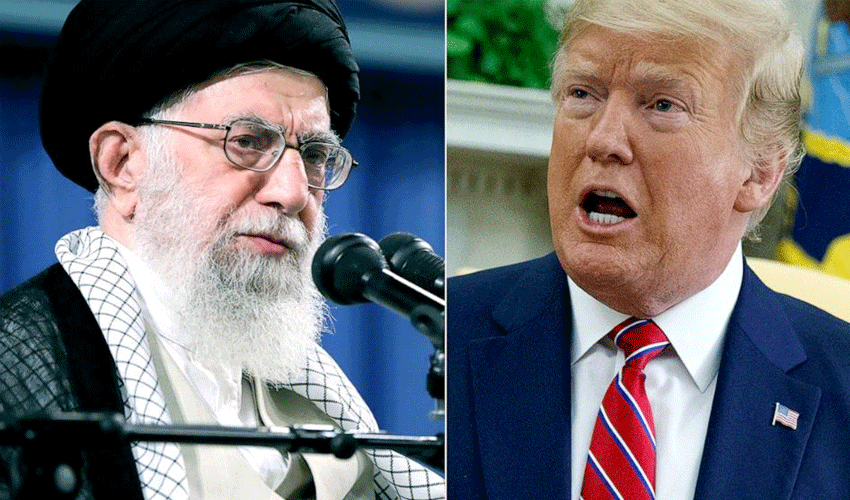
While the ceasefire is in place, retrospectively looking at the “stone age” warning issued by President Donald Trump in his address to the nation, it carried a far deeper strategic message than a simple threat directed at Iran. While on the surface it appeared as a warning of overwhelming military force, in reality it reflected frustration, signaling, and pressure directed not only at adversaries but also at traditional allies.
Diplomatically, the statement triggered strong reactions. Such language departed from conventional norms of international discourse, where restraint and calculated wording are expected.
The use of a term like “stone age” has been widely interpreted as a breakdown of diplomatic etiquette, raising concerns about escalation and the erosion of established global communication standards.
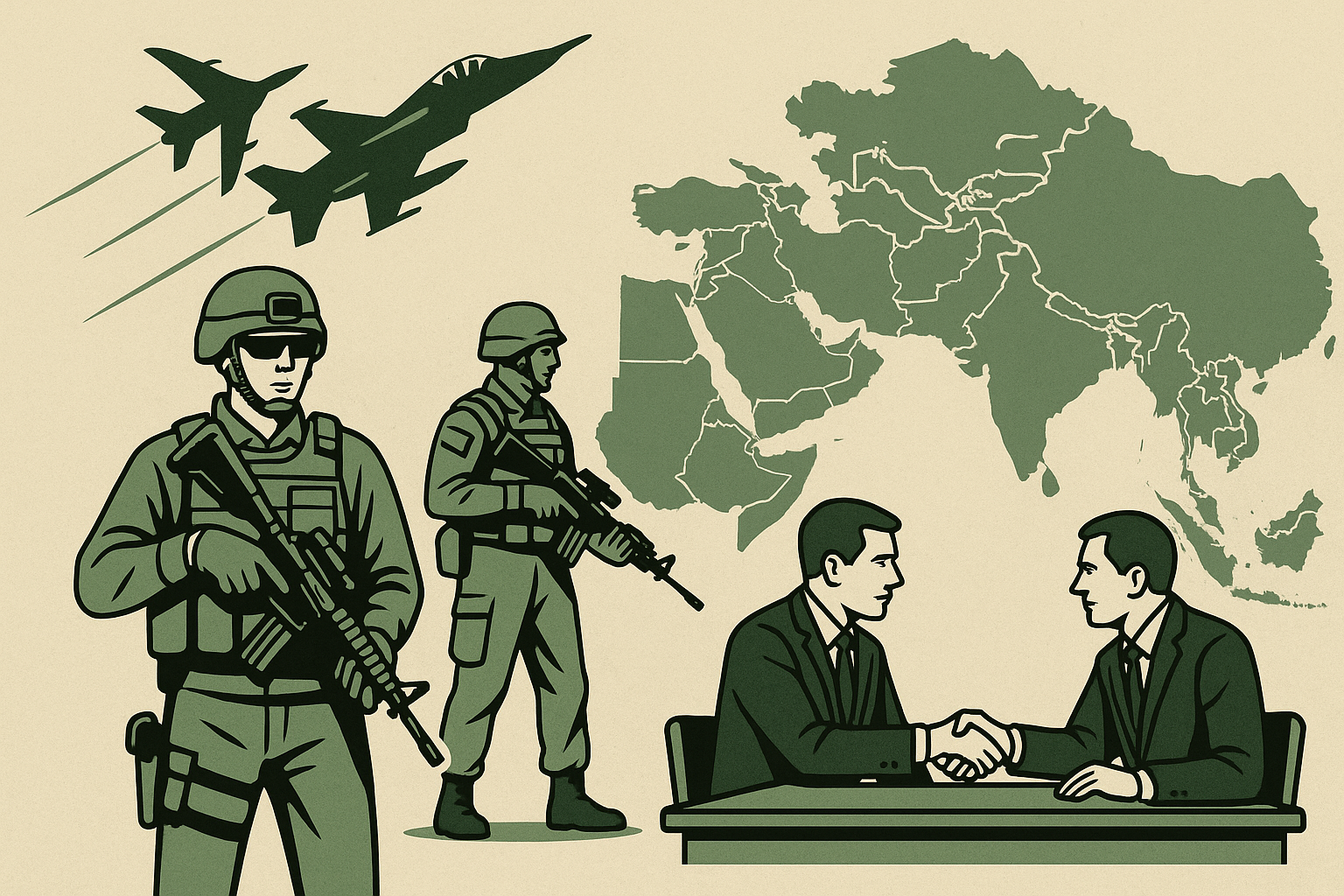
From a military standpoint, the threat itself is not unrealistic. The US, alongside Israel, possesses overwhelming technological superiority ranging from advanced platforms like the F-35 Lightning II and B-2 Spirit to carrier strike groups and precision-guided munitions.
Iran is already facing sustained pressure under modern warfare conditions. Therefore, the “stone age” remark is less about capability and more about intent and signaling.
The deeper message appears to be aimed at NATO allies and key European states. The reluctance of countries such as UK, France, Germany, Italy, and Spain to fully support U.S. military operations whether through denial of airspace, logistical constraints, or hesitation in troop deployment has exposed fractures within the alliance. This lack of unified backing has likely intensified domestic Political Pressure on the U.S. administration, including criticism from Congress and internal strategic circles.
In this context, the “stone age” narrative functions as coercive diplomacy. It signals that if allies do not align with US strategic objectives, the consequences of instability particularly in energy markets and regional security may be allowed to escalate. The implicit message is that disruption in critical chokepoints like the Strait of Hormuz could have long-term repercussions for European economies heavily dependent on Middle Eastern energy supplies.
For Europe, the impact would be devastating. Major economies such as France, Germany, Italy, and Spain remain heavily dependent on energy flows from the Gulf. A prolonged disruption would lead to fuel shortages, industrial slowdown, inflation spikes, and widespread economic instability. Logistics networks from shipping to aviation would face cascading failures.
This is where the “stone age” message takes on its real meaning.
It is not simply a threat to destroy Iran it is a warning to allies. The implication is clear: if allies choose distance during conflict, they may also face the consequences alone through destruction of main oil and Energy fields.
At the same time, the emerging security environment is becoming increasingly unstable. Strategic targets such as Kharg Island a hub for the majority of Iran’s oil exports highlight how quickly military escalation can translate into global economic shock. Any strike on such infrastructure would not remain a regional issue; it would ripple across international markets.
This evolving posture also signals a broader realignment. The US appears less willing to rely on traditional alliance structures like NATO, opening space for competitors such as China and Russia to expand influence amid Western divisions.
Ultimately, the “stone age” doctrine is not about a single country, it is about leverage. It weaponized energy dependency, alliance uncertainty, and global economic vulnerability as tools of strategic pressure.
But this approach carries serious risks.
A disruption in the Strait of Hormuz would not selectively damage adversaries or reluctant allies it would impact the entire global system, including the United States. Energy markets would destabilize, economic shocks would spread, and the conflict could escalate beyond control.
What began as a strategic confrontation risks turning into something far less predictable: a conflict driven by pressure, fragmentation, and diminishing clarity of objectives.
And in such a scenario, the real danger is not just who gets pushed back to the “stone age” but how much of the modern global order goes with it.
EVOLVING SCENARIO.
A US-led military campaign against Iran, featuring sustained airstrikes and infrastructure targeting, began on February 28, 2026, Iran has demonstrated resilience and adaptability. Reports of sustained waves of missile and drone operations suggest evolving tactics designed to challenge even advanced defensive systems.
This raises questions about the effectiveness of systems like Iron Dome and other layered defenses, which, despite their sophistication, are not invulnerable under prolonged and complex attack scenarios.
Strategically significant targets such as Kharg Island which handles a substantial portion of Iran’s oil exports remain central to the conflict calculus. Any escalation involving such infrastructure would not only cripple Iran’s economy but also send shockwaves through global energy markets. This, in turn, would directly impact European nations, reinforcing the leverage embedded in President Trump’s warning.
However, the evolving nature of the conflict suggests a shift from clearly defined military objectives to a more ambiguous and reactive posture. Initial goals such as limiting nuclear capabilities or deterring regional influence appear overshadowed by broader escalation dynamics. The targeting of civilian infrastructure and economic assets risks undermining both legal and moral legitimacy, raising concerns about potential violations of international law.
Moreover, the personalization of the conflict is becoming increasingly evident. What may have begun as a strategic confrontation now risks being perceived as driven by individual leadership dynamics rather than coherent policy objectives.
This perception is further complicated by fluctuations in global markets particularly oil and energy where political statements can trigger immediate economic consequences, benefiting certain actors while destabilizing others.
In conclusion, the “stone age” warning is not merely a threat directed at Iran; it is a multidimensional signal aimed at allies, competitors, and global markets alike. It reflects frustration within the U.S. leadership, highlights fractures in Western alliances, and underscores the risks of escalation in an already volatile region.
Importantly, any large-scale destabilization would not remain confined to the Middle East it would have profound global repercussions, including for the US itself, in economic, political, and security terms.