Maj. Kashif Bangash
A targeted killing of a Prominent tribal elder in Bajaur has once again underscored the persistent vulnerability of community leaders in KP Tribal district in particular Bajaur tribal districts.
According to the reports, Malik Fazal Wahid, a respected elder from Mamond Tehsil, was shot dead by unidentified gunmen in the busy Enayat Kaley Bazar of Khar Tehsil. The assailants opened fire at close range, killing him instantly before escaping the scene amid panic in the crowded marketplace.
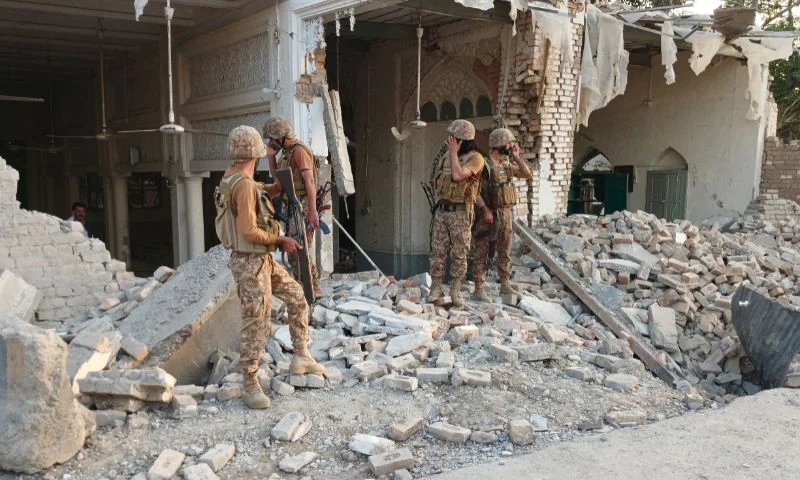
After the incident, security forces swiftly cordoned off the area and launched a forensic investigation. Authorities examined multiple angles, including tribal rivalries and the possibility of militant involvement, particularly targeting individuals perceived as pro-state or influential within local communities.
The incident reflects a disturbing pattern of violence against the victim’s family. His brother, Malik Abdul Hameed, was previously assassinated in a similar targeted attack, indicating a sustained campaign against the family.
The killing has heightened tensions across Mamond and Khar tehsils, prompting an increase in security patrols and raising concerns among local residents about deteriorating law and order conditions.
Since 2004, a rough estimate shows that around 2,500 to 3,100 tribal elders have been killed in Pakistan. In Bajaur and adjacent tribal districts including other parts of the KP region, militants allied with Daesh and the TTP regularly target politicians, tribal elders and security personnel.
Bajaur District formerly part of the Federally Administered Tribal Areas (FATA) has witnessed a notable resurgence in targeted violence since 2021, following the Taliban’s return to power in Afghanistan.
Recent years have seen a sharp increase in attacks on tribal elders, Political figures, Security forces, Police personnel, and pro-government individuals. Militant groups, particularly Islamic State Khorasan Province (ISKP) and Tehreek-e-Taliban Pakistan (TTP), have been linked to these incidents.
High-profile attacks between 2024 and 2026 include the assassination of former senator Hidayatullah Khan, multiple killings of police officers, and coordinated assaults using improvised explosive devices (IEDs) and small arms.
In early 2026 alone, Bajaur experienced several major security incidents:
- February 16, 2026: A suicide vehicle-borne IED (VBIED) attack followed by a gun assault on a joint check post killed 11 security personnel and one civilian, while injuring seven others. Security forces reportedly killed 12 militants in the ensuing operation.
- February 25, 2026: Four policemen were killed and two injured in an attack on an Ababeel Force patrol.
- January 2026: A Counter-Terrorism Department (CTD) official was assassinated in Mena Bazaar, War Mamond.
- March 15, 2026: Three Pakistan Army soldiers were martyred while repelling an infiltration attempt along the Pak-Afghan border.
- 15 April 2026. Two children and a woman were killed while three others were injured when mortar shells fired from across the Afghan border hit a house in the Kitkot village
Escalating Trend of Targeted Killings
Since 2019, ISKP has emerged as a key driver of targeted assassination campaigns in Bajaur. According to data from The Khorasan Diary (TKD), the group has claimed responsibility for at least 23 attacks in the district, many specifically targeting members of Jamiat Ulema-e-Islam (Fazl), or JUI-F.
The hostility between ISKP and JUI-F stems from ideological and political differences. JUI-F’s pro-democratic stance and perceived alignment with the Afghan Taliban have made it a frequent target.
Earlier roots of this animosity can be traced to the TTP under Hakimullah Mehsud, who had also advocated attacks on JUI-F leadership.
A report by the Khyber Pakhtunkhwa Home and Tribal Affairs Department (November 2023) identified JUI-F as the most vulnerable political party to terrorist attacks in the Province. While TTP has largely focused on security forces, ISKP has increasingly targeted civilians, exacerbating the overall security environment.
Military Operation & RESURGENCE IN TARGETED VIOLENCE.
Following major Military Operations in the erstwhile FATA, Bajaur witnessed a period of relative stability, with fatalities declining to minimal levels by 2018. However, this trend has reversed in recent years, marked by a resurgence of militant activity and targeted violence.
A key factor behind this deterioration is the limited capacity of Law Enforcement Agencies (LEAs) to effectively Counter Terrorism and control high-profile militant groups such as TTP and ISKP.
The Post-Operation withdrawal of security forces created a vacuum, which was not adequately filled through institutional or policing reforms. The FATA merger, while politically significant, did not sufficiently address ground-level security requirements.
The transition of Levies and Khassadar into the Police force occurred without comprehensive upgrading, training, or resource allocation, leaving them ill-equipped to manage both the vast terrain and the evolving nature of militant threats.
Consequently, gaps in governance, policing, and administrative capacity exposed the region to renewed militant influence. Insufficient manpower, limited infrastructure, lack of training, and weak state support further compounded the situation, enabling militant groups to reorganize and reclaim lost space.
Additionally, the withdrawal of security forces initially weakened border management, facilitating cross-border infiltration from Afghanistan. Although the completion of border fencing and enhanced management by FC-KP have significantly reduced infiltration and cross-border attacks, large parts of Bajaur and other tribal districts remain vulnerable to militant operations.
The convergence of Cross-Border Militant Movement, ideological competition among extremist groups, and local Socio-Political fault lines has contributed to renewed instability. Despite intensified counterterrorism operations by Pakistani security forces including reported large-scale militant casualties in early 2026 the frequency of attacks indicates that militant networks retain operational capability in the region.
To conclude, the assassination of Malik Fazal Wahid is not an isolated incident but part of a broader pattern of targeted violence aimed at undermining traditional tribal structures and eroding pro-state influence in Bajaur. Similar trends have been observed across other tribal districts, particularly in North Waziristan, where areas such as Mir Ali continue to record some of the highest levels of targeted killings.
This pattern reflects both the persistence of militant networks and the exploitation of local political and ideological fault lines. In Bajaur, a significant proportion of targeted killings is linked to tensions involving groups such as JUI-F and ISKP, further complicating the security landscape.
Addressing this challenge requires a multi-pronged approach. There is a pressing need to strengthen security measures, enhance intelligence coordination particularly through structured engagement with tribal elders and ensure adequate resourcing, training, and institutional support for LEAs. Without such interventions, the continued erosion of local leadership and governance structures risks further destabilizing the region.
The writer is an ex-army officer and is a security analyst.