Khurram Khan

As the first anniversary of Marka-e-Haq is being observed with renewed resolve to safeguard Pakistan’s territorial integrity and respond to Indian belligerence and allegations of cross-border terrorism, recent elections in five Indian states and one union territory have further strengthened the position of the Bharatiya Janata Party (BJP). The results indicate that the Indian electorate put faith in the BJP. The elections were held in Assam, Kerala, Tamil Nadu, West Bengal and the Union Territory of Puducherry. The BJP was already in power in Assam and Puducherry and retained both with enhanced seats. BJP has been a marginal political force In the southern states of Kerala and Tamil Nadu dominated by regional and opposition parties.
In Kerala, the contest was mainly between the Congress-led United Progressive Alliance (UPA) and the Left Democratic Front (LDF), which had governed the state since 2016. The UPA succeeded in unseating the LDF by winning 99 seats in the 140-member assembly. Congress secured 63 seats, while the Indian Union Muslim League won 22. Kerala demonstrated to once again choose liberal and non communal political agenda as against hate filled politics of BJP.
In Tamil Nadu, Dravida Kazhagam (DMK) and the All India Anna Dravida Munnetra Kazhagam (AIADMK) took turns for the last fifty years. This time, however, actor-turned-politician Joseph Vijay Chandrasekhar emerged as a major force. His party, Tamizhaga Vetri Kazhagam (TVK), founded only in 2024, emerged as the single largest party. The old guard of DMK and AIADMK with tacit backing of the centre tried to deprive TVK from forming the government, as Governor of the state, a diehard RSS/BJP, dilly dallied on inviting Vijay to form government until all secular and small parties like Congress, communists, IIUM lend support to TVK.
Elections in West Bengal, ruled by the All India Trinamool Congress (TMC) under Chief Minister Mamata Banerjee since 2011 were keenly contested. Banerjee had ended the 34-year rule of the Left Front and was a staunch opponent of BJP leaders. The election campaign was marked by intense acrimony and allegations of pre-poll rigging. TMC accused the Election Commission of deleting nearly 8.3 million voters during revisions of the electoral rolls under the Special Intensive Revision process. Most of those were Muslims dubbed as illegal Bangladeshi immigrants.
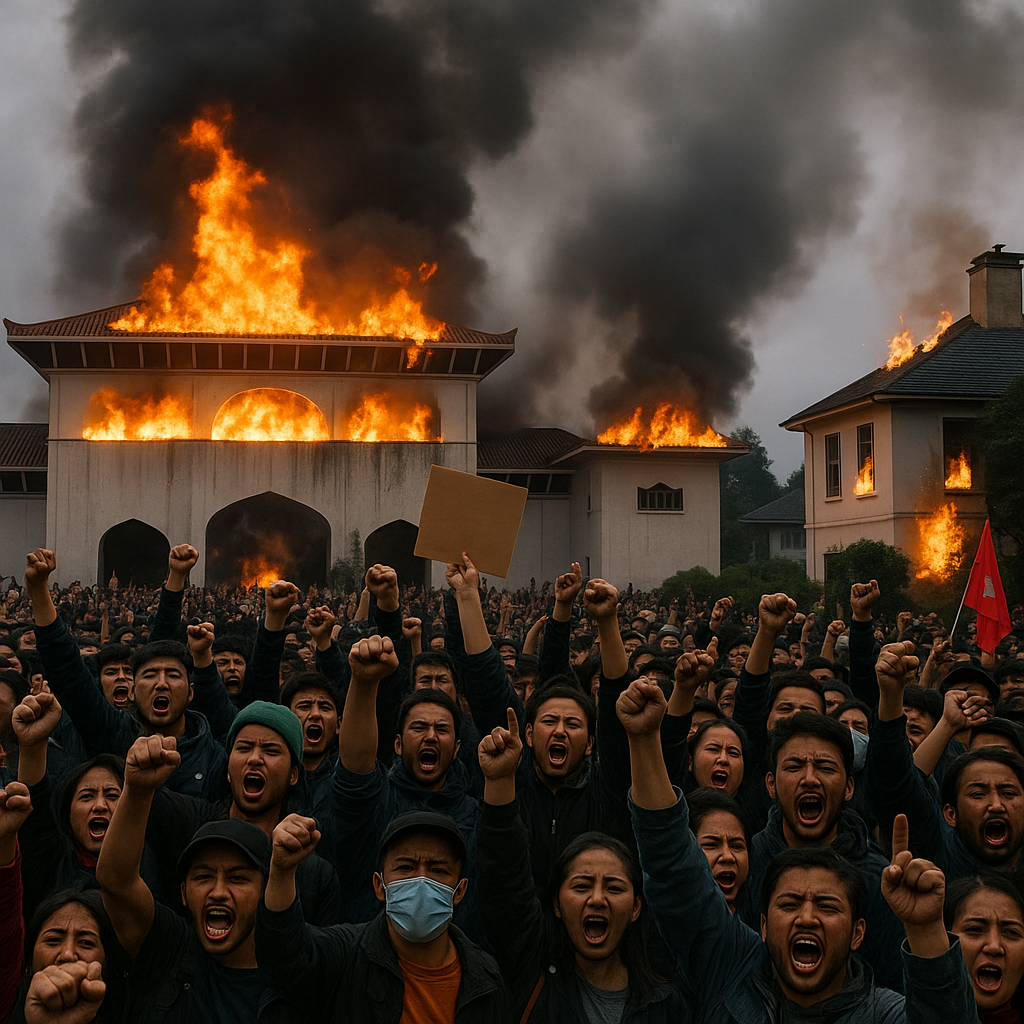
TMC also alleged that central law enforcement agencies acted in favour of BJP candidates and targeted its supporters. Central leadership of BJP including Prime Minister Modi and Home Minister Amit Shah led the election campaign. It won a landslide victory by securing 207 seats in the 294-member assembly, while TMC was reduced to only 80 seats. Mamata Banerjee rejected the election result. Post-election violence further increased political tensions in the state. It is feared that the BJP may intensify pressure on TMC leadership and workers in the coming months.
In the 2024 Lok Sabha elections, the BJP failed to secure an outright majority but better showing of its allies in the National Democratic Alliance (NDA) allowed it to remain in power. This led many analysts to believe that the BJP’s dominance had begun to decline. Opposition parties united under the Indian National Developmental Inclusive Alliance (INDIA) in an attempt to challenge the BJP nationally.
However, subsequent state elections have shown that the BJP remains strong. Since the 2024 parliamentary elections, the BJP has won five state assembly elections and two union territory elections, while its NDA allies have secured another state. Today, the BJP and its allies rule 22 states and union territories, whereas Congress and its partners rule only six, with regional parties holding power in three others. The opposition’s political space continues to shrink as the BJP expands its influence across India.
More state elections are due in 2027 and 2028 before the next parliamentary elections in 2029. Whether the BJP can further weaken opposition strongholds and consolidate nationwide dominance remains a key question. At present, however, the party appears well positioned for another strong performance in the next Lok Sabha elections.
The trend is concerning for India’s secular forces and Muslim minority. Critics argue that the BJP’s politics thrives on anti-Muslim rant and fanning communalism. Muslims are widely perceived by the BJP as supporters of opposition parties, particularly Congress, leaving no political reason for the BJP to woe them.
Meanwhile, relations between Pakistan and India are at its lowest ebb. There is minimal diplomatic engagement, although both countries still maintain missions in each other’s capitals with limited staff. India has suspended implementation of the Indus Waters Treaty, arguing that “blood and water cannot flow together,” a reference to its allegations of cross-border terrorism. Both sides continue to indulge in verbal clashes at international forums.
India’s efforts to isolate Pakistan diplomatically has failed as Islamabad managed to maintain important international relationships. Bonhomie between Pakistan and the USA following the May 2025 military confrontation, nullified any advantage that India sought by bombing so-called terror camps inside Pakistan. President Donald Trump’s praise for Pakistan’s civilian and military leadership on a number of occasions further strengthened bilateral relations and raised Pakistan’s international standing.
It is not likely that India will engage Pakistan to sort out differences between the two countries after BJP’s continued successes in the state assembly elections in the run up to Lok Sabha elections; hence stalemate will linger on.
The author is former Joint Director General, Intelligence Bureau.