Dr. Naveed Elahi
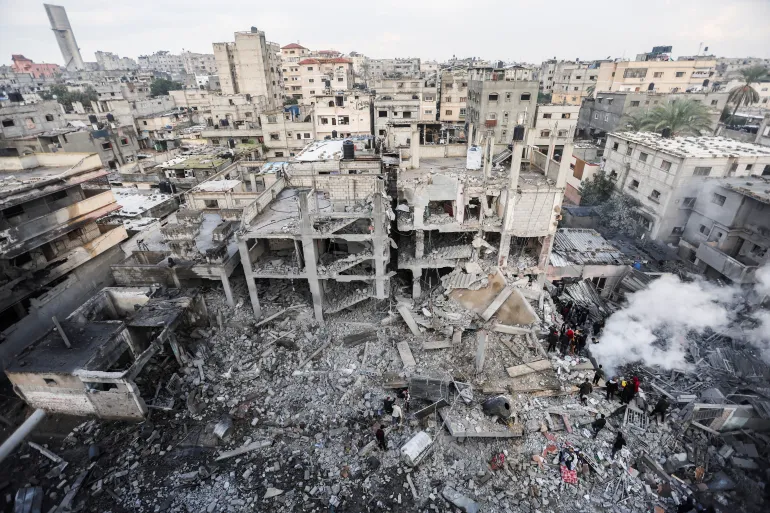
Pakistan, a longstanding supporter of the Palestinian cause, initially approached the Israeli brutalities in Gaza with caution. However, as the atrocities escalated, the government’s stance evolved to a more principled and firm position. Critics, however, argued for a clearer and more aggressive response.
National Institute of Public Policy (NIPP), the research institute of the government of Pakistan, arranged research cum discussion session to discuss the matter and formulate cogent recommendations in this regard. This research and discussion endeavour offered five sets of data and ideational factors to the decision makers to make evidence-based interventions wisely.
First, the NIPP research team established that the vision of the founder of Pakistan Quaid-e-Azam Muhammad Ali Jinnah and the Constitution of Pakistan, the two pillars of Pakistan’s foreign policy, provide clear and categorical directions for formulating the stance on the Palestine issue.
The research highlighted that the posture and approach of Quaid-e-Azam Muhammad Ali Jinnah adopted a steadfast and strong stance on Palestine issue for good thirty years, especially during the last 14 years, starting from 1934 to his death in 1948. He remained stiff and straight on his stand even in testing and ‘perilous’ times. He conveyed his views, without mincing the words, to the powers including UK and USA. He termed the UN decision of partition of Palestine ultra vires of the UN Charter, basically wrong, invalid in law, unfair, morally untenable, and politically, historically, geographically, and practically unenforceable. In essence, Quaid-e-Azam’s multifaceted involvement in the Palestine issue underscores his commitment to justice, self-determination, and the protection of Muslim interests on the international stage. It gives a strategic clarity. His actions underscore the importance of diplomatic engagement, solidarity, and a comprehensive understanding of global political dynamics.
Apart from the Quaid’s unwavering stance, the other guiding principle of Pakistan’s foreign policy is Article 40 of the Constitution of Pakistan. On the strengthening bonds with Muslim world and promotion international peace, the Article 40 states that “The State shall endeavor to preserve and strengthen fraternal relations among Muslim countries based on Islamic unity, support the common interests of the peoples of Asia, Africa and Latin America, promote international peace and security, foster goodwill and friendly relations among all nations and encourage the settlement of international disputes by peaceful means.”
These two strategic principles of our foreign policy cannot be ignored in making decisions or taking actions on any contentious and sensitive foreign policy issues like the Israeli attack on Gaza.
The NIPP team also conducted content analysis of the articles written by the experts, intellectuals, and analysts in national dailies in Pakistan, starting from 7 October, which revealed that the elements of frustration, helplessness and anger against the brutalities committed by Israel dominated in their thought process. Mostly authors saw the issue from foreign policy, historical and international human rights violation perspectives. Their main points of concern were the blatant and unhindered support to Israel by the west especially the US, in the name of self-defense. Interestingly, most of the authors did not write much about the desired response of the government of Pakistan or how it should handle this challenge. The recommendations by the experts were quite generic and stereotyped, showing a lack of fresh knowledge and out of the box solution for resolving the issue.
The next step was to have a quick look at the stance and statements of the Government of Pakistan which revealed that its statements primarily consisted of condemnation, appeals for a ceasefire, and advocacy for a two-state solution. Many quarters of the public voiced concerns that Pakistan’s efforts to curb human rights abuses by the Israel Defence Forces in Gaza were insufficient. The perception was that Pakistan’s stance gained strength gradually, particularly as more nations spoke out, labeling the situation a genocide of Palestinians by Israel. The submission of four points by Pakistan’s Deputy Permanent Representative to the UN indicated a commitment to Quaid-e-Azam’s legacy. However, responses and statements from Islamabad appeared excessively cautious, contributing to an ambivalent posture that diminished Pakistan’s relevance on the international stage, particularly in the Middle East.
Finally, some wise and knowledgeable men and women huddled together at NIPP for deliberations and at the very outset shared the agreement that Israeli brutal assaults on civilians had resulted in a humanitarian crisis, likened to acts of genocide and apartheid. A unanimous call was made for an immediate ceasefire to halt gross human rights violations. Lt-Gen Asad Durrani, Senator Mushtaq Khan, Senator Dr. Musadik Malik, Dr. Hassan Askari, Amb.Aizaz Ahmed Ch, Amb.Javid Husain and Nasim Zehra extrapolated that the conflict was multi-dimensional in nature i.e., territorial, political and ideological and more importantly the historical perspective as well. There were reservations and concerns about the strong support of the US and UK to Israel at every international forum, both diplomatically and militarily.
On the point of Hamas attack on Israel, though sorrow was expressed on the loss of lives of civilians in Israel, consensus prevailed among the panelist that it was meant to impede the Arab Israel normalization process. There was strong evidence that the Arab states were divided on the issue and their inaction exposed the geopolitical vulnerabilities. The Arab world must show more spine and represent the aspirations and sensibilities of their people. The Muslim organizations like OIC and Arab League could not play strong and tangible role in raising concerns of the Muslims at international fora. Conspicuous lack of adequate action by the Arab and other Muslim countries caused frustration and despondency among the Palestinians.
Despite consensus on the above points, the panelists differed on the approaches to address the issue. Dr. Askari advocated that Pakistan needed to strike a balance between international relationships and economic dependencies. Though Dr. Musadik Malik agreed with him on the need to align with the challenges of shifting geopolitical dynamics, he characterized the conflict as a genocide and apartheid. He highlighted historical support for Palestinian rights, drawing parallels with the Kashmir issue. Lt-Gen Durrani highlighted the lack of comprehensive policy to address the issue. He was bit concerned about the significant shift in Pakistan’s stance and on advocating appeasement towards Israel, considering it as departure from historical position. On the other hand, Ms. Nasim Zehra and Senator Mushtaq Ahmad called Pakistan’s response excessively soft and shy. Conversely, Ambassador Javid Husain advised the government to carefully tread the conduct of its policy towards Israel, but the support for Palestine must be reflected in policy statements in international organizations like OIC and UN.
In light of the research, analysis and discussion conducted by NIPP, a consensus emerged on the following policy recommendations for Pakistan.
- Formulate a well-articulated policy statement on the Israel-Palestine issue.
- Maintain a principled stance against the use of force in geopolitical conflicts.
- Adopt a more confident and assertive approach to call for an urgent ceasefire.
- Uphold the historical stance of Quaid-e-Azam Muhammad Ali Jinnah, coordinating with Arab and Muslim countries.
- Strive for a strong economic and stable political environment for international relevance.
- Highlight the Kashmir issue on the global stage by drawing comparisons with the Palestine conflict.
- Take a judicious position in the UN to emphasize the far-reaching consequences of Israel’s brutal actions.
- Four points submitted by Pakistan Deputy PR to UNGA on November 29, 2023, should be part of Pakistan’s policy.
- Israeli Defence Forces’ aerial and ground attacks on civilians must be termed genocide and ethnic cleansing of Palestinians.
- Stress the need for a forceful response from the international community to bridle the gross human violations of Israel.
- Officially observe ‘Palestine Day’, to express solidarity, as Muslim League had done under the leadership of Quaid-e-Azam.
- Follow Quaid-e-Azam’s strategy by writing letters to key international leaders to resolve the issue.
- Suggest to the OIC to hold an Islamic Summit Conference on the Israel-Palestine war.
- Develop a media strategy to cover the humanitarian catastrophe in Gaza and highlight atrocities in Kashmir.
(Full report will be issued by NIPP)
The author is Editor The Strategic Brief and Dean, National Institute of Public Policy at NSPP, Lahore.