
Domestic
BALOCHISTAN
- Unidentified miscreants fired four rockets in Quetta, injuring three people and damaging at least two houses (30.4.26).
- Security forces killed four terrorists during an operation in Pasni, Gwadar district (2.5.26).
- Two security personnel from a private company were seriously injured when a landmine planted by unknown individuals exploded after their motorcycle hit it in the Taleo area of Duki district (2.5.26).
- At least three people were killed and eleven others, including a woman, were injured in separate incidents of firing, a stabbing, and an accident linked to family and property disputes in Dera Murad Jamali, Notal, Tambo, and Jhal Magsi (2.5.26).
- Gas supply to a large area of Sohbatpur district in Nasirabad division was suspended after unidentified miscreants blew up a gas pipeline (5.5.26).
- The funeral prayer of Lt Col Khalid Hussain of FC Balochistan, who was martyred after sustaining injuries during an IBO in Balochistan, was offered by the Prime Minister, the COAS & CDF, and other high-ranking civil and military officers in Chaklala Garrison, Rawalpindi (6.5.26).
- Armed men kidnapped three coal miners, identified as Abdul Razzaq, Asmatullah, and Hameedullah, from the Zahri coalfield area in Harnai district after surrounding a mine and taking them at gunpoint to an unknown location (7.5.26).
- Three policemen were arrested, and a case was registered against them, for killing student Safeer Ahmed Bajwa, who was travelling with his brother in a car on Sumangali Road in the Sariab area of Quetta, after he had allegedly failed to stop at a police signal (7.5.26).
- Balochistan CM Sarfraz Bugti said intelligence agencies had foiled a plot to coerce a girl into carrying out a suicide attack in Islamabad, alleging RAW-linked honey-trapping and blackmail. He also said similar plots involving women had been foiled earlier in Khuzdar and Karachi, stressing that they were against Baloch traditions (11.5.26).
- Two workers were killed and five injured in a clash between the Pakistan Coast Guards and workers in Pasni’s Machin Kapar area over security-related tensions (12.5.26).
- The FIA arrested 34 undocumented Afghan nationals, including men, women, and children, during a raid on the CPEC Road in Turbat. They had allegedly been attempting to travel to Iran through the Gwadar route without valid documents (12.5.26).
- Security forces killed seven terrorists during an operation in the Nosham area of Barkham district. However, during the exchange of fire, five soldiers — Major Tauseef Ahmed Bhatti, Naik Fida Hussain, Sepoy Zakir Hussain, Sepoy Suhail Ahmed, and Sepoy Muhammad Ayaz — embraced martyrdom (13.5.26).
ISLAMABAD
- The passing-out parade of the Islamabad Police Delta Force was held at Police Lines Headquarters, Islamabad, where 100 personnel — 50 each from the Special Services Group and the Counter Terrorism Department (CTD) — completed their training. IGP Syed Ali Nasir Rizvi said the unit aimed to counter terrorism, ensure public safety, and protect citizens’ lives and property, and that the Delta Force would strengthen counter-terrorism efforts in the federal capital (6.5.26).
KHYBER PAKHTUNKHWA (KPK)
- Pakistani security forces killed 13 TTP-linked terrorists in two foiled infiltration attempts along the Pakistan–Afghanistan border in KP, and urged the Taliban to prevent the use of Afghan soil for attacks (30.4.26).
- During a terrorist attack on Shadi Khel Police Station and nearby camps in Lakki Marwat, four personnel, including Irfanullah Waseem, Fareedullah, and Sadiqullah of the police, ANF, and Jail department, were abducted and later found martyred (30.4.26).
- Policeman Noorullah was martyred in a gun battle following a terrorist attack on a police post in Shadikhel, Lakki Marwat (1.5.26).
- A police constable was martyred in a rocket and sniper attack on an armoured vehicle near Mandan police station in Lakki Marwat (1.5.26).
- An Additional SHO, Mirjan Shah, was injured in an ambush by armed men in Upper South Waziristan while travelling to join duty (3.5.26).
- A suicide bombing in Azam Warsak Bazaar, Lower South Waziristan, killed one civilian and injured 15 others, damaging nearby buildings (4.5.26).
- Five WSSC employees were abducted in Bannu but later released through a jirga, while two individuals and a vehicle remained in captivity (5.5.26).
- A murder suspect, Adnan, was killed in a police encounter in Bannu after he had allegedly killed five people (5.5.26).
- A school teacher, Musafir Shah, was shot dead outside a government school in Bara, Khyber district (6.5.26).
- JUI-F leader Maulana Sheikh Muhammad Idrees was killed in Charsadda by unknown armed gunmen. ISKP/Daesh reportedly claimed responsibility, prompting nationwide protests by the JUI-F (5.5.26).
- Security forces killed four terrorists during an operation in Tank district (7–8.5.26).
- One terrorist was killed in an exchange of fire with security forces in Dera Ismail Khan (7–8.5.26).
- A prolonged operation backed by helicopters in Hangu district, after militants fired mortar shells into civilian areas, saw intense clashes between police, security forces, and militants, leaving six civilians dead, 12 injured, and two policemen wounded. Security forces foiled terrorist attempts to besiege checkposts (8.5.26).
- Two children were killed and four injured during clashes between security forces and militants in Bajaur (8.5.26).
- According to unconfirmed reports, the high-profile militant Fatehullah alias Mudassir, killed in a recent security operation in Bannu, was allegedly linked to the Afghan Taliban’s Yarmook 60 Special Forces Battalion and allegedly involved in cross-border terrorist activities with the banned TTP (8.5.26).
- Police repelled a terrorist attack in the Kurram Par trans-river area of Lakki Marwat district (9.5.26).
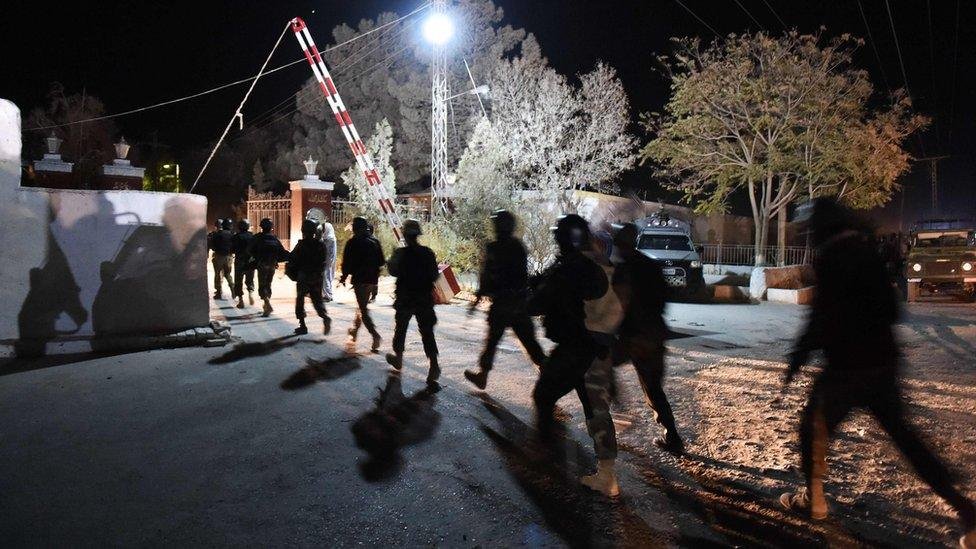
- A suicide attack targeted a police checkpoint in the Fateh Khel area of Bannu district at night when a vehicle laden with explosives rammed into the post. Fifteen police personnel were reportedly martyred and three others injured, while terrorists also opened heavy fire from surrounding areas. The martyred policemen included Rehmat Ayaz, Sanaullah, Niaz Ali, Habib, Saadullah Jan, Kamran, Noorullah, Abid Jani, Imran, Kaleemullah, Sadiqullah, Munir Alam Khan, Rahatullah Khan, and Farooq, while the injured were Mujrim Feroz, Hayatullah, and Qadarullah. A banned militant alliance, “Ittehad-ul-Mujahideen Pakistan,” later reportedly claimed responsibility for the attack (10.5.26).
- A Head Constable was martyred in a gun attack on Link Road in Tank district (10.5.26).
- A policeman, Saeedullah, was martyred by unknown gunmen in Bajaur district (11.5.26).
- Seven people, including four brothers, were killed in a gunfight over a property dispute in Nowshera (11.5.26).
- Police arrested an arms smuggler in Lakki Marwat and recovered a large cache of weapons being smuggled to Punjab (12.5.26).
- An Afghan national wanted in murder and extortion cases was killed in a police encounter in Charsadda (12.5.26).
- Robbers looted over Rs 80 million from a National Bank cash van in Domel, Bannu, but left the staff unharmed (13.5.26).
- A Rescue 1122 technician went missing under mysterious circumstances in Bannu (13.5.26).
- Armed men allegedly hijacked a ration vehicle for the security forces in Janikhel, Bannu (13.5.26).
Raising a Security Guards Unit for Kurram District / Countering Violent Extremism Education
The KPK Centre of Excellence launched Pakistan’s first undergraduate course on countering violent extremism to promote peace and study the drivers of radicalisation in local and global contexts (10.5.26).
The KPK government formed a Road Protection Force (RPF), comprising 850 ex-servicemen, 200 police personnel, and 10 contingents of the Federal Constabulary (FC), for deployment on the Thall–Parachinar Road and other places in Kurram district to ensure travel security amid ongoing concerns. The district witnessed bloody sectarian and tribal-ethnic clashes between rival groups in 2024 (10.5.26).
Comments & Analysis: A media survey quoting RPO Bannu Sajjad Khan stated that the Bannu and Lakki Marwat regions had witnessed 33 drone attacks, causing civilian and police casualties, while more than 300 attempted drone strikes had been intercepted by anti-drone systems. Police said militants, including the TTP, were increasingly using modified commercial drones in a shift towards low-cost unmanned warfare tactics. Despite ongoing security operations, experts and residents stressed that lasting peace required improved governance, economic stability, employment opportunities, and public support alongside military action. The recent suicide attack on a police post in Bannu, resulting in multiple casualties, has further highlighted the need for a more comprehensive security and public safety policy. Meanwhile, unconfirmed reports said that tribal elders from Pakistan’s Bajaur district and Afghanistan’s Kunar province had recently signed a five-point peace agreement aimed at promoting ceasefire, dialogue, and lasting peace along the border.
PUNJAB
- CTD Lahore arrested YouTuber Muhammad Saad bin Riaz of “Eon News” and recovered an Al-Qaeda membership card. He was allegedly recruiting people into the banned outfit. The CTD also arrested 21 others, including Peer Shamas and Abdul Lateef, linked to banned outfits such as the TTP and BLA, in separate multiple intelligence-based operations (2.5.26).
- Five family members were found dead and two daughters injured under mysterious circumstances in Mozang, Lahore (2.5.26).
- The Supreme Court upheld the death sentences of Ghulam Rasool alias Chuto, ringleader of the Chotu gang, for killing six policemen in Rajanpur and for his involvement in other heinous crimes in 2016 (4.5.26).
- Six suspects wanted in different cases across Punjab were extradited from the UAE to Pakistan through Interpol in serious criminal cases (10.5.26).
- Former minister Col (r) Sardar Ayub Gadhi, MPA (PML-N), was critically injured and four of his aides killed in a gun attack in Toba Tek Singh (10.5.26).
- An Anti-Terrorism Court in Lahore declared Saad Rizvi and 23 TLP leaders proclaimed offenders in an attack case (13.5.26).
SINDH
- Unknown gunmen shot and critically injured Khalid Qadri, senior vice president of the Sunni Tehreek (Sarwat faction), in a suspected targeted attack outside a mosque in Liaquatabad, Karachi (1.5.26).
- Police claimed to have arrested an accused, Ahmed Ali alias Zeeshan, after seizing ecstasy pills worth Rs 10 million, along with 200 grams of ice and 250 grams of other drugs, allegedly sold online to students in Latif Town, Malir area of Karachi (1.5.26).
- A judicial magistrate in Karachi granted bail to Sharjeel Akbar, who had been arrested for allegedly threatening to bomb the United States Consulate General Karachi, after finding insufficient evidence and noting that the case required further inquiry (2.5.26).
- Five suspected robbers were killed in an alleged police encounter in the New Karachi Industrial Area (5.5.26).
- A Karachi district court remanded alleged female drug dealer Anmol alias Pinky in police custody for three days after setting aside a magistrate’s order of judicial remand. Police claimed to have recovered 1.5 kg of cocaine, other drug-making substances, and an unlicensed 9mm pistol from her apartment, leading to narcotics and arms cases. It has been learned that the 31-year-old Anmol Pinky, an aspiring model turned drug queenpin, ran a nationwide narcotics network from Lahore and Karachi using social media, allegedly operating benami accounts and SIMs despite lacking a bank account (13–14.5.26).
DEFENCE AND SECURITY
Army
- Field Marshal Syed Asim Munir, COAS & CDF, chaired the 275th Corps Commanders’ Conference at GHQ, Rawalpindi, where the Pakistan Armed Forces reviewed the security situation, praised counter-terrorism efforts, and vowed to continue operations against militant networks while rejecting Afghan Taliban allegations. The forum reaffirmed its commitment to national security, unity, and readiness, condemned terrorism and developments in IIOJK, and emphasised regional stability, professionalism, and vigilance in addressing evolving threats (5.5.26).
- The two-week Pakistan–Sri Lanka joint counter-terrorism exercise “Shake Hands-II,” involving the Special Services Group and the Sri Lankan Special Forces, concluded at Tarbela after focusing on enhancing operational coordination and counter-terrorism skills (7.5.26).
- The DG ISPR, Lt Gen Ahmed Sharif Chaudhry, said the Pakistan Armed Forces were fully prepared, highlighting indigenous capabilities and improved readiness for multi-domain warfare on the first anniversary of “Marka-i-Haq.” He, along with the Deputy Chief of Naval Staff Shiffat Ali and Air Vice Marshal Tariq Ghazi, said the conflict had strengthened Pakistan’s regional security role and ended with a 10 May ceasefire after Operation Bunyan-um-Marsoos (7.5.26).
- The Pakistan Army Rocket Force Command successfully conducted a training fire of the indigenously developed Fatah-4 ground-launched cruise missile to test its precision and technical systems. The President, the Prime Minister, the COAS & CDF, and other senior military leaders praised the successful trial test (14.5.26).
Navy
- The Pakistan Navy and PMSA assisted seven stranded crew members aboard MV Gautam in the Arabian Sea after a technical fault, following a request from Mumbai’s rescue centre. They provided food, medical aid, and technical support, with rescue operations led by PMSS Kashmir still ongoing (4.5.26).
- The Pakistan Navy responded to a distress call from MV Gautam in the Arabian Sea after receiving an alert from MRCC Mumbai, India, following a technical failure on the vessel.
- PMSA Ship Kashmir provided food, medical aid, and technical assistance, ensuring the safety of all seven crew members (5.5.26).
- The Command and Staff Conference of the Pakistan Navy, chaired by Chief of the Naval Staff Admiral Naveed Ashraf in Islamabad, reviewed operational readiness, maritime security challenges, and technological modernisation, while emphasising preparedness against traditional and non-traditional threats, regional stability, and commemorating the first anniversary of “Marka-i-Haq” (6.5.26).
Air Force
- On the first anniversary of “Marka-i-Haq,” the Pakistan Air Force, on the nights of 6 and 7 May, said the occasion reflected a defining moment that had strengthened national confidence and showcased its modernisation, multi-domain capabilities, and readiness for future warfare. It emphasised operational excellence, ongoing investment in advanced technologies, and a commitment to defending Pakistan’s sovereignty while maintaining peace and stability in the region, declaring itself “second to none” (7.5.26).
DIPLOMATIC DEVELOPMENTS, ECONOMY, AND SIGNIFICANT EVENTS
- Pakistan’s Foreign Office said the US had transferred 22 crew members of the seized Iranian ship MV Touska to Pakistan as a confidence-building measure, with plans to hand them over to Iran, while the vessel was being returned to its owners after coordination among the parties. Iran condemned the seizure near Chabahar as illegal and “armed piracy,” demanding the ship’s release and confirming that the sailors had later crossed into Iran via the Rimdan Border Terminal. The Iranian and Pakistani foreign ministers, Abbas Araghchi and Ishaq Dar, also stressed diplomacy as the only path to regional peace.
- The United States announced the phased closure of its Consulate General in Peshawar, citing staff safety and resource management. Diplomatic responsibilities for Khyber Pakhtunkhwa will be transferred to the US Embassy in Islamabad (6.5.26).
- (a) Field Marshal Syed Asim Munir, speaking in Rawalpindi on the first anniversary of Marka-e-Haq, declared Pakistan’s defence impregnable against external aggression and warned of severe consequences for any future misadventure. He said Pakistan had achieved a decisive victory in Marka-e-Haq and Operation Bunyan-um-Marsoos, praising the armed forces and the martyrs. He also highlighted modern warfare challenges, reaffirmed the commitment to counter-terrorism, and stressed that Pakistan’s sovereignty and dignity would remain uncompromised.
- President Asif Ali Zardari and Prime Minister Shehbaz Sharif paid tribute to the armed forces on the first anniversary of Marka-e-Haq, praising their success in Operation Bunyan-um-Marsoos. Speaking at the Pakistan Monument, PM Shehbaz said Pakistan had responded strongly to India after the Pahalgam incident, forcing a ceasefire within hours, and announced 10 May as Marka-e-Haq Day. He lauded Field Marshal Asim Munir and thanked friendly countries, including the US, China, Saudi Arabia, and Türkiye, for their support, praising US President Donald Trump’s “historic” role in helping secure peace and prevent escalation between the two nuclear powers. He also acknowledged China’s support and highlighted Pakistan’s diplomatic efforts for regional peace, including facilitating an Iran–US ceasefire and talks after decades, with continued efforts for lasting stability.
- It is worth mentioning that countrywide rallies celebrating Pakistan’s historic victory in “Marka-e-Haq” were held across Sindh, Khyber Pakhtunkhwa, Balochistan, Azad Jammu and Kashmir, and Gilgit-Baltistan. The enemy carried out an unprovoked attack on Pakistan, which was responded to in a befitting manner through Operation Bunyan-um-Marsoos.
- The Foreign Office spokesperson, Tahir Andrabi, addressing the weekly briefing, said Pakistan–UAE relations remained strong, brotherly, and unaffected by any external engagements of the Gulf state, while highlighting mutual trust, a 2.2 million-strong Pakistani diaspora, and nearly $8 billion in bilateral trade. Earlier in the day, the Minister of State for Interior, Tallal Chaudhry, said Pakistan–UAE relations were “absolutely fine” and denied media reports of large-scale expulsions of Pakistani workers from the UAE (14.5.26).
- The FO spokesperson welcomed growing voices in India calling for peace and dialogue while commenting on a question referring to former Indian army chief Gen (retired) Manoj Naravane, who supported the remarks of RSS Secretary General Dattatreya Hosabale calling for keeping the window for dialogue between Islamabad and New Delhi open. He, however, declined to comment on reports of back-channel talks between Islamabad and New Delhi, saying he was not aware and did not wish to comment; he added that if he were to comment, there would be no back channel, as such channels were meant to remain undisclosed.
Regional
AFGHANISTAN
- Afghanistan’s former Vice President Amrullah Saleh claimed the Taliban had moved 23 containers of military equipment and deployed 1,000 personnel in Kabul for reinforcements near the Pakistan border after reported Pakistani strikes (2.5.26).
- Taliban authorities seized illegal Starlink devices in Bamiyan, while an unidentified gunman killed an Ismaili woman named Lelima in Badakhshan province (2, 7.5.26).
- Taliban Supreme Leader Sheikh Hibatullah Akhundzada ordered stricter anti-corruption measures and said disobedience to his orders equated to defying religious authority (7.5.26).
- Russia’s Secretary of the Security Council, Sergei Shoigu, said Moscow was building closer ties with the Islamic Emirate of Afghanistan and urged greater SCO engagement with Kabul to prevent militant threats from Afghanistan to other countries in the region (14.5.26).
- CENTCOM chief Admiral Brad Cooper said Afghanistan remained a key US security concern, while the IEA denied the presence of militant groups (14.5.26).
Pakistan–Afghanistan Relations
- Pakistan’s ambassador, Ubaidur Rehman Nizamani, speaking at an event in connection with the first anniversary of “Marka-e-Haq” at the Pakistan Embassy in Kabul, urged the Taliban to act against militant threats allegedly originating from Afghan soil. Earlier, Pakistan’s Information Minister, Attaullah Tarar, accused the Afghan Taliban of supporting attacks in KP, while the Taliban rejected the allegations and called for dialogue and cooperation. China’s envoy Yue Xiaoyong said Pakistan and the Afghan Taliban supported the Urumqi peace process, but stressed the need for practical outcomes on security issues such as the TTP (10, 14.5.26).
CHINA
- US President Donald Trump concluded his two-day visit to China, saying he had secured “fantastic trade deals” with President Xi Jinping, covering key sectors and easing tensions on global issues. Xi described the talks as a milestone for a “constructive strategic relationship,” while Trump said China would not provide military support to Iran amid tensions around the Strait of Hormuz. Xi Jinping warned that missteps on Taiwan could push China and the US into conflict, although US officials said Washington’s Taiwan policy remained unchanged. Trump also said Xi had signalled that China would not provide military aid and had expressed willingness to help keep the Strait of Hormuz open, while China called for a ceasefire and the reopening of shipping lanes. The leaders discussed trade, Taiwan tensions, and AI, with Trump claiming major deals, including Boeing purchases and broader cooperation, despite ongoing strategic differences (13–14.5.26). It has been learned that the discussion between the two leaders focused on trade disputes, Taiwan, Iran, rare-earth exports, and regional security, while Trump sought greater access for American companies in China. The visit also highlighted ongoing tensions between Washington and Beijing over technology, military competition, and China’s ties with Russia and Iran (13–14.5.26).
Illegally Indian Occupied Jammu and Kashmir (IIOJK) / LOC
- Indian security forces and police, during their fake anti-militancy drive, continued arresting innocent Kashmiri youth under fabricated cases. Jammu and Kashmir Police arrested two persons, including a teacher named Ashkoor Ahmed, for allegedly aiding foreign militants in Kishtwar district. The DG IIOJK Police, Nalin Prabhat, said in Srinagar that the police had intensified their fight against narco-terrorism alongside counter-terror operations, calling drug trafficking a major threat to society and national security and blaming Pakistan for sponsoring it (15.5.26).
- On 2 May, mobile users in IIOJK received a loud emergency alert during India’s nationwide test of its cell broadcast warning system, which officials confirmed was only a drill. The Emergency Cell Broadcast Alert System, developed under the NDMA with support from the Home Ministry and the Department of Telecommunications, sends instant location-based alerts to mobile phones without requiring internet or phone numbers. It is designed for rapid warnings during disasters or security threats such as terror attacks, border escalations, or wartime emergencies, including missile and drone attacks, forming a key part of India’s civil defence and national security preparedness.
- GOC 16 Corps Lt Gen P. K. Mishra, along with CIF Delta GOC Maj Gen A. P. S. Bal, visited Kishtwar to review the operational environment, counter-terrorism preparedness, and coordination among security agencies, and praised the troops for their commitment and vigilance (2, 12.5.26).
INDIA
Defence and Security
- India’s Defence Minister, Rajnath Singh, described Operation Sindoor as a high-impact mission at the Joint Commanders’ Conference in Jaipur, stressing the need to strengthen AI, cyber, space, and multi-domain warfare capabilities. The conference focused on future military transformation and was attended by top civil and military leadership, including CDS General Anil Chauhan and the three service chiefs (8.5.26).
- GOC 16 Corps Lt Gen P. K. Mishra, along with GOC 25 Infantry Division Maj Gen Kausshik Mukherji, reviewed the operational preparedness of the White Knight Air Defence Brigade in Rajouri and the Centre of Expertise for drone fabrication capabilities, as well as security arrangements under the Krisha Ghat Brigade alongside the LoC, in connection with the first anniversary of Operation Sindoor. Separately, the Northern Command chief, Lt Gen Pratik Sharma, also reviewed the security situation in the Pir Panjal range during a visit to forward areas of Poonch district, focusing on counter-terrorism operations and the protection of Gujjar-Bakarwal migration routes (9, 12.5.26).
- Lt Gen N. S. Raja Subramani (retd) has been appointed as India’s next Chief of Defence Staff and Secretary of the Department of Military Affairs, tasked with implementing military theaterisation and enhancing tri-services synergy, replacing Gen Anil Chauhan after 30 May (9.5.26).
- Vice Admiral Krishna Swaminathan has been appointed as the next Chief of the Naval Staff, while the incumbent, Admiral Dinesh Kumar Tripathi, will retire on 31 May 2026 (9.5.26).
- India conducted a flight test of an advanced Agni missile with MIRV capability from Dr APJ Abdul Kalam Island, Odisha, on 8 May 2026, demonstrating multiple independently targeted payloads striking different targets across a wide area in the Indian Ocean Region (9.5.26).
Diplomatic Developments, Economy, and Significant Events
- State elections in Assam, Kerala, Tamil Nadu, West Bengal, and Puducherry were held in April 2026, with results declared on 4 May 2026, strengthening the BJP-led NDA and marking a major political shift. The West Bengal result is seen as completing the BJP’s eastern consolidation, with tighter border management and reduced informal cross-border trade with Bangladesh. It also has wider regional implications, including stronger Indian strategic influence in the Bay of Bengal and the Asia-Pacific, alongside economic and livelihood challenges in border areas (14.5.26).
- Former Indian Army Chief Gen (retd) Manoj Naravane, PDP chief and former CM IIOJK Mehbooba Mufti, and National Conference (NC) president and former Jammu and Kashmir Chief Minister Farooq Abdullah supported comments by the Hindu nationalist organisation Rashtriya Swayamsevak Sangh (RSS) leader Dattatreya Hosabale, calling for dialogue with Pakistan and stating that war was never an option. The RSS leader’s call to keep dialogue open came despite firm responses to security threats such as Pulwama. However, Congress strongly criticised the remarks, accusing the RSS of inconsistency and “love for Pakistan,” with Jairam Ramesh alleging that Hosabale’s recent US visit had influenced his stance and comments about the government (13, 14.5.26).
- Indian Prime Minister Narendra Modi departed on a five-nation tour from 15 to 20 May 2026, beginning with a key visit to the UAE followed by trips to the Netherlands, Sweden, Norway, and Italy. During his visit to the UAE, Modi met President Sheikh Mohamed bin Zayed Al Nahyan to discuss energy cooperation, defence ties, and regional stability amid Middle East tensions. The tour aims to strengthen strategic partnerships, energy security, and economic cooperation amid global geopolitical challenges (15.5.26).
IRAN
(a) President Donald Trump announced a US Central Command (CENTCOM)-backed operation to escort and assist ships stranded in the Strait of Hormuz amid rising tensions with Iran and major disruptions to global shipping and oil supplies. CENTCOM is accordingly preparing a large naval and air deployment, weighing all pros and cons, to secure the route, while Iran has warned against any foreign military presence, insisting that it controls maritime security in the area. The Strait of Hormuz crisis has led to stranded vessels, rising oil prices, and fears of wider global energy disruption, with diplomatic efforts still uncertain despite indirect talks. Regional developments include reported incidents at the UAE’s Fujairah oil facility and ongoing Iran–China–US diplomatic exchanges, with Beijing playing a mediating role while opposing US sanctions on Iranian oil. During the same period, alleged ceasefire violations by the two sides on various pretexts in Hormuz and adjoining areas, along with Israeli strikes into southern Lebanon, continued with variation. Meanwhile, US–Iran tensions continue to escalate, with President Trump rejecting Iran’s response to a proposed agreement, and his talks with Chinese President Xi Jinping focusing on Middle East stability and maritime security.
(b) Before arriving in Beijing, US President Donald Trump said he did not need China’s help to end the Iran conflict and that the US would win one way or another, while Iran reportedly strengthened its control over the Strait of Hormuz through energy arrangements, calling it a long-term strategic advantage. President Trump said his patience with Iran was running out after discussing the conflict with Chinese President Xi Jinping, while the White House claimed both leaders had agreed on keeping the Strait of Hormuz open amid reports of a ship seizure near the UAE. India condemned an attack on an Indian-flagged commercial vessel near Oman, close to the Strait of Hormuz, calling it unacceptable and stressing the need to protect civilian sailors and freedom of navigation, while confirming that all crew members were safe. India, however, did not identify who had carried out the attack or specify the type of weapon used. US President Donald Trump said the US had agreed to a ceasefire with Iran partly as a favour to Pakistan and praised Field Marshal Asim Munir and Prime Minister Shehbaz Sharif. He also said Washington was considering lifting sanctions on Chinese companies buying Iranian oil and would support Iran in suspending its nuclear programme for 20 years if Tehran made a genuine commitment (3, 4, 5, 6, 10, 13, 14, 15.5.26).
(c) Iranian Foreign Minister Araghchi said Iran welcomed diplomatic support, especially from China, and stressed that the Strait of Hormuz remained open under coordinated safe-passage rules, while blaming US actions for regional insecurity. He added that US–Iran tensions could only be resolved through negotiation and warned against spoilers of diplomacy. Meanwhile, the US offered rewards for information on Iran’s IRGC-linked drone network, while BRICS divisions over the Middle East led India to issue a chair’s statement instead of a joint one, with Iran also alleging that a country had blocked parts of the BRICS statement over its ties with Israel (15.5.26).
MIDDLE EAST
- Donald Trump’s statements on Iran appear inconsistent, as he has rejected a peace proposal while also threatening military action and claiming that US objectives have already been achieved. After talks with Benjamin Netanyahu, who insists that the war continues and that Iran’s nuclear threat remains, tensions persist despite a fragile ceasefire and regional flashpoints such as the Strait of Hormuz and Lebanon. Gulf states are divided, with some pushing diplomacy — reportedly including Saudi Arabia with Pakistan and Türkiye — while others remain closer to the US due to security concerns. Overall, the conflict is reshaping alliances and sustaining regional instability with no clear resolution.
- Meanwhile, in a sudden development, UAE President Mohamed bin Zayed Al Nahyan met Egyptian President Abdel Fattah el-Sisi on 7 May to discuss cooperation, regional security, and Egypt’s support for the UAE amid tensions with Iran, including a visit to Egyptian Rafale units stationed in the UAE. Iran warned that any attack launched from UAE territory would face a strong response, while denying that it had directly targeted the UAE. Reports also highlighted major US arms sales to regional allies, including Israel, Qatar, Kuwait, and the UAE, as tensions rose. The UAE denied reports that Israeli Prime Minister Benjamin Netanyahu had secretly visited the country during the Iran war, despite Netanyahu’s office claiming that he had met UAE President Sheikh Mohamed bin Zayed Al Nahyan. The claim came alongside reports following US statements that Israel had sent Iron Dome air-defence systems and personnel to the UAE. Netanyahu’s office described the deployment as a “historic breakthrough” in bilateral relations (7, 8, 10, 13.5.26).
Comments & Analysis:Analysts suggested that Egyptian President Sisi’s visit may reflect shifting regional alignments, with Saudi Arabia and the UAE seen as taking different positions, effectively forming two blocs while continuing to rely on the US security umbrella. The emerging realignment in the Gulf appears to place the UAE, Israel, India, and partially Egypt on one side, while Saudi Arabia, Pakistan, and Türkiye are on the other, with Qatar, Bahrain, Kuwait, and Oman in a grey area. Interestingly, all three sides are expected to continue relying on US support. Furthermore, most Gulf countries are likely to see Iran as their main rival, irrespective of any peace agreement, while continuing to host US military bases and maintain primary security dependence on the US and the West for their geo-economic and political interests.