
DOMESTIC
AZAD JAMMU AND KASHMIR (AJK)
1. The election campaign has intensified in Azad Jammu and Kashmir (AJK) ahead of the 27 July general elections, which cover 45 Legislative Assembly seats, more than 2.8 million voters and several key contests. The AJK Election Commission has announced elections for 45 Legislative Assembly seats, including refugee constituencies, across 10 districts, with voters expected to cast their ballots (APP — 13.7.26.
2. Clashes in the Poonch Division of AJK, ahead of the JAAC long march to Muzaffarabad, reportedly left two security personnel martyred and seven JAAC activists killed. The AJK government vowed to remove the obstacles to the movement of people and supplies created by the Joint Awami Action Committee (JAAC), which had set 14 July as the deadline for meeting its demands. The first clash occurred at Mutyalmera, near Rawalakot, during a security raid over the alleged storage of weapons and ammunition; JAAC supporters allegedly resisted, resulting in an exchange of fire (15.7.26).
BALOCHISTAN
1. On 30 June, Pakistan’s defence system intercepted and neutralised four rudimentary drones allegedly launched from across the border by the Afghan Taliban into Balochistan in support of terrorist outfits (1.7.26).
2. Six labourers of a private gas company were abducted at gunpoint by unidentified armed men from the Zarghoon Ghar area of Harnai district (1.7.26).
3. Forty people were killed and eight others injured when a Peshawar-bound passenger bus fell into a ravine after crossing from Balochistan’s Sherani district into KPK’s Dera Ismail Khan (3.7.26).
4. Police recovered five bullet-riddled bodies — including two identified as Shah Bakhsh and Peri — from the Panowan–Ganz area of Gwadar district (5.7.26).
5. Five people, including a young girl, were killed when armed men opened fire during a tribal clash over an old enmity in the Killi Badawan area of Qila Abdullah district (5.7.26).
6. Four people were killed and one injured after two rival Bugti clan factions exchanged fire over a marriage proposal in Dera Bugti (5.7.26).
7. Three people allegedly linked to the proscribed TTP were killed and nine others injured during a clash in Hanna Urak, on the outskirts of Quetta (4–6.7.26).
8. Nine policemen, including two officers, were reportedly martyred and five others went missing during an attack by a large number of terrorists on a police post in the Mangi Dam area of Ziarat district (6.7.26).
9. ISPR DG Lt Gen Ahmed Sharif Chaudhry said that, since 5 July, terrorism-related incidents and operations in Balochistan had killed 4 civilians, 27 police personnel and 11 security personnel, while over 50 terrorists were eliminated in Hanna Urak, Ziarat, Bela–Winder, Kharan and Dalbandin. He alleged that India and Afghanistan had supported the attackers (8.7.26).
10. During the Provincial Apex Committee meeting in Quetta, PM Shehbaz Sharif, alongside Field Marshal Syed Asim Munir, vowed to eliminate terrorism through a united national effort, stating that 54 terrorists had been killed and accusing India of backing Fitna al-Khawarij (FAK)/TTP and other terrorist groups (9.7.26).
11. CM Sarfraz Bugti said 75 terrorists had been killed since 5 July in intelligence-based operations. He said Operation Subhan had killed 39 terrorists and foiled an attack on Zehri Police Station, while PTV later reported nine more terrorists killed, raising the total to 88 (10.7.26).
12. Protesters ended their sit-in on Quetta Airport Road after the release of 11 kidnapped tribesmen who had reportedly been abducted on 5 July from the Hanna Urak valley (10.7.26).
13. Four bullet-riddled bodies of unidentified men were recovered from the Kot Barozai area of Sibi district (11.7.26).
14. Five workers from Punjab were gunned down by unknown armed men in Mashkel town, Washuk district (12.7.26).
15. Unknown saboteurs blew up two high-voltage power pylons near the Uch Power Plant, disrupting electricity supply to Quetta, Sibi and parts of Balochistan (14.7.26).
16. According to a PTV report, three more terrorists were killed in Operation Subhan in Balochistan, raising the operation’s total terrorist death toll to 88. Since 5 July, 126 terrorists have been killed in Balochistan operations (15.7.26).
Security and Administrative Measures
17. The Balochistan government has decided to introduce a security-convoy system on highways to ensure the safety of cargo trucks, passenger coaches and road travellers. The provincial government has also restructured the province’s administrative map by creating new divisions and districts, including splitting Quetta into East Quetta and West Quetta, increasing the total to 11 divisions and 41 districts (12.7.26).
GILGIT-BALTISTAN (GB)
Amjad Hussain Advocate (PPP) was sworn in as Chief Minister of Gilgit-Baltistan on 6 July at Chinar Bagh, Gilgit, with Governor Syed Mehdi Shah administering the oath in the presence of PPP Chairman Bilawal Bhutto Zardari and other leaders. He announced priorities including transparent governance, institutional reforms, merit-based recruitment, e-governance, and daily monitoring of under-construction hydropower projects to improve electricity supply. The Chief Minister also pledged to create 8,000 jobs, increase revenue collection, and build a new socio-economic system. He later announced the formation of a Glaciers Protection Authority to protect glaciers, address climate change, and attract international support. The authority will reportedly oversee GLOF monitoring and early-warning systems — operated by the PMD and GBDMA through hundreds of automated weather stations, river sensors and warning units (7, 12.7.26).
ISLAMABAD
PAF Group Captain Asim Tariq was martyred after being shot by a suspect, Saad Abbasi, on 9th Avenue in Islamabad while trying to stop the suspect’s alleged attempt to abduct a woman. According to police, Abbasi and the woman both worked at a cash-and-carry outlet in G-6 and were previously acquainted (5.7.26).
KHYBER PAKHTUNKHWA (KP)
1. Unidentified assailants martyred police constable Umar Niaz Khan near Lora Bridge in Bannu while he was on his way to report for duty (1.7.26).
2. Unknown gunmen reportedly martyred two policemen — Additional SHO Zaitullah and Head Constable Noor Zeb — and injured two others during an ambush at Machni Aqrab Dag, Yakka Ghund, in Mohmand district (2.7.26).
3. The bodies of a man and a woman were recovered from a house in Batkhela town of Malakand district (3.7.26).
4. Police foiled a night-time terrorist attack on Yarik Police Station in Dera Ismail Khan district after an exchange of fire (4.7.26).
5. Unknown armed men attacked the residence of ANP leader Malik Mumtaz Khan and then opened fire on an ambulance, injuring five people including a rescue worker, in the Shakadara area of Swat district. Malik Mumtaz Khan’s family has previously suffered terrorist violence, with seven members killed in separate incidents over the years (6.7.26).
6. One person was killed and four others injured in a quadcopter strike in the Bakakhel area of Bannu district (7.7.26).
7. Abdur Raziq, brother of ANP leader Dr Tariq, was reportedly shot dead by unidentified gunmen in front of his shop in Lowi Sam Bazaar, Bajaur (7.7.26).
8. Two terrorists were injured in an exchange of fire with police during a search operation in the Shadev area of Huwaid in Bannu district, while their accomplices escaped with them (9.7.26).
9. A suspected terrorist, Umar Khan, was killed while his two accomplices — identified as Muzamil and Alam from Sara Shah — escaped; a police SHO was injured during an exchange of fire in the Prang Ghar area of Mohmand district (9.7.26).
10. Unidentified armed men martyred a police constable, Ziaullah Bhittani, in the main bazaar of Tank district (9.7.26).
11. Two children and a woman were injured after unidentified assailants hurled a hand grenade and opened fire at their house in Wanda Ali village of Dera Ismail Khan district (9.7.26).
12. Four terrorists linked to the Commander Zahid Group were killed in an IBO near Khattak Dam, on the Karak–Kohat district border (10.7.26).
13. Unknown gunmen martyred two policemen — Naqeebullah and Sher Qadir — in Spinwam tehsil of North Waziristan district (10.7.26).
14. An FC soldier, Inamullah, was reportedly martyred by unknown armed men in Hayat Khel village of Lakki Marwat district (11.7.26).
15. Four people were killed and nine others injured after rival groups exchanged fire over a land dispute in the Sultan Khel area of Landi Kotal in Khyber district (11.7.26).
16. An unidentified man was reportedly killed in an explosion inside a vehicle in the Mandal River area of Salarzai tehsil in Bajaur district (11.7.26).
17. One Muhammad Nawaz was killed and two others injured when a suspected quadcopter struck their house in Allah Jan Kot village in Ladha tehsil of South Waziristan district (11.7.26).
18. Authorities detained 47 undocumented Afghan nationals on the first day of a crackdown in the Charsadda, Shabqadar and Tangi tehsils of Charsadda and Mohmand districts for lacking valid stay documents. It is part of a province-wide campaign across KP against undocumented Afghan nationals and foreigners overstaying their visas (12.7.26).
19. CTD Police Sub-Inspector Maskeenzada was martyred by unidentified gunmen in the Totalai area of Buner district (12.7.26).
20. Two police personnel — ASI Fareedullah and Constable Akhtar Zaman — were martyred and two others injured in a blast targeting a police armoured vehicle by unknown terrorists near Masha Jan Bungalow in Tank district (13.7.26).
21. KP Police Chief Zulfiqar Hameed claimed in Peshawar that, over six months, police had conducted 2,004 CTD intelligence-based operations, foiled 341 terrorist drone attacks, arrested 504 terrorists (including 14 high-value targets), killed 182 terrorists and repulsed 161 attacks. He added that 122 police personnel had been martyred and 175 injured, while weapons, explosives, RPGs and suicide jackets had been recovered (9.7.26).
22. KP Police released a list of 40 most-wanted terrorists carrying total head money of Rs158.5 million. The highest rewards were announced for Akhtar Mohammad alias Khalil (Rs10 million), Sadar Hayat alias Sufyan (Rs8 million), Sadiqullah Gurbaz (Rs8 million) and Naseerullah alias Geedar (Rs7 million) (10.7.26).
23. At least 67 Pakistani students stranded in Afghanistan for months due to the Torkham border closure reportedly returned home after negotiations between the two countries (14.7.26).
24. Bomb Disposal Unit (BDU) member Khaisat Rehman was martyred while defusing an unexploded IED inside an abandoned police post in Faqeeri Banr, Hassankhel subdivision of Peshawar (15.7.26).
25. A police vehicle assigned to the ZRK Chinese Security Squad crashed near the Colonel Sher Khan Interchange on the Islamabad–Peshawar Motorway while avoiding a car, killing squad in-charge Head Constable Faheem Khan and seriously injuring three others (15.7.26).
PUNJAB
1. CTD police arrested a suspect, Roze Ali Khan, from Okara near Koh-e-Noor City on Faisalabad Road on 5 July for alleged links to RAW, and recovered explosives, an IED, detonators, electronic devices and a map of the Okara Police Lines (5.7.26).
2. Police registered a case against several suspects, including one Raza Dar, for allegedly kidnapping and sexually assaulting two foreign women — from the Netherlands and Venezuela — who were later recovered and produced before a magistrate. The suspects allegedly demanded a $1.5 million ransom. With arrests made using Punjab Safe City Authority footage and courts granting physical remands, the total number of suspects arrested reached eight (2–7.7.26).
3. The CTD arrested an alleged proscribed-TTP activist, identified as Arab Gul, a resident of Mohmand district (KPK), from Old Harappa Road, Sahiwal, and recovered eight banned books, pamphlets and hate material from his possession (9.7.26).
4. The FIA arrested three NADRA officials in Chakwal for allegedly issuing CNICs to an Afghan national currently in jail (10.7.26).
5. One Munawar Sunyara (Munawar Hussain), the ringleader of the Sunyara Gang wanted in multiple 2023–24 Libya boat-tragedy human-trafficking cases, has been arrested in Libya and will be repatriated by the FIA through Interpol (12.7.26).
SINDH
1. Unidentified armed men shot and injured five seminary students from Wazirabad, Punjab, in Clifton while they were travelling to visit the mausoleum of Hazrat Abdullah Shah Ghazi. They had come to Karachi to attend a gathering at the invitation of Dawat-e-Islami (1.7.26).
2. A PPP worker, Faisal Abbasi, was shot dead and two others injured in Orangi Town, Karachi, by unknown assailants. Separately, two local-government representatives affiliated with the PPP — Manthal Mirani and Abdul Hafeez Mirani — were assassinated, and another injured, by armed men in Chhohara Market, Sukkur (2, 3.7.26).
3. A 22-year-old private-school teacher, Mudasir Ali, was shot dead by armed motorcyclists in Surjani Town, Karachi (7.7.26).
4. CTD police arrested two outlawed BLA terrorists — Mujahid Baloch and Farid Baloch — in Karachi, recovering 4 kg of explosives and a detonator from their possession. The suspects were allegedly trained in a BLA camp and operating under the direction of their commanders Sajid Baloch and Bashir Zaib (7.7.26).
5. CTD police arrested two alleged Lashkar-e-Jhangvi terrorists, Mohammed Jamil Ansari and Hammad Ali Ansari, accused of involvement in bomb attacks and targeted killings, including the Karachi Airport attack (9.7.26).
6. Police claim to have arrested Qari Bashir alias Qari Habib, the alleged mastermind of the 27 June Rangers camp attack in Gulistan-e-Jauhar, Karachi, in which three security personnel were martyred and four injured (14.7.26).
Security and Significant Events
1. The Sindh cabinet, chaired by CM Syed Murad Ali Shah, approved a one-year extension of the Pakistan Rangers’ deployment in the province — from 20 July 2026 to 19 July 2027 — to assist police in maintaining law and order (7.7.26).
2. K2 Airways Flight 1732, a cargo Boeing 737-400BDSF flying from Sharjah, UAE, to Karachi, crashed into the Arabian Sea on 7 July 2026 following a reported navigation-system malfunction; the crew lost contact with air traffic control three minutes later. Wreckage was found 53 nautical miles off Ormara after a 12-hour search. All five crew members remain missing and are reportedly presumed dead (9.7.26).
DEFENCE
Army
1. The Pakistan Armed Forces, led by COAS and CDF Field Marshal Syed Asim Munir and the service chiefs, commemorated the 27th martyrdom anniversary of Captain Karnal Sher Khan Shaheed (Nishan-e-Haider) and Havildar Lalak Jan Shaheed (Nishan-e-Haider), honouring their bravery and sacrifice during the 1999 Kargil conflict (5, 6.7.26).
2. Field Marshal Syed Asim Munir chaired the 276th Corps Commanders’ Conference at GHQ and reviewed the country’s security situation. The forum pledged continued action against terrorism and raised concerns over attacks allegedly launched from Afghan Taliban–controlled territory. Participants stressed better governance in troubled areas and vowed to counter hybrid warfare and disinformation campaigns. The conference reaffirmed Pakistan’s commitment to regional peace, the protection of its water rights, and national security. The forum reiterated support for the Kashmir cause and directed commanders to maintain high operational readiness and military modernisation (6.7.26).
3. Field Marshal Syed Asim Munir, addressing graduating officers at the NDU in Islamabad, stressed strategic clarity, professionalism and the Pakistan Armed Forces’ readiness to counter hybrid, conventional and terrorist threats, while urging officers to uphold integrity and commitment to the nation (8.7.26).
4. Field Marshal Syed Asim Munir visited Ankara, Türkiye, to strengthen defence ties, holding high-level meetings with President Recep Tayyip Erdoğan, Defence Minister Yaşar Güler and the Turkish military leadership. At the Turkish General Staff Headquarters in Ankara, he discussed regional security and military cooperation with General Selçuk Bayraktaroğlu, who awarded him the Turkish Armed Forces Distinguished Service Medal for strengthening bilateral military relations (14.7.26).
Navy
5. The Pakistan Navy and the Pakistan Maritime Security Agency, after receiving a distress call, rescued all 20 crew members from a sinking cargo dhow transiting from Karachi to the Gulf of Oman, near Ormara, following severe flooding and bad weather (10.7.26).
DIPLOMATIC DEVELOPMENT, ECONOMY AND SIGNIFICANT EVENTS
1. A high-level Pakistani delegation — comprising Prime Minister Shehbaz Sharif, Deputy Prime Minister and Foreign Minister Ishaq Dar, COAS and CDF Syed Asim Munir, and PPP Chairman Bilawal Bhutto Zardari — attended the last rites of the late Iranian Supreme Leader Ayatollah Syed Ali Khamenei in Tehran and held meetings with the Iranian leadership. The Prime Minister later visited Türkiye, where he and President Recep Tayyip Erdoğan agreed to expand cooperation in defence, trade, energy, transportation, strategic minerals and information technology, while reaffirming their commitment to diplomacy and to raising bilateral trade to $5 billion (3–6.7.26).
2. According to the US Embassy in Islamabad, its consulates in Lahore and Karachi are expected to resume regular services from 20 July 2026. The facilities will assist US citizens and process non-immigrant visa applications. Services were suspended in March following violent protests linked to the US–Israel war with Iran, during which 10 people were reportedly killed in clashes between protesters and law-enforcement agencies near the US Consulate in Karachi on 1 March (9.7.26).
REGIONAL
AFGHANISTAN
Law and Order / Security
1. Uzbekistan’s State Security Service intercepted a drone carrying 2.03 kg of opium from Afghanistan near the Amu Darya River in Surkhandarya — the first reported drone-based drug-smuggling attempt between the two countries. Separately, Tajikistan’s Drug Control Agency reported that 17 Afghan nationals had been killed in seven border clashes with Tajik forces along the Afghanistan–Tajikistan border during the first six months of 2026, amid rising narcotics-trafficking concerns (6, 13.7.26).
2. Taliban-led IEA Defence Minister Mohammad Yaqoob Mujahid visited military positions in Badakhshan’s Zebak, Ishkashim, Kuran wa Munjan, Wakhan and Pamir regions on 4 July to assess border security along Afghanistan’s frontiers with Tajikistan, China and Pakistan. The visit came amid a reported unresolved dispute with dissident Taliban commander Juma Khan Fateh in Shingnan over control of the Darwaz region and Badakhshan’s mineral resources. Additional Taliban forces were also deployed to Nusay district amid rising tensions over local authority and gold-mining revenues. The COAS of the Ministry of National Defence, Fasiuddin Fetrat, rejected reports of a rift with the local commander Juma Khan Fateh, and of his possible arrest, as media propaganda (4, 14.7.26).
Comments & Analysis : Opposition to the Taliban in northern Afghanistan remains fragmented, with non-Pashtun ethnic groups — including the NRF led by Ahmad Massoud, Dostum’s militia and others — conducting low-level guerrilla activity in Panjshir and Badakhshan. Reported internal Taliban disputes with commander Juma Khan Fateh and others over authority and mineral resources in Badakhshan may deepen divisions, but the opposition is unlikely to pose a serious challenge without external support. The situation appears to be closely watched by regional and global powers, including China, Pakistan, Tajikistan, Uzbekistan, Russia and the USA, while India is allegedly seeking to advance its geopolitical and economic interests by engaging both the Taliban and their opponents.
3. Afghanistan and Russia held their second round of political consultations in Kabul, with Abdulhai Qanet and Alexey Pavlovsky discussing stronger bilateral ties, economic cooperation and regional coordination. UN Secretary-General António Guterres appointed Bangladeshi diplomat Rabab Fatima as the new head of UNAMA in Afghanistan, succeeding Kyrgyzstan’s Roza Otunbayeva. Afghanistan’s Deputy PM Mullah Abdul Ghani Baradar met Iranian President Masoud Pezeshkian in Tehran to discuss bilateral ties, while the National Resistance Council (NRC) led by Ahmad Massoud attended the Ayatollah Ali Khamenei ceremonies. Iranian Deputy Foreign Minister Vahid Jalalzadeh and Amir Khan Muttaqi also met in Kabul to discuss ties, consular issues and border cooperation. The recent US air strikes on Iran’s Chabahar Port — developed by India and vital for Afghanistan’s trade access — raised concerns over regional logistics amid rising US–Iran tensions (3, 4, 7, 10, 13.7.26).
Afghanistan–India Relations
4. Afghanistan’s Agriculture Minister Attaullah Omari met NABARD Chairman Shaji Krishnan V. in India to enhance cooperation in agriculture, rural development and capacity building. India also announced 1,000 fully funded online scholarships for Afghan students for the 2026–27 academic year, and provided family tents to Afghanistan’s Ministry of Refugees and Repatriation to support families returning amid increased deportations from Pakistan and Iran (10, 12, 14.7.26).
Pakistan–Afghanistan Relations
5. According to an unconfirmed report, TTP commander Khalid Masood was killed by unidentified gunmen in Ghazni, a week after another TTP member was shot dead in Kandahar. Meanwhile, the Taliban rejected Pakistan’s allegation that Afghan soil is being used for cross-border attacks. In another statement, the Taliban-led IEA said it appreciates and supports the OIC’s efforts to promote the welfare of Muslim countries and communities; responding to the 9th OIC Ministerial Conference on Women’s Affairs in Islamabad, IEA spokesperson Zabihullah Mujahid stated that Afghanistan protects women’s rights under its interpretation of Islamic law (Sharia) and will not adopt rights frameworks it considers influenced by Western values or external demands. Separately, Afghan Army Chief Fasihuddin Fitrat described Pakistan’s cross-border attacks as unacceptable, stating that every military action had received a response. Meanwhile, Pakistan cleared 26 WFP aid containers carrying food and relief supplies to Afghanistan through the Torkham border after completing customs formalities (2, 10, 13–14.7.26).
BANGLADESH
Ousted Bangladeshi Prime Minister and banned Awami League leader Sheikh Hasina told Reuters that she plans to return from exile in India around December to surrender in court and face trial, despite a possible death sentence. She fled Bangladesh in 2024 after mass protests and was later sentenced to death in absentia over a deadly crackdown on student-led protests — charges she denies (10.7.26).
CHINA
China and Russia held the “Joint Sea-2026” naval exercises off Qingdao in the Yellow Sea, focusing on air and missile defence, anti-submarine warfare, reconnaissance and counter-drone operations. Earlier, China said a PLA Navy strategic nuclear submarine had launched a missile carrying a training warhead into the Pacific Ocean on 6 July, describing it as a routine exercise conducted after notifying the relevant countries. The launch coincided with the China–Russia naval drills off Qingdao. Japan condemned the test, while the Pentagon says China had more than 500 operational nuclear warheads as of May 2023 and could exceed 1,000 by 2030 (14.7.26).
ILLEGALLY INDIAN-OCCUPIED JAMMU AND KASHMIR (IIOJK) / LOC
1. IIOJK Chief Minister Omar Abdullah backed India–Pakistan dialogue, saying no one should oppose calls for peace, while responding to a letter to Prime Minister Narendra Modi. He invoked Atal Bihari Vajpayee’s “neighbours cannot be changed” remark, adding that similar views are accepted when expressed by the Rashtriya Swayamsevak Sangh but often spark controversy when voiced in Jammu and Kashmir (2.7.26).
2. Indian security forces killed an innocent Kashmiri youth — Zakir Ahmad Ghani — in a staged encounter in Shopian district, falsely labelling him a militant (8.7.26).
3. India’s National Investigation Agency (NIA) filed a supplementary charge-sheet naming Hafiz Saeed as the alleged mastermind of the 22 April 2025 Pahalgam attack in Jammu and Kashmir, which killed 26 people. It stated that Lashkar-e-Taiba (LeT) and The Resistance Front (TRF) had planned and executed the attack; the case was investigated by the NIA after its transfer from the J&K Police. Two days later, the special NIA court in Jammu (IIOJK) issued a non-bailable warrant against Hafiz Saeed (8, 11.7.26).
4. The National Conference (NC) and the PDP commemorated the 13 July 1931 martyrs, while IIOJK CM Omar Abdullah and former CM Mehbooba Mufti accused the authorities of restricting leaders and blocking access to Srinagar’s Martyrs’ Graveyard. On the other hand, the BJP’s IIOJK unit questioned the National Conference’s statehood campaign, alleging it was a diversionary tactic to shift focus from Pakistan’s alleged atrocities in AJK (13, 14.7.26).
Comments & Analysis: According to analysts, the Pahalgam attack heightened India–Pakistan tensions, with India accusing Hafiz Saeed and linking the attack to the self-styled Resistance Front (TRF), described as an offshoot of the so-called Lashkar-e-Taiba (LeT). Pakistan denied involvement, sought evidence, called for an independent investigation, and said no credible proof had been provided. The incident led to a four-day military confrontation in May 2025, during which Pakistan claimed it shot down several Indian aircraft and drones and inflicted heavy losses on Indian military assets. Analysts also contend that such incidents are used by India’s BJP-led government for political and electoral gain. They cite the 2019 abrogation of Article 370 — ending the autonomous status of IIOJK and creating the two Union Territories of Jammu & Kashmir and Ladakh under direct central control — as part of the BJP’s agenda.
5. Former APHC Chairman and veteran Kashmiri religious leader Mirwaiz Umar Farooq expressed concern over civilian and police casualties amid the LoC unrest in Rawalakot and Poonch in AJK, and urged dialogue to address it. It is notable that he has periodically faced house arrest in Srinagar due to security restrictions. In December 2025, he relinquished the Hurriyat chairmanship, citing pressure and bans on Hurriyat-linked groups following the 2019 abrogation of Article 370 (15.7.26).
INDIA
Defence
1. Lt Gen Mohit Malhotra assumed charge as South-Western Army Commander in Jaipur, and Lt Gen Rajesh Pushkar as Southern Army Commander in Pune, both overseeing Pakistan-border regions (1.7.26).
2. Air Marshal Ashutosh Dixit took over as Vice Chief of the Indian Air Force at Air HQ, New Delhi, becoming the senior-most officer in line after the Chief (2.7.26).
3. Lt Gen Sandeep Jain assumed charge as Vice Chief of the Indian Army at Army HQ, New Delhi, with prior experience in the Northern and Southern Army Commands (2.7.26).
4. The Indian Army began raising five Integrated Battle Groups (IBGs) under the Mountain Strike Corps for Sikkim and Arunachal Pradesh, enhancing rapid-response capability along the China border (2.7.26).
5. COAS Gen Dhiraj Seth outlined his “VIJAY” vision, focusing on vigilance, innovation, jointness, self-reliance and modernisation of the Indian Army. Later, during a three-day IIOJK visit, Gen Dhiraj Seth reviewed LoC security, counter-terror operations and readiness at Srinagar, Kupwara, Poonch, Rajouri and Sunderbani, visiting forward formations (2, 8, 9.7.26).
Diplomatic Development / Economy
6. The Adani Group and Abu Dhabi’s International Holding Company will invest $11.5 billion in a 50:50 aluminium project in Odisha, boosting India’s aluminium production and India–UAE trade ties (2.7.26).
7. PM Narendra Modi and Japanese PM Sanae Takaichi, at the India–Japan Annual Summit (1–3 July) in New Delhi, strengthened cooperation in AI, semiconductors, defence, energy security and economic security (4.7.26).
8. The state-owned ONGC announced an expansion of India’s Strategic Petroleum Reserve capacity at Visakhapatnam, Mangaluru and Padur to enhance energy security against global disruptions (10.7.26).
9. PM Narendra Modi’s recent three-nation visit to Indonesia, Australia and New Zealand focused on strengthening India’s strategic partnerships in the Asia-Pacific. In Jakarta (6–8 July 2026), Modi and Indonesian President Prabowo Subianto elevated defence cooperation through agreements on BrahMos supersonic cruise missiles, Astra Mk-1 air-to-air missiles, maritime security and defence-technology collaboration. In Melbourne, Australia, Modi and Prime Minister Anthony Albanese signed agreements on defence, maritime security and nuclear-energy cooperation, including uranium exports to India, reaffirming the Comprehensive Strategic Partnership and Quad-based cooperation. The visit highlighted India’s effort to expand defence exports, secure maritime partnerships and build a balance of power in response to China’s growing military and economic influence in the region (6–10.7.26).
10. India condemned attacks on the commercial vessels MT Al Bahiyah and MT Mombasa in the Strait of Hormuz, which killed one Indian seafarer and injured 10 others; it lodged a protest with Iran and called for an end to the violence and the restoration of safe navigation (15.7.26).
Indian Government Bans the Film “Satluj”
11. The film *Satluj* (formerly *Punjab ’95*) — based on Sikh activist Jaswant Singh Khalra’s investigation into alleged disappearances during Punjab’s 1980s and 1990s pro-Khalistan movement and militancy era — has sparked debate over censorship and competing narratives. Sikh groups have criticised its reported ban, while Hindu groups and some critics have raised concerns over a one-sided narrative and possible separatist interpretations. The makers say it is a human-rights story; the film is reportedly being screened privately, with great enthusiasm, by Sikh communities in India, in Punjab, and abroad (15.7.26).
IRAN
1. Massive public funeral ceremonies for Ayatollah Ali Khamenei were held in Tehran, attended by a very large number of local mourners and leaders from abroad — including President Masoud Pezeshkian, PM Shehbaz Sharif, Ishaq Dar and Field Marshal Syed Asim Munir — while the deceased was finally buried on 9 July in Mashhad (3, 4, 9.7.26).
2. Iran’s new Supreme Leader, Ayatollah Mojtaba Khamenei, vowed to avenge the killing of his father, Ayatollah Syed Ali Khamenei, praising the millions of mourners at the funeral and promising justice against those responsible for the US–Israeli airstrikes (11.7.26).
3. CENTCOM conducted a large number of strikes on Iranian military targets and ports, including the coastal sites of Bandar Abbas and Chabahar, after attacks on shipping in the Strait of Hormuz; Iran retaliated by launching attacks toward Kuwait and Bahrain, while Donald Trump declared the ceasefire effectively over (8–13.7.26).
4. President Donald Trump informed Congress that hostilities had resumed on 7 July, seeking a 60-day military authorisation over alleged Iranian violations of the 17 June ceasefire. Jean-Noël Barrot said sanctions would remain until Iran halted its nuclear programme. The US and Iran both vowed to control the Strait of Hormuz. Trump met officials in the White House Situation Room on expanding military action, while Axios reported discussions on Iran’s Kolan Ghazala underground nuclear site, with bunker-buster bombs remaining an option. Meanwhile, the IRGC threatened to close all export routes benefiting the US and its allies after shutting the Strait of Hormuz and facing a renewed CENTCOM naval blockade (14–15.7.26).
Bottom-Line Summary of the Current Situation
1. US forces reimposed a naval blockade on Iran and conducted intensified airstrikes, targeting Iranian military installations — including a barracks in Sistan and Baluchestan — reportedly killing at least seven troops and injuring over 260 personnel.
2. Escalating US–Iran retaliatory strikes across the Gulf region have heightened the risk of a wider conflict, with both sides contesting control of the strategic Strait of Hormuz.
3. Iran’s Revolutionary Guard warned of potential disruption to regional energy exports, stating that oil and gas shipments would be affected if Iran’s access remained restricted.
4. Missile and drone exchanges continued across the Gulf, with Bahrain, Kuwait and Jordan reporting intercepted Iranian attacks, while Washington accused Tehran of regional aggression.
5. Diplomatic efforts remain ongoing to revive stalled negotiations over Iran’s nuclear programme, as the tensions threaten regional stability and global energy security.
Comments & Analysis:
a. US–Iran tensions have escalated with missile and air strikes around the Strait of Hormuz, increasing fears of a wider regional conflict. Iran-backed Houthi attacks on Saudi Arabia have further heightened instability, while Tehran has accused Washington of violating the Islamabad MoU ceasefire and warned of reconsidering its commitments. The Strait of Hormuz crisis has intensified as the US and Iran exchange threats and attacks, with both sides disputing control of the strategic waterway. Reports of a Russian Tu-214PU command aircraft visiting Tehran indicate possible strategic coordination, though its mission and any nuclear link remain unconfirmed. US Secretary of State Marco Rubio’s engagement with Gulf states — including the UAE, Bahrain and Kuwait — aims to reaffirm US support for them and their interests, strengthening regional security and countering Iran’s influence. Future stability will depend on a balanced regional framework involving Iran, the Gulf countries and global powers, as further escalation could draw China and Russia deeper into the conflict.
b. Pakistan’s role in facilitating the April ceasefire and MoU was a significant diplomatic achievement, but the recent escalation highlights that mediation alone cannot ensure lasting peace. Islamabad should continue to move beyond crisis management by supporting sustained dialogue, technical negotiations and regional cooperation — especially with Oman. While diplomacy can pause conflicts, durable peace requires addressing the underlying disputes that drive them.
MIDDLE EAST
1. CENTCOM held a regional security dialogue in Bahrain with military officials from 12 countries, including Saudi Arabia, the UAE, Egypt, Kuwait, Oman and Qatar. Participants reaffirmed their commitment to freedom of navigation, maritime security and uninterrupted trade through the Strait of Hormuz, while Iran criticised the meeting (2.7.26).
2. Syrian President Ahmed al-Sharaa appointed 70 members — including the actress Rouzaina Lazkani — to complete the country’s 210-member transitional parliament. The move follows the end of Bashar al-Assad’s rule, as Syria continues its political transition and the formation of new institutions (2.7.26).
3. The European Union (EU) announced €900 million ($1 billion) for Gaza reconstruction in Brussels, with EU, UN and World Bank estimates placing reconstruction costs near $70 billion. The UN reported that over 60 million tonnes of debris remain in Gaza, requiring years to clear (14.7.26).
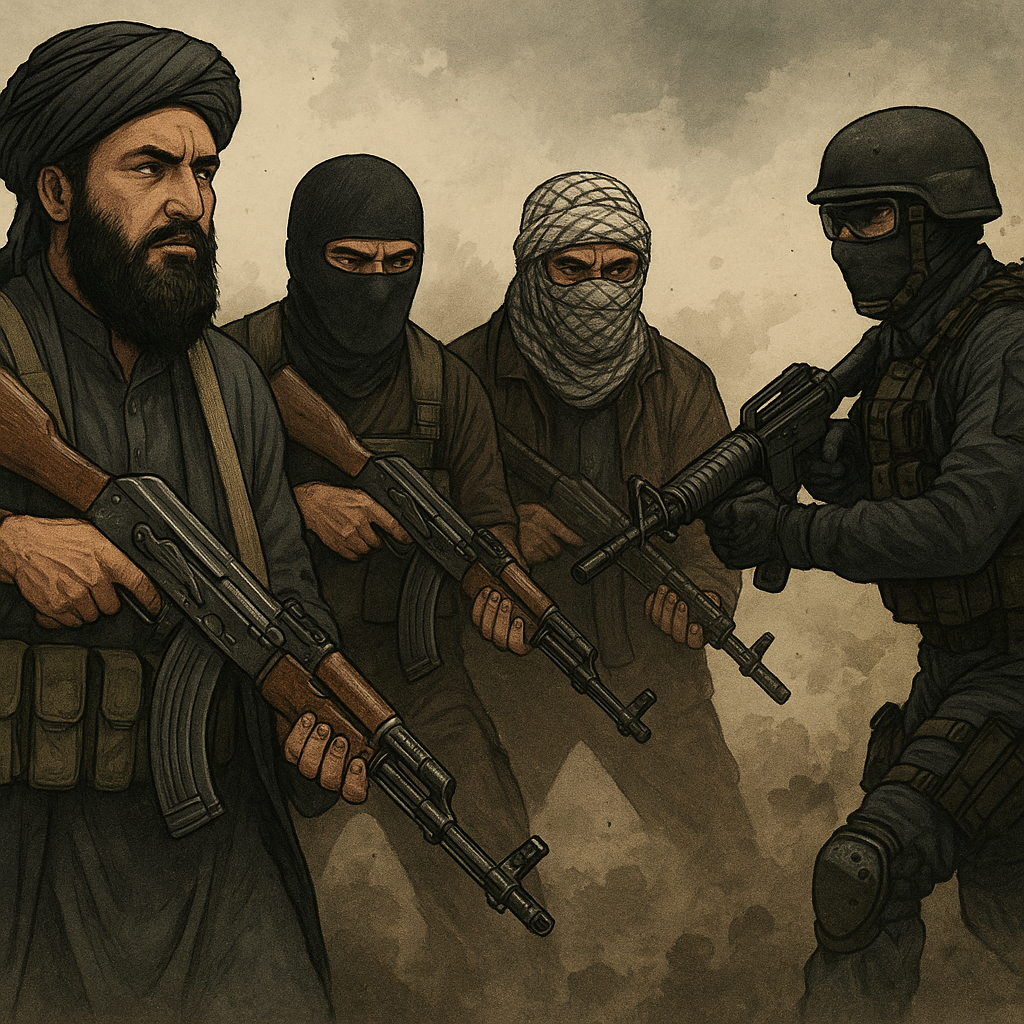
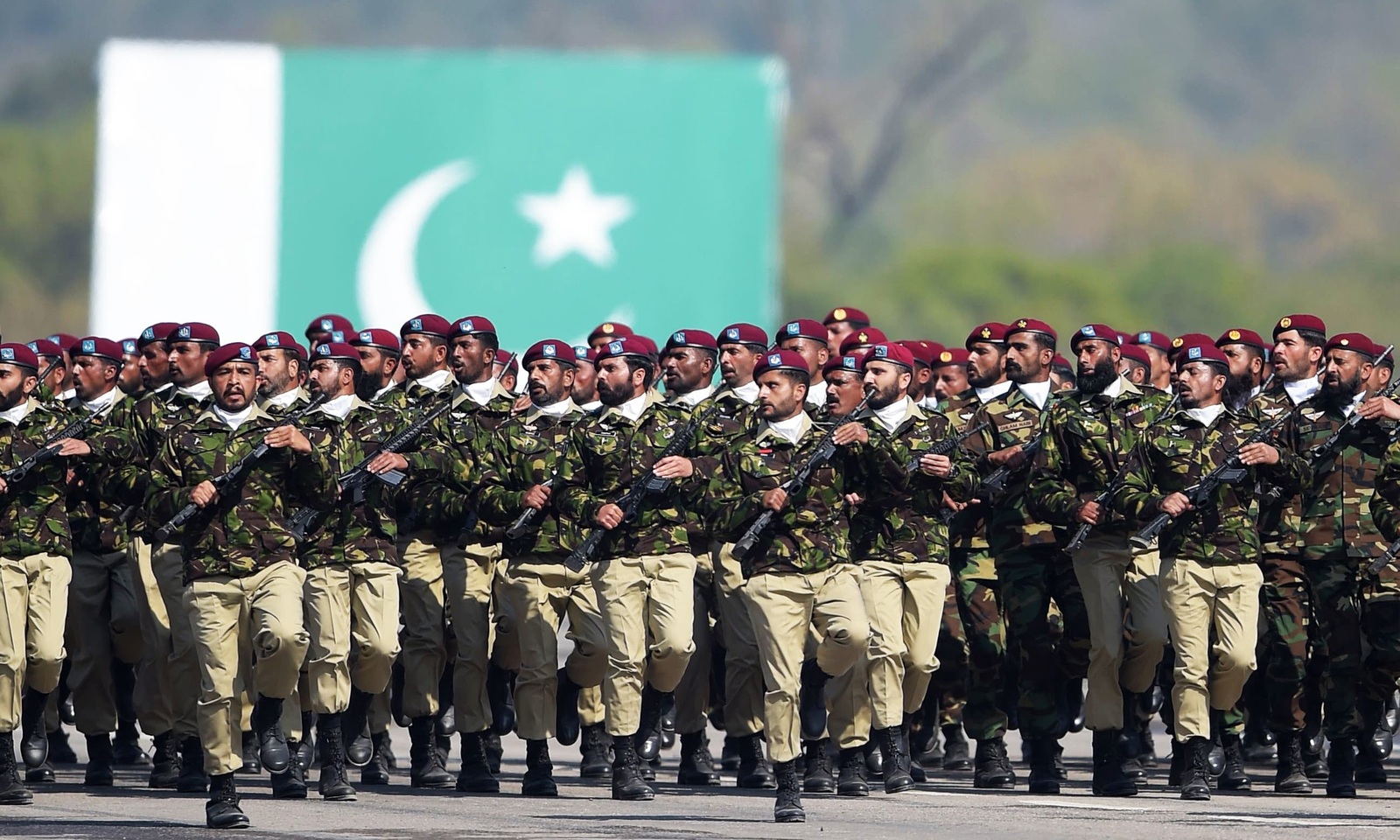
Pakistan’s structural security dilemma: For decades, the state has treated these geolocations as security frontiers to be managed through kinetic force, central containment, and administrative fragmentation, rather than treating them as living communities with inherent rights to their own wealth and governance.
By continuing “more of the same,” the state inadvertently validates the narratives of insurgent and activist groups. To break this cycle, the counter-security doctrine must pivot from kinetic containment to radical economic indigenization and structural alignment with international human rights standards, specifically the principles of ILO Convention 169 (Indigenous and Tribal Peoples).
Here is how this paradigm shift must be customized to each section, followed by overall concluding remarks.
1. Azad Jammu and Kashmir (AJK): Indigenization of Fiscal & Fiscal-Decision Autonomy
* The “More of the Same” Failure: Centralized control over water resources and electricity tariffs, combined with administrative heavy-handedness against groups like the Joint Awami Action Committee (JAAC), treats the region as an energy-exporting colony while denying locals affordable access to the very wealth they generate.
* The Paradigm Shift (ILO 169 Customization):
* Resource Sovereignty & Wealth Indigenization: In alignment with Article 15 of ILO 169 (rights to natural resources), AJK must be granted explicit co-ownership and primary-use rights over its hydel power generation. Financial profits and royalty structures from major dams must flow directly into a localized, autonomous AJK Development Fund managed by elected regional representatives, not routed through federal bureaucracies.
* Devolved Decision Hierarchy: Shift the decision-making locus from Islamabad-appointed administrators to local municipal and district councils. The gridlock and clashes disappear when the local population has the legislative authority to set regional consumer tariffs and control the pricing of essential commodities locally.
2. Balochistan: Equitable Ownership of Mineral Wealth & Tribal Resource Demarcation
* The “More of the Same” Failure: Launching kinetic operations (like Operation Subhan) and splitting Quetta into East/West administrative divisions are classic top-down, bureaucratic containment strategies. They do nothing to fix the core grievance: the systematic extraction of natural gas and mineral wealth (Saindak, Reko Diq) by foreign and federal entities while local populations face extreme poverty and security profiling.
* The Paradigm Shift (ILO 169 Customization):
* Mandatory Free, Prior, and Informed Consent (FPIC): The state must formally adapt Articles 6 and 7 of ILO 169. No foreign or national corporate mining lease (copper, gold, gas) should be signed without the legally binding consent of the local tribal and district councils (Jirgas integrated into corporate law).
* Local Equity Stakes: Shift from a “royalty/charity” model to an equity-ownership model. Local communities must hold a permanent 15-25% equity stake in all mining and energy transit projects. This creates an indigenous stakeholder class where local youth are corporate co-owners and managers, transforming security threats into asset protection.
3. Gilgit-Baltistan (GB): Community-Owned Ecotourism & Climate Autonomy
* The “More of the Same” Failure: The newly announced Glaciers Protection Authority and revenue targets are currently framed as centralized, bureaucratic structures answerable to high-level political hierarchies. When local communities are excluded from the governance of their natural environment, conservation efforts are viewed with suspicion as land-grabbing mechanisms under the guise of green policy.
* The Paradigm Shift (ILO 169 Customization):
* Indigenous Environmental Stewardship: Under Article 14 (rights to traditionally occupied lands), the Glaciers Protection Authority must be legally decentralized. Management, monitoring, and execution rights of environmental projects must be legally vested in village-level Valleys and Pasture Committees.
* Indigenization of Climate and Transit Wealth: Tolls and carbon credits generated from the Karakoram Highway transit trade and mountaineering expeditions must bypass the federal treasury and land directly in local community bank accounts. When the decision-making hierarchy is horizontal and community-led, security risks around infrastructure vanish because the assets belong to the people.
4. Khyber Pakhtunkhwa (KP) & Tribal Belts: Reversing Marginalization in the Post-Merger Landscape
* The “More of the Same” Failure: The post-FATA merger promised integration but delivered an administrative vacuum, where local traditional policing and dispute-resolution systems were dismantled without being replaced by an empathetic, functioning civic judiciary. This has allowed the TTP/FAK to exploit governance failures and target localized police forces, who are seen as enforcers of a distant federal will.
* The Paradigm Shift (ILO 169 Customization):
* Customary Law Integration: In line with Articles 8 and 9 of ILO 169, the state must formally harmonize traditional customary laws (Pashtunwali dispute resolution mechanisms) with constitutional human rights. Re-empower localized, community-selected elders within the formal legal framework to resolve land and resource disputes.
* Local Police Indigenization: Frontline security must transition from paramilitary deployments to deeply localized, community-managed civilian watches. The decision-making hierarchy for district security must be answerable to local grand councils (Jirgas), ensuring that law enforcement is viewed as a protective community shield rather than an occupying federal force.
Overall Concluding Remarks: A New Charter of Security Through Sovereignty
The data from July 1–15, 2026, proves that Pakistan’s security matrix is caught in an existential loop. The current “Securitized State Doctrine” operates under the illusion that you can secure a territory while alienating the people who live on it.
True stability cannot be exported from Islamabad or enforced by the barrels of guns. It must be cultivated from the soil up.
By adopting the spirit of ILO Convention 169, Pakistan has the historic opportunity to redefine its national security blueprint. True counter-insurgency does not require more administrative subdivisions or heavily guarded highway convoys; it requires the state to sign a New Social Contract with its periphery. When the wealth of the land—whether it is the hydel power of AJK, the minerals of Balochistan, the water of GB, or the transit trade of KP—is owned, managed, and enjoyed by the indigenous communities themselves, the incentive for conflict dissolves. Peace and prosperity will only arrive when local communities are no longer treated as bystanders to their own resources, but as the sovereign custodians of their own destiny.