
Dr. Naveed Elahi
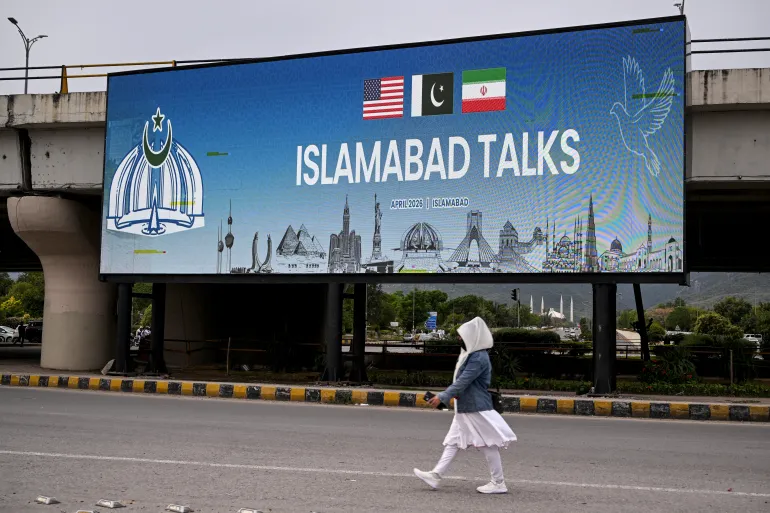
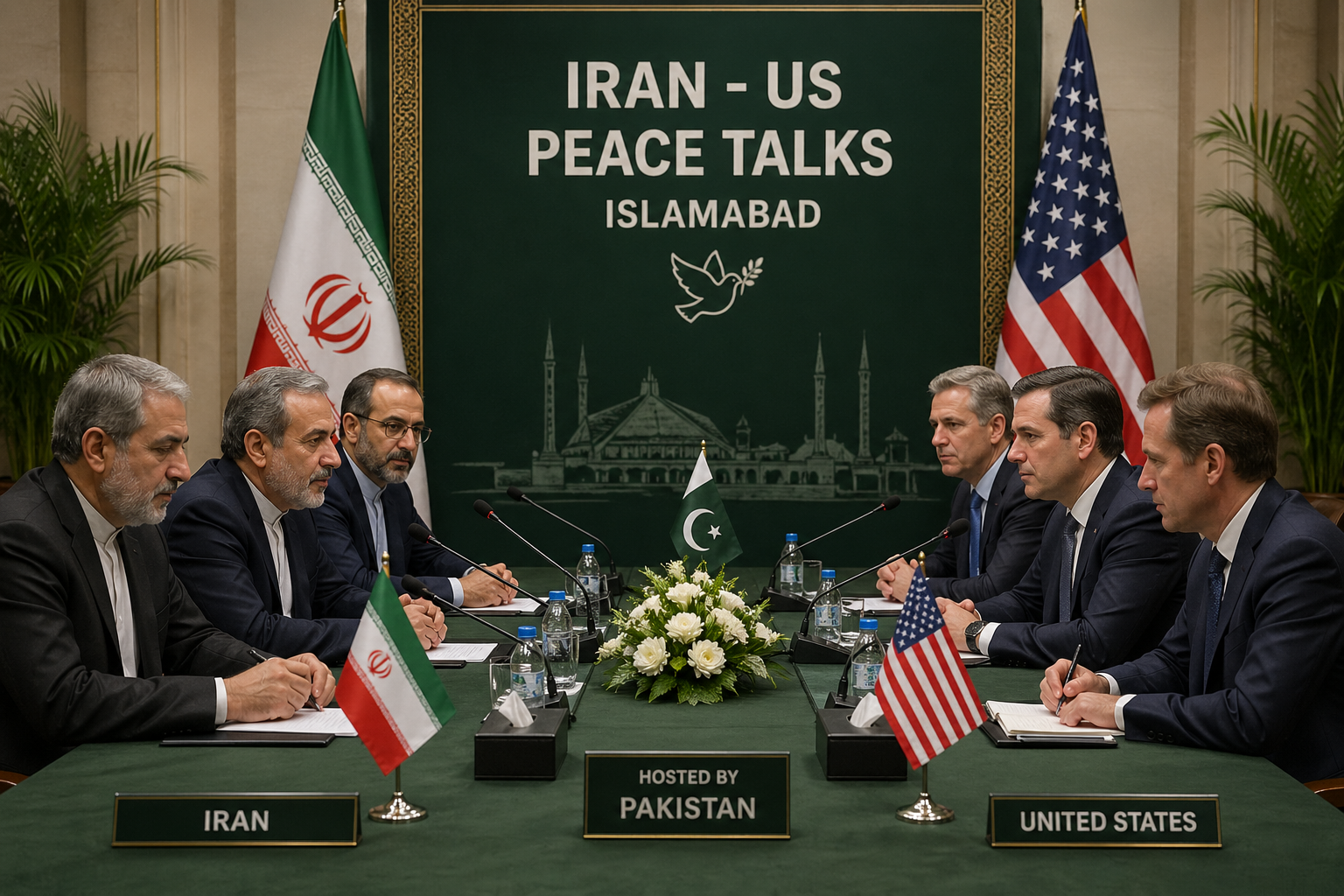
By hosting talks between the senior American and Iranian negotiators in Islamabad, Pakistan is at the centre of the stage attempting to salvage a fragile ceasefire from the wreckage of one of this decade’s most consequential wars. It is like writing a new chapter in Pakistan’s diplomatic history.
The choice of venue is itself a story. For decades, the world’s most sensitive negotiations between Washington and Tehran have been quietly hosted in Muscat, Doha, or Geneva, capitals with long-established reputations as discreet intermediaries in the dark arts of back-channel diplomacy. That the world has now turned to Islamabad is a development that deserves more than passing notice. It is a moment of opportunity, but it is also a moment of acute risk, which Pakistan is ready to take.
A Country Uniquely Placed
Why Pakistan, and why now? The answer lies in a combination of geography, history, and that rarest of diplomatic commodities, working relationships with both sides of an apparently irreconcilable quarrel.
Pakistan shares a 909-kilometre border with Iran. It has deep historical, religious, and cultural ties to the Iranian world, and a Shia population estimated at ten to fifteen per cent of its citizens, which lends Islamabad a textured understanding of Tehran that few other capitals can match. At the same time, Pakistan has spent decades sustaining its security partnership with the United States, often at considerable domestic cost. In an era of acute polarisation, that double-handed balance, so often criticised as fence-sitting, suddenly reveals itself as a genuine diplomatic asset.
There is also the matter of nuclear credibility. As a nuclear-armed state outside the Non-Proliferation Treaty, Pakistan occupies a singular vantage point on questions of nuclear restraint and verification, the very questions that lie at the heart of the U.S.-Iran impasse.
And there is precedent. It was Pakistan that quietly arranged the original American opening to China in 1971, ferrying Henry Kissinger to Beijing through a story about a stomach ailment in Murree. That institutional memory, and the diplomatic muscle that built it, is real. It has not been lost on the planners in Washington and Tehran.
Above all the enthusiasm and courage of Prime Minister Shehbaz Sharif and Field Marshal Asim Munir to resolve the thorny issue and their likeability and acceptability to the leadership of Iran and particularly the US, has perfectly perched Pakistan at this position of credible mediator.
What Pakistan Stands to Gain
If the Islamabad talks succeed, even partially, the rewards for Pakistan are considerable.
Diplomatic prestige is the most obvious, which it has already gained. A successful facilitation would offer a powerful counter-narrative to the more troubled foreign policy headlines that have surrounded the country in recent years. It would remind the world that Pakistan is not merely a country to which things happen, but a country that can shape the course of events.
There is also leverage to be gained. A constructive role in resolving a conflict that the American president personally cares about creates political capital with Washington that can be converted into other goods, economic, military, and diplomatic. Equally, Iran will not soon forget who hosted it during a period of acute strategic pressure. That goodwill matters along Pakistan’s western border, where insurgency, narcotics trafficking, and refugee flows have long bedevilled bilateral relations.
Beyond the immediate, a successful Islamabad process would position Pakistan as an indispensable Muslim-majority interlocutor on the world’s most dangerous diplomatic file, ahead of regional rivals who have invested heavily in the same space. And there is an economic dividend, too. Reduced regional tension is good for Pakistan’s struggling economy, particularly its energy security, given the long-standing but sanctions-blocked interest in cross-border gas and electricity links with Iran.
And What It Stands to Lose
The risks, however, are at least as numerous as the rewards, and arguably more consequential.
The first is physical. Hosting senior Iranian and American negotiators on Pakistani soil places the country squarely in the cross-hairs of any spoiler, state or non-state, who has reason to want the talks to fail. The security burden is immense, and an attack on a diplomat, a hotel, or a government facility would not merely embarrass the host; it would haunt Pakistan’s diplomatic reputation for a generation. Nevertheless, Pakistan tackled it very well as it managed to make fool-proof arrangements during the first round of talks when the US Vice President JD Vance and his important delegates Special Envoy, Steve Whitkoff and Jared Kushner, and rom the other side Iranian Speaker Muhammad Baqar Qalibof and the FM Abbas Iraqchi were here. Pakistan Airforce ensured to take the Iranian delegation back home safely.
The second is reputational. Mediation is an exercise in which credit for success is shared but blame for failure tends to concentrate on the host. Given the documented volatility of President Trump’s communications during the conflict, the probability of a public, embarrassing breakdown is not negligible. His own officials have anonymously complained that his social media posts have repeatedly undermined his own negotiators’ work. Pakistan must plan for a process that could collapse through no fault of its own, and yet leave Islamabad associated with the failure.
The third is domestic. Pakistani public opinion is broadly sympathetic to Iran on humanitarian grounds and broadly sceptical of American military action in the Muslim world. Visibly facilitating a process that may be perceived as legitimising the U.S.-Israeli strikes carries political costs for the government, particularly given the religious and sectarian sensitivities at play.
The fourth is regional. Saudi Arabia, the United Arab Emirates, Qatar, and Bahrain are themselves directly affected by the war, having absorbed Iranian retaliatory strikes on their own soil. Several are major Pakistani economic partners. Hosting these talks in Islamabad rather than in a Gulf capital may be read in some quarters as a quiet slight, with consequences that may surface only later. However, except the estranged UAE, Pakistan has kept the others in loop and consulted them at every stage.
The fifth is competitive. India has invested heavily in its own relationships with Israel, the United States, and the Gulf, and will not welcome a Pakistani diplomatic ascendancy. Counter-narratives questioning Pakistan’s neutrality, raising old terrorism concerns, or spotlighting the Balochistan border situation should be anticipated and prepared for.
The sixth is the Trump factor itself. The president has already, at one juncture, cancelled an envoys’ trip to Pakistan, illustrating just how fragile any process tied to him can be. Islamabad must plan for the very real possibility that the process unravels not because of anything Pakistan did, but because of a Truth Social post sent at three in the morning.
A Strategy for the Moment
How, then, should Pakistan navigate the days and weeks ahead? Several principles suggest themselves.
It should define its role narrowly and publicly: a host and facilitator, not a guarantor of outcomes nor a party to substantive terms. It should coordinate quietly with Gulf partners, ensuring that Riyadh, Abu Dhabi, and Doha are briefed, consulted, and where possible incorporated into a parallel track that dilutes the risk of being seen as a freelance diplomatic actor. It should secure the venue and the process to a standard that is unimpeachable, because the cost of any incident on Pakistani soil would be catastrophic.
It should manage its domestic communications with care, framing the role in language that emphasises peace, Muslim solidarity, and Pakistan’s historical mediation tradition, while avoiding any appearance of endorsing the military action that brought the parties to the table. It should document everything, because detailed records of who said what, when, and to whom will be Islamabad’s best protection against future misrepresentation by any party, including, it must be said, the United States. It should invest in technical legal expertise, ensuring that any text emerging from Islamabad can withstand scrutiny under international humanitarian law, the law of treaties, and the nuclear non-proliferation regime.
And it should prepare for the long game. Even if these particular talks fail, Pakistan’s positioning as a credible interlocutor on the U.S.-Iran file is itself a strategic asset that should be cultivated, institutionalised, and protected.
A Question of Statecraft
In the end, hosting these talks is neither an unalloyed opportunity nor an unmanageable burden. It is, rather, a high-variance diplomatic opening that will reward careful, disciplined statecraft and punish improvisation. The stakes are larger than the immediate file. They touch Pakistan’s standing in its region, its relationships with two consequential capitals, its domestic political cohesion, and its place in the historical record of one of the defining conflicts of this decade.
If Pakistan can navigate this process with sobriety, technical excellence, and strategic patience, Islamabad may emerge not merely as the venue for these talks, but as a renewed and credible voice in the regional diplomatic order. If it falters, the costs will be measured not in days or weeks, but in years.
The world will be watching. So, more importantly, will the next generation of Pakistani diplomats, who will inherit whatever record is set in the rooms where these talks are held. They deserve to inherit a record worth defending.
The writer is Chief Editor of The Strategic Brief.