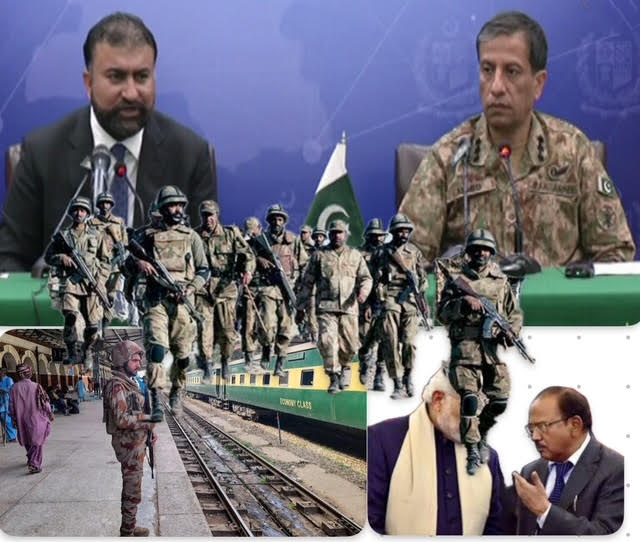

1–15 August 2026
Domestic
BALOCHISTAN
1. Security forces killed seven alleged BLA terrorists, including a suicide bomber, during an operation in Nushki, Balochistan, destroying their hideout, ammunition and explosives (30-31.7.26).
2. Eight people were killed in separate incidents across Balochistan, including a bus driver Shamadoodul Haq in Kachhi and two others in Khuzdar district (1.8.26).
3. Local journalist Nazar Muhammad Kanrani was shot dead and his brother injured in an armed attack in Dera Allahyar’s Ladies Bazaar area of Jaffarabad district, while police arrested a suspect named Hafiz and launched an investigation (4.8.26).
4. Unidentified armed men shot dead Inayatullah Jattak, father of kidnapped woman Asma Jattak, in Shehzad Town of Shokhro area in Khuzdar district (4.8.26).
5. Authorities clamped evening lockdown across Kalat and Khuzdar and Surab districts requiring the closure of commercial centres and shops from 8 pm to 10 am daily and advising residents to stay indoors at night amid security concerns (7,9.8.26)
6. Security forces killed five terrorists allegedly linked with BLA, including a key commander during an IBO in the Sarkini and Chedgi areas of Panjgur district: Radio Pakistan (10.8.26).
9. A vehicle-borne IED (VBIED) being prepared by alleged BLA-linked terrorists prematurely detonated in Surab district, killing eight terrorists and injuring several others. The blast and secondary detonation of stored explosives also reportedly killed three nearby civilians, according to ISPR (12.8.26).
10. Seven miners of a private copper mining company were abducted at gunpoint by armed men in the Mahian Kaur area of Chagai district, after the attackers looted equipment, weapons and other items from the camp (12.8.26).
11. Gas supply to several Balochistan towns and parts of Quetta was suspended after an 18-inch SSGC pipeline was blown up near Gorkat in Bolan, Kachhi district (12.8.26).
12. Six people, including three police personnel, were injured when gunmen attacked Balochistan Home Minister Mir Ziaullah Langove’s convoy in Khad Khoca, Mastung district (13.8.26).
13. Two people, Ehsanullah and Muhammad Younis, were killed by unidentified armed motorcyclists in Ziarat district (14.8.26).
14. Five people were injured in a blast targeting a Frontier Corps (FC) vehicle on a road near Shaheed Fida Chowk in Turbat (14.8.26).
**ISLAMABAD**
Interior Minister Mohsin Naqvi and Norwegian Foreign Minister Espen Barth Eide discussed counterterrorism cooperation and the use of Afghan soil for attacks against Pakistan in Islamabad (13.8.26).
**KHYBER PAKHTOON KHAWA ((KPK)**
1. JUI-F cleric Maulana Mohammad Ismail was shot dead by unidentified armed motorcyclists after Friday prayers in the Azam Warsak area of Birmal tehsil in South Waziristan district (1.8.26).
2. Security forces killed five alleged TTP-linked terrorists during an operation in Razmak area of North Waziristan District; However, during the exchange of fire, Major Hafiz Ihsan Elahi embraced martyrdom (1.8.26).
**3. ** Police, after returning fire, repulsed a terrorist attack on the Daraban Police Station in Dera Ismail Khan district (1.8.26).
4. Police repulsed a terrorist attack on the Kharai Dara police check post in the Ambar area of Mohmand district after an exchange of fire (2.8.26).
5. Two policemen were injured in a roadside IED blast targeting a police van near Pir Zakori Bridge on GT Road in Peshawar (3.8.26).
6. Security officials repelled an attack by unidentified armed men on the convoy of North Waziristan Deputy Commissioner and District Police Officer near Boya area in North Waziristan district (3.8.26).
7. Peshawar Corps Commander Lt-Gen Omer Ahmed Bukhari visited the Central Police Office, where he was briefed by IGP Zulfiqar Hameed and senior officials on the law and order situation in KP. He praised KP police for their sacrifices, professionalism, and anti-terror efforts, and reaffirmed the joint resolve to eliminate terrorism and extremism. He stated that the Pakistan Army and KP police will continue coordinated operations to protect public life and property (5.8.26).
8. An unidentified mortar shell struck a riverside tent camp of nomadic families, killing Gul Makai Bibi, Gor Gora Bibi and a young girl, while injuring three others in North Waziristan district (4.8.26).
9. A suspected quadcopter attack in Chalweshtai, Ladha tehsil, injured Taimoor, Tanveer and Gul Rahman. A day earlier, religious scholar Mufti Jana Mir Mastikhel Wazir was killed in a bomb explosion at a supermarket in Rustam Bazaar, Wana tehsil of South Waziristan district (4.8.26).
10. Three people, including a woman and a child, were killed and three children injured in a grenade explosion inside a house owned by Rasheed Khan in Behramkhel area of Lakki Marwat district (5.8.26).
11. Security forces killed ten terrorists allegedly linked with TTP during an operation in Azam Warsak area of South Wazirstan district (6.8.26).
12. Two alleged TTP linked terrorists were killed by the security forces during an operation in Dir district (6.8.26).
13. Security forces killed seven alleged TTP affiliated terrorists during an operation in Hangu district However, during the exchange of fire, Captain Hamaza Akram embraced martyrdom (8.8.26).
14. A Special Branch police constable, Noor Alam Khan, was martyred by unidentified gunmen in the Masoomabad area along Miramshah Road in Bannu district (8.8.26).
15. Two terrorists were killed and another injured in four drone strikes on a vehicle, school and mosque in Hassankhel subdivision of Peshawar district, following intelligence reports indicating the presence of terrorists there (8.8.26).
16. A police constable Sajidullah was martyred and Constable Mohammad Waqas seriously wounded after terrorists attacked their patrol squad near Saeedkhel graveyard in Lakki Marwat district (9.8.26).
17. Two tribal elders, Haji Gul and Malik Badasha, were shot dead by unidentified armed men while traveling in a car in Toi Khulla Tehsil of South Waziristan district (9.8.26)
18. CTD police and security forces in a joint operation, killed an unidentified terrorist during a joint operation in Maryan police station area of Bannu district (10.8.26).
19. Police constable Anwarullah Khan was martyred by unknown gunmen near Hamza Tablighi Markaz in Bakakhel area of Bannu district (10.8.26).
20. Security forces killed two unidentified terrorists during an operation in Shahid Khan village, Janikhel, area of Bannu district while a roadside explosive device detonated in Khanikhel, Miryan tehsil, causing a large crater but no casualties (11.8.26).
21. KP IGP Zulfiqar Hameed handed over modern Dragon APCs, bulletproof vehicles, 33 forklifts and 25 motorcycles to district police units at Saad Shaheed Police Lines, Peshawar to counter terrorism and unrest. Advanced APCs were allocated to Tank, Hangu, Upper Swat, Upper Dir and Mansehra, while vehicles were distributed across several districts; 84 APCs are being upgraded with modern technology (11.8.26).
22. Commission agent Khaliq Noor Wazir was killed and a woman injured when an armed man opened fire inside a BISP centre in Azam Warsak Bazaar, Birmal tehsil, South Waziristan district (12.8.26).
23. Three terrorists, including highly wanted commander Naseer Mohammad alias Geedarh, who carried a Rs 6 million bounty were killed in a joint Police-CTD operation in Bannu district, while six policemen were injured in the exchange of fire (13.8.26).
24. A policeman, Zahir Shah, was martyred and another wounded when terrorists attacked a police post in Barang tehsil, Bajaur district (13.8.26).
25. Two bullet-riddled bodies, identified as Ziad Khan and Muzammil Khan, were recovered from Sadakhel Road near Bahmali Pump in the Domel area of Bannu district (13.8.26).
26. Two women, Sanam Bibi and Satara Bibi, were critically injured in a bomb explosion hidden in a pile of dry wood in Nawagai tehsil, Bajaur district (14.8.26).
27. Six members of the same family—Ayaz, his wife Gul Pariza, mother Gul Meena, sister-in-law Niaz Meena, and nieces Yasra and Sana—were reportedly injured when a mortar shell allegedly struck their house from an unknown location in Surah Ghorgha, Lower Kurram (14.8.26).
PUNJAB
1. Punjab’s Foreign National Security Cell has deported 140,468 illegal Afghan nationals, with the drive continuing; 39 holding centres currently house 188 Afghan nationals, while around 2.68 million Afghans have been deported from Pakistan overall (10.8.26).
2. An armed man, Muhammad Hussain, reportedly from Khyber district and allegedly linked to a “political party,” was killed after opening fire on security forces on Mall Road, Rawalpindi, injuring a patrolling officer, according to The Express Tribune and PTV (11.8.26).
3. Three people, including tribal leader Sardar Alamgir Kosh, were allegedly killed when 11–12 armed Katcha dacoits raided an outhouse in Ahmedpur Lama, Sadiqaba in Rahim Yar Khan district (13.8.26).
6. Special Branch VIP Security Sub-Inspector Ikramullah Niazi, 57, was found murdered with a suspected sharp weapon in his rented room in Dhoke Hassu in Rawalpindi. A police investigation is underway (13.8.26).
7. According to a claim by the police, five members of the notorious Ladi Gang, led by Molvi Yaqoob, surrendered with heavy weapons to Kot Mubarak police in Koh-e-Sulaiman in the presence of Deputy Commissioner Muhammad Usman Khalid and DPO Sadiq Baloch in RahimYar Khan district (14.8.26)
8. Three Police personnel—Sub-Inspector Adeel Ashiq, Head Constable Muhammad Asad and Constable Haris—were martyred in targeted attacks in Lahore’s Badami Bagh and Multan Road, Lahore, while suspects Rehan Butt and his father Fayyaz Butt were later killed in a police encounter in Muridke. Police reportedly noted that the attacks appeared to be a personal revenge vendetta led by Rehan Butt, whose brother had been killed in a previous CTD operation while a TTP faction also claimed responsibility (13-14.8.26)
SINDH
1. Police repulsed a terrorist attack on Daraban Police Station, Dera Ismail Khan (1.8.26).
2. Head Constable Muhammad Zaman was shot dead near Jamali Pull, Karachi; two suspected car lifters were also killed in a police encounter near Hill Park (3.8.26).
3. Police repulsed a terrorist attack on Kharai Dara checkpost, Mohmand, forcing attackers to flee towards Bajaur (2.8.26).
4. Two policemen were injured in an IED blast targeting a police van near Pir Zakori Bridge, Peshawar (3.8.26).
5. Four armed men robbed an Edhi shelter in Sohrab Goth, Karachi, of over Rs 6.5 million; CM Sindh ordered their arrest (8.8.26).
6\. Sindh IGP Javed Alam Odho at Sukkur, directed the police to intensify Operation Najat-i-Mehran against criminals in upper Sindh’s riverine areas (11.8.26).
AZAD JAMMU AND KASHMIR (AJK)
Azad Jammu and Kashmir (AJK) Police spokesperson Khawar Ali Shaukat said the proscribed Joint Awami Action Committee (JAAC) had allegedly abducted eight highway police personnel on election duty in AJK, with clashes previously reported in Rawalakot and Mirpur on 28 July. He vowed strict action against groups challenging the state’s writ, while the JAAC continued protests demanding the abolition of 12 reserved legislative seats for refugees from Indian-held Kashmir. AJK Information Secretary Muhammad Rashid Hanif said seven law-enforcement personnel had been martyred during the unrest (13.8.26).
Comments & Analysis: The reported abduction of eight highway police on election duty, following clashes at Rawalakot and Mirpur and set against seven law-enforcement personnel martyred, marked a sharp escalation in the confrontation between the state and the proscribed Joint Awami Action Committee (JAAC). What ostensibly began as a rights-and-representation movement has, on the official account, crossed into a direct challenge to the writ of the state during a politically sensitive election period — the point the police spokesperson signalled with his pledge of strict action. The core grievance, however, is quite disruptive: the demand to abolish the twelve legislative seats reserved for refugees from Indian-held Kashmir; which goes to the heart of AJK’s constitutional identity, since those seats symbolise the territory’s status as a stakeholder in the wider Kashmir dispute rather than a settled province. This is Pakistan’s stance in the UN. To end the 12 seats smacks of doubt in JAAC’s integrity and intention that reinforces Indian stance. The strategy of killing policemen and mutilating their bodies shows that a well-planned strategy is in place to create fear and unrest among the people and the forces. Nevertheless, at precisely the moment Islamabad can least afford instability on the Line of Control. The timing is doubly delicate: unrest in AJK during elections offered a propaganda opening to India and complicates Pakistan’s diplomatic framing of Kashmir. The path out lies less in escalation than in political engagement that addresses the representation question while restoring order, lest a governance dispute calcify into a lasting security problem in one of the country’s most strategically exposed regions
DEFENCE
1. The 99th anniversary of the founding of China’s PLA was commemorated at GHQ, Rawalpindi, where COAS & CDF Field Marshal Syed Asim Munir and Chinese Ambassador Jiang Zaidong reaffirmed the Pakistan-China strategic partnership, mutual trust, and commitment to regional peace and security (1.8.26).
2. Field Marshal Syed Asim Munir visited NDMA’s National Emergencies Operation Centre, reviewed monsoon preparedness and response mechanisms, and reaffirmed the Armed Forces’ support for relief, rescue, and rehabilitation operations (4.8.26).
3. Field Marshal Syed Asim Munir, Admiral Naveed Ashraf, Air Chief Marshal Zaheer Ahmed Baber Sidhu, and the Pakistan Armed Forces reaffirmed solidarity with the people of Indian Illegally Occupied Jammu and Kashmir (IIOJK) on Youm-e-Isthesal, observed on 5 August, expressing support for their right to self-determination and a peaceful resolution of the Kashmir dispute (4.8.26).
4. Somalia’s Defence Minister Ambassador Ahmed Moallim Fiqi met Chief of Naval Staff Admiral Naveed Ashraf and Chief of Air Staff Air Chief Marshal Zaheer Ahmed Baber Sidhu at Naval and Air Headquarters, respectively, in Islamabad to discuss bilateral defence cooperation, maritime security, training, and capacity building (5.8.26).
5. Field Marshal Syed Asim Munir, the services chiefs, and the Pakistan Armed Forces solemnly commemorated the 68th martyrdom anniversary of Major Tufail Muhammad Shaheed, Nishan-e-Haider, paying tribute to his extraordinary bravery, devotion to duty, and supreme sacrifice in defending the nation (8.8.26).
6. Norwegian Foreign Minister Espen Barth Eide met Field Marshal Syed Asim Munir at GHQ, Rawalpindi, where they discussed bilateral relations, regional security, global peace, and strengthened defence and security cooperation (13.8.26).
7. Pakistan’s Armed Forces, led by Field Marshal Syed Asim Munir, Admiral Naveed Ashraf and Air Chief Marshal Zaheer Ahmed Baber Sidhu, felicitated the nation on the 79th Independence Day, paying tribute to Quaid-e-Azam, martyrs, veterans and law-enforcement personnel while reaffirming their resolve to defend Pakistan’s sovereignty and promote unity, peace, stability and prosperity (14.8.26).
8. Field Marshal Syed Asim Munir, COAS & CDF, hosted an Independence Day reception for Pakistan Army veterans, paying tribute to their lifelong services and contributions to national resilience, while veterans reaffirmed their support for the Armed Forces and commitment to national unity, peace, stability and prosperity (14.8.26).
SCIENCE AND TECHNOLOGY
SUPARCO announced “Jinnah-1” as Pakistan’s first lunar rover, set to be sent to the Moon in 2029 as part of China’s Chang’e-8 mission to conduct scientific research at the lunar south pole; the name was selected from 4,000 proposals in a nationwide competition at a ceremony in Islamabad (13.8.26).
DIPLOMATIC DEVELOPMENT, ECONOMY, SIGNIFICANT EVENTS
1. The United States and Pakistan held their 4th Counterterrorism Dialogue in Washington, led by Ambassador Gregory LoGerfo and Ambassador Nabeel Munir. Both sides reaffirmed security cooperation and discussed terrorist threats, border security and disrupting militant networks, including ISIS-K, Al-Qaeda, TTP and BLA, while pledging stronger bilateral and multilateral counterterrorism efforts (5.8.26).
2. Pakistan’s Foreign Office spokesperson, Tahir Andrabi, rejected India’s criticism of legislative elections in Azad Jammu and Kashmir (AJK), citing India’s 5 Aug 2019 revocation of Article 370. He said India lacked the “standing” and “moral authority” to comment, called for implementation of UNSC resolutions and urged a peaceful settlement of the Jammu and Kashmir dispute through a UN-administered plebiscite (6.8.26).
Pakistan-Saudi Arabia- Turkey Defence Pact
3. Pakistan, Saudi Arabia and Türkiye signed the Makkah Joint Defence Agreement at Al-Safa Palace in Makkah during the Makkah Al-Mukarramah Summit, attended by PM Shehbaz Sharif, Crown Prince Mohammed bin Salman, and President Recep Tayyip Erdoğan. The pact establishes collective defence, treating an attack on one member as an attack on all, while strengthening defence cooperation, regional security and peace amid tensions involving Iran, Israel, Gulf states and Houthi threats. Pakistan’s Foreign Office described the agreement as rooted in historic ties, Islamic solidarity, and shared strategic interests. Türkiye’s Defence Ministry reportedly said on 13 August that the accord would establish strategic political and military mechanisms involving the defence and foreign ministers and military chiefs, ensuring coordination at the highest level. It was also reported that the pact includes joint land, naval and air exercises, air-defence and unmanned-systems cooperation, and deeper defence-industry collaboration.Turkish Foreign Minister Hakan Fidan reportedly compared the pact to NATO Article 5, stressed that it is not directed against Iran, and suggested Egypt as a potential fourth member. Deputy Prime Minister and Foreign Minister Ishaq Dar said the pact is purely defensive, open to other regional states, and complementary to existing agreements (6, 7, 8, 9, 10; 13. 26).
Comments & Analysis:
(a). The Makkah Joint Defence Agreement, signed by Pakistan, Saudi Arabia and Türkiye, under which an attack on one member would be treated as an attack on all, has drawn mixed regional reactions and could signal a shift away from full reliance on the United States. Iran cautiously welcomed the changing security landscape, while China sees opportunities to expand strategic ties with Pakistan and Saudi Arabia, and Russia views the pact as part of a more multipolar Middle East. India’s MEA said it is assessing the agreement’s implications for national security and regional stability, while Israel is closely monitoring the emerging alignment.
(b). Pakistan assured Iran that the Makkah agreement is purely defensive and not directed against Tehran. Foreign Minister Ishaq Dar told Iranian counterpart Abbas Araghchi that it was “not an instrument of confrontation,” while PM Shehbaz Sharif described it as entirely defensive. Iranian Foreign Ministry spokesperson Esmaeil Baqaei said Tehran had no reason to believe the pact was aimed at encircling Iran and supported regional security mechanisms based on cooperation and free from foreign interference. The Mecca Joint Defence Agreement aims to deter aggression through collective solidarity, strategic ambiguity, intelligence sharing, and joint military responses, while preserving members’ operational freedom. It raises the strategic costs for Iran, Israel, India and regional non-state actors, but must avoid triggering counter-alignments or a regional arms race.
(c) Domestically, the agreement was broadly welcomed in Pakistan as a step toward ensuring national security, promoting regional peace and Muslim unity, and expressed hope that it is not aimed against any brotherly Muslim country. It was also viewed as a means of strengthening security in the region. People have high expectations that the agreement will enhance economic cooperation, create employment opportunities and facilitate visas among member states, particularly with Saudi Arabia. Security analyst Dr. Naveed Elahi, in his article “Makkah Pact: Can It Become Muslim NATO?” published on 8 August 2026, examined its potential to develop into a broader collective-security framework.
(Also read Dr.Naveed Elahi’s article on this topic published in The Strategic Brief. https://thestrategicbrief.com/2026/08/08/makkah-pact-can-it-become-muslim-nato/
REGIONAL
Afghanistan
Law and Order / Security
1 (a). Taliban spokesman Zabihullah Mujahid said mining in Badakhshan was suspended over illegal extraction and disputes pending revised guidelines. An unverified report alleged that the Afghanistan United Front (AUF) killed a Taliban morality officer in Aino Mina, Kandahar. The Defence Ministry claimed that operations near the Durand Line over three months resulted in the seizure of weapons, ammunition, 45 vehicles and 2,600 kg of narcotics, and the arrest of 39 alleged smugglers. A Taliban helicopter was damaged while landing in Nusay, Badakhshan, with conflicting reports over whether it was an accident or an attack. Defence Minister Mohammad Yaqoob Mujahid, marking 15 August 2021, pledged to defend Afghanistan’s territorial integrity, independence, Islamic system and national security.
(b). Afghan Foreign Ministry spokesman Abdul Qahar Balkhi expressed regret over the death of a Tajik woman in Darvoz, Tajikistan, reportedly caused by gunfire from the Afghanistan-Tajikistan border. He warned that “destructive and opportunistic elements” in Badakhshan, Afghanistan, could undermine regional security, stability and trust between Afghanistan and Tajikistan (15.8.26
(c). UNAMA reported the detention of two Afghan male staff members by the de facto General Directorate of Intelligence in Herat. It said that five years after the Taliban’s return to power, improved security had reduced conflict, but restrictions on women and girls, terrorism, human-rights concerns and limited civic freedoms remained obstacles to stability and international reintegration. Zabihullah Mujahid rejected UN allegations about foreign militant groups, saying TTP operates in Pakistan, while denying Al-Qaeda and ETIM activity and disputing claims about Daesh (4, 8, 11, 12, 14, 15.8.26).
Comments & Analysis: After nearly five years of IEA rule, AFF operations in Zebak and Yaftal, Badakhshan, including the reported seizure of Yaftal on 17 July 2026, have challenged Taliban dominance and raised concerns over a possible insurgency in the strategic Wakhan Corridor. The Taliban reportedly deployed around 1,000 reinforcements and reshuffled four commanders, while economic hardship, internal tensions, and the activities of TTP, Al-Qaeda, ETIM, IMU, and Jamaat Ansarullah add further pressure. However, claims by anti-Taliban groups that growing dissent and isolated insurgent activity, particularly in Badakhshan, could lead to the regime’s collapse do not reflect current ground realities. Such an outcome remains unlikely without sustained opposition and significant external support. Former President Hamid Karzai also called for dialogue and the reopening of girls’ schools. Meanwhile, UN-reported allegations of Taliban support for TTP and the presence of IS-K/ Daesh, Al-Qaeda/AQIS, and ETIM but these allegations are denied by the IEA.
Afghanistan-Iran Relations
Iran’s Deputy Ambassador Seyed Hassan Mortazavi said Tehran does not support political or military groups opposing the Taliban and does not regard their armed struggle as “resistance,” drawing criticism from anti-Taliban groups. Zabihullah Mujahid welcomed the statement and urged dialogue, while Mortazavi met Herat Governor Maulana Islamjar to discuss visas, trade and transit through Islam Qala–Dogharoon. Habibullah Hassam of the NRF rejected the position. Experts note that Mortazavi’s remarks reportedly angered Fatemiyoun fighters, whose activities the IRGC allegedly restricted after the Taliban takeover in 2021. Zakaria Mashkoor Kabuli of the resistant front terms the statement may reflect only a temporary Iranian stance. Although Iran backed anti-Taliban factions after the killing of eight Iranian diplomats and a journalist in Mazar-e-Sharif in 1998, Tehran now prioritizes pragmatic IEA ties focused on IS-K, border security, Helmand water rights, migration, trade, Chabahar Port and the Khaf-Herat railway, making renewed Iranian support for anti-Taliban conflict unlikely. (4, 6, 8,10,15.8.26)
Afghanistan- Russia Relations
2. The CSTO considers Afghanistan a major regional security concern, particularly along the Afghanistan-Tajikistan border, while a joint programme is strengthening Tajik border security. Russia is also exploring a North–South transport route through Afghanistan and Pakistan to connect the INSTC with South Asia and the Indian Ocean. Despite security and financing challenges, Russia continues pursuing commercial, mining and industrial projects with the Taliban-led authorities.
Afghanistan-US Relations
3. The FBI renewed its $5 million reward for information on Afghan-American Mahmood Shah Habibi, who disappeared with his driver in Kabul on 10 August 2022. Zabihullah Mujahid denied that Habibi is in Afghan Taliban Government’s custody. Former U.S. envoy Zalmay Khalilzad urged stronger U.S.-Afghanistan engagement, while FM Amir Khan Muttaqi called for reopening the U.S. embassy and investment in Afghanistan’s mines, dams and roads but rejected any renewed U.S. military presence.
Pakistan- Afghanistan Relations
4 (a) The PM&DC, under its 30 July 2026 decision, reportedly stopped recognizing Afghan medical and dental degrees and suspended medical and dental education for Afghan students in Pakistan, including new and existing enrolments and transfers. The measures could affect more than 1,000 Pakistani students, while institutions were directed to provide Afghan student data. Pakistan and China’s Special Representatives for Afghanistan, Mohammad Sadiq and Yu Xiaoyong, discussed Afghan security, alleged TTP/ETIM activities and stronger counterterrorism cooperation. PM Shehbaz Sharif stressed Pakistan’s desire for peace but warned Kabul against allowing Afghan territory to be used for terrorism. Zabihullah Mujahid rejected the allegations, urged direct Pakistan-Kabul engagement and described Pakistan as a “brotherly country.” Despite continued security concerns and disagreements, analysts remain divided over the peace process; however, several believe that despite ongoing security challenges, Pakistan and Afghanistan should maintain sustained dialogue, cooperation, trade, and diplomatic engagement to rebuild trust and improve bilateral relations (4, 5, 8, 9; 14.8.26).
BANGLADESH
Sajeeb Wazed Joy, the son of the ousted former Prime Minister and Awami League leader Sheikh Hasina, reportedly warned in a statement from India of rising security risks in Bangladesh and the growing influence of Pakistan. Speaking at the Foreign Correspondents’ Club in New Delhi, he claimed that militant groups, including Hizb ut-Tahrir, are operating more openly and alleged that individuals linked to al-Qaeda have appeared at public events and warned that Bangladesh could become “another Pakistan” on India’s eastern border. Joy’s remarks followed the 2024 ouster of mother’s government after nationwide protests. He criticised the political environment, alleging the arrests and intimidation of Awami League supporters and journalists. Bangladesh’s authorities rejected the allegations of widespread political persecution following the 2024 political transition. India continues to monitor developments due to concerns over border security, migration, trade, and regional extremism (6.8.26).
Comments & Analysis: Sheikh Hasina and the Awami League face a difficult near-term comeback, as Bangladesh’s political landscape has shifted and China, USA and Western actors are engaging beyond the traditional India-centric framework. For India, Hasina remains strategically important, particularly for security and regional connectivity, but reinstalling her personally is unlikely to be India’s sole objective; New Delhi may increasingly prioritize a stable, predictable government with workable ties. The Awami League’s longer-term revival therefore depends primarily on domestic legitimacy, organizational renewal and political reconciliation, rather than external support alone. (en.proth
ILLEGALLY INDIAN-OCCUPIED JAMMU AND KASHMIR (IIOJK) / LOC
1. Army personnel safely destroyed two rusted mortar shells found in Choki Sagra area, Mendhar in Mankote sector of Poonch district through a controlled explosion, with no loss of life or property damage reported (6.8.26).
2. In IIOJK, the Chief Minister Omar Abdullah and National Conference leaders renewed demands for restoration of statehood, with Abdullah criticising the Centre’s undefined timeline; protests were held across J&K on 5 August. In Srinagar, former APHC chairman and noted religious scholar, Mirwaiz Umar Farooq, Apni Party leader Mohammad Ashraf Mir, and CPI(M) leader Mohammad Yousuf Tarigami criticised the 5th August 2019 abrogation of Articles 370 and 35A by the BJP led Narendra Modi government, calling for dialogue, constitutional and political rights, restoration of statehood, and greater domicile eligibility amid concerns over democratic space and unemployment (5,6.8.26).
India
Defence
1. IAF conducted Exercise Rotor Clap-III in Rajasthan to test counter-UAS capabilities, involving AH-64 Apache, Mi-25/35, Prachand, Chinook, Mi-17 and Dhruv helicopters with live missile and rocket firing (1.8.26).
2. India is expected to host the second Tarang Shakti multinational air exercise next month at Jodhpur, Rajasthan, with the US, UAE, Australia, Bangladesh, France, Greece, Singapore and Sri Lanka; observers from 18 of 51 invited countries are expected to participate (5.8.26).
3. India reportedly test-fired the nuclear-capable Agni-4 medium-range ballistic missile from the Integrated Test Range (ITR), Chandipur, Odisha, Bay of Bengal in a Strategic Forces Command user trial to validate operational and technical parameters, troop readiness and system reliability (6.8.26).
4. Dassault Aviation, France, offered India 114 Rafale fighters, including local production, to boost domestic defence manufacturing. India is also separately exploring a sixth-generation fighter partnership with France, amid competition with the UK-Italy-Japan and France-Germany next-generation fighter programs (7,8.8.26).
5. The Indian Air Force (IAF) has issued an RFI for 150 Stage-III advanced jet trainers to replace the Hawk Mk-132, with the RFP tentatively planned for December 2027 and deliveries within 60 months, making induction unlikely before the mid-2030s (11.8.26).
6. COAS Indian Army, General Dhiraj Seth met Punjab CM Bhagwant Mann and Haryana Governor Prof. Ashim Kumar Ghosh in Chandigarh. The CM sought Army support for anti-drone systems and low-lying interceptive radars along Punjab’s 532-km Pakistan border, citing cross-border drone smuggling. Discussions also covered Operation Sindoor, border management, internal security, Agniveer rehabilitation, recruitment and welfare of serving personnel/veterans, reinforcing joint security and crisis-response mechanisms (11.8.26).
7. Unconfirmed reports say three Indian Navy warships are deployed under Operation Sankalp across the Strait of Hormuz, Gulf of Aden, Red Sea, Gulf of Oman and waters off Somalia for maritime security, anti-piracy and anti-drone operations, supported by P-8I aircraft, Sea Guardian drones and MARCOS commandos (11.8.26).
8. The Indian Navy is reportedly seeking ship-launched loitering munitions with a 1,000+ km range and 9+ hours’ endurance, while the Indian Army’s Regiment of Artillery has launched an indigenous LRLM project for one-way attack drones with a 1,000-km strike range under the Make-II route (12.8.26).
Security (Indian Punjab)
9. According to a report, the US-based Sikh separatist leader Gurpatwant Singh Pannun of an organisation “Sikhs for Justice”, reportedly stated from Washington DC on 10 August accused the Indian government under PM Narendra Modi of targeting Sikhs through violence, economic pressure and demographic change; he announced a Khalistan referendum for 16 August in Indiana, proposed Shimla as its capital and a “Sikh Homeland Security Force,” and called for political change alongside armed resistance: Daily Times (13.8.26)
10. SAD president Sukhbir Singh Badal was attacked with a sharp weapon by Nihang sect of Sikhs, Jaspal Singh, an advocate with no criminal record, at Gurdwara Mata Sahib Kaur in Nanded Sahib, Maharashtra, on 13 August. Badal sustained an injury to his right hand, while his security guard was seriously injured while protecting him. Badal had earlier visited Takht Sri Hazur Sahib with his wife, Harsimrat Kaur Badal. In December 2024, former Khalistani militant Narayan Singh Chaura also attacked Badal at the Golden Temple in Amritsar, Punjab. The attack on SAD President Sukhbir Singh Badal triggered widespread reactions across India and abroad from Sikh leaders, political groups, communities and pro-Khalistan hardliners, with views divided between condemning violence and highlighting political-religious grievances. It is significant that the SAD-BJP alliance remained an electoral and governing partner in Punjab both against Congress and pro- Khalistan’s movement for many years in the past (13.8.26).
Diplomatic Development, Economy, political, Significant Event
India- China Relations
11. India’s External Affairs Ministry stressed that peace and stability along the border are critical to bilateral ties amid reports of renewed tensions near Taksing, Upper Subansiri, Arunachal Pradesh, where security forces reportedly confronted each other in late July 2026. Defence authorities termed the reports “unsubstantiated and uncorroborated.” The developments precede the BRICS Summit in New Delhi on 12–13 September 2026, expected to be attended by Chinese President Xi Jinping, amid the disputed 3,488-km LAC and the 2020 clashes that killed 20 Indian and four Chinese soldiers (12.8.26).
Pakistan-India Relations
12. President Droupadi Murmu, addressing the nation from New Delhi on 14 August 2026, called the suspension of the Indus Waters Treaty with Pakistan a “decisive step” in the national interest, particularly for farmers, while highlighting Kargil Vijay Diwas (26 July) and Operation Sindoor (7 May) as symbols of India’s security response (14.8.26).
Indian Energy Security and Concern over weaponisation on strategic routes in Gulf
13. India’s Energy Security: On 15 August 2026, Prime Minister Narendra Modi, addressing the nation from Red Fort, Delhi warned that the weaponization of strategic routes, including the Strait of Hormuz between Iran and Oman, threatens India’s energy security. He stressed self-reliance, noting India imports nearly 90% of its crude oil and 50% of its natural gas, and highlighted the Rs84,084-crore Samudra Manthan scheme and diversified crude and LNG imports from 41 and 15 countries, respectively (15.8.26).
IRAN
Iran – US/Israel Conflict
1. US President Donald Trump warned Iran of a “last chance” for a nuclear deal; on 4 Aug, Mohsen Rezaei, adviser to the Supreme Leader warned against a “second corridor” in the Strait of Hormuz. Iranian Foreign Minister Abbas Araghchi said an Oman-mediated Hormuz shipping deal was near completion, while President Masoud Pezeshkian appointed Mohsen Rezaei as SNSC secretary. Houthi forces also claimed an attack on Saudi Aramco’s Jazan refinery. Iran demanded an end to U.S. actions and compensation for reopening Hormuz and warned of risks to energy and internet infrastructure. Pakistan’s Interior Minister Mohsin Naqvi met Abbas Araghchi and Masoud Pezeshkian in Tehran to revive mediation between Iran and the U.S. Pakistan’s Foreign Office said his visit to Iran focused on bilateral relations, security matters, and regional developments, particularly peace and stability in the region (3,9,11,12.8.26).
2. The U.S. says it can sustain a naval blockade of Iran indefinitely with Defence Secretary Peter Hegseth saying US forces can sustain it while Washington plans tougher sanctions as ceasefire talks stall. Iran is using control of the Strait of Hormuz as leverage, demanding sanctions relief and the release of frozen assets before reopening the waterway. Iranian FM Abbas Araghchi said Tehran has not decided to resume U.S. talks, while separate Oman-mediated discussions focused on a maritime route through the strait. Meanwhile, Iran alleges that three pilots shot down during a 2 March attack on a U.S. base were captured by Qatari forces and denied family contact, calling the alleged treatment a possible violation of the Geneva Conventions and subject to war-crimes investigation (14,15.8.26).
Comments & Analysis: Iran, the United States, and its regional allies are pursuing competing strategies to influence maritime traffic through the Strait of Hormuz. Iran is reportedly negotiating with Oman to expand oversight of shipping through the strait, while the U.S. supports the immediate restoration of normal maritime traffic under the post-conflict ceasefire framework. Tehran has rejected shared transit responsibility, while President Trump warned Iran of a “last chance” to reach a nuclear deal. Iran has demanded an end to U.S. actions and compensation before reopening the Strait of Hormuz and has warned of potential risks to energy and internet infrastructure. The significant trilateral defence agreement, the “Macca Accord,” signed on 7 August by Pakistan, Türkiye, and Saudi Arabia, is not directed against any country and is expected to contribute to regional security, promote peace, and indirectly support the restoration of maritime traffic in the Gulf. Overall, developments appear to be unfolding on multiple fronts, potentially advancing U.S.-Israeli geopolitical and economic interests concerning Iran, Lebanon and the Houthis, as well as the implementation of the Gaza Peace Board under the broader but yet-to-be-completed Abraham Accords framework.
GULF / MIDDLE EAST / AFRICA, ISRAEL / TURKEY
1. Türkiye’s President Recep Tayyip Erdoğan and Saudi Crown Prince Mohammed bin Salman discussed Red Sea security, with Erdoğan condemning Houthi attacks and backing a Saudi-led maritime coalition (4.8.26).
2. Nigeria security forces and police rescued 308 kidnapping victims from Kainji Lake National Park; 163 were from Kwara State and 145 from Niger State, though 52 others were reportedly abducted in Zamfara (6.8.26).
3. Israeli PM Benjamin Netanyahu rejected the U.S. Gaza peace plan, insisting Hamas must disarm before Israel withdraws, while surviving Hamas leaders reportedly remained committed to the July 2026 plan (9,10.8.26).
4. A Syrian court sentenced former President Bashar al-Assad and ex-security official Atif Najeeb to death in absentia for alleged killings, torture and crimes against humanity; Assad remains in Moscow, Russia (11.8..26).
5. Three vessels were attacked in the Red Sea, Gulf of Oman and Bab el-Mandeb; the Houthi attack on Tihamah reportedly killed six people, including three Pakistanis, drawing Pakistan’s condemnation (11,12.8.26).
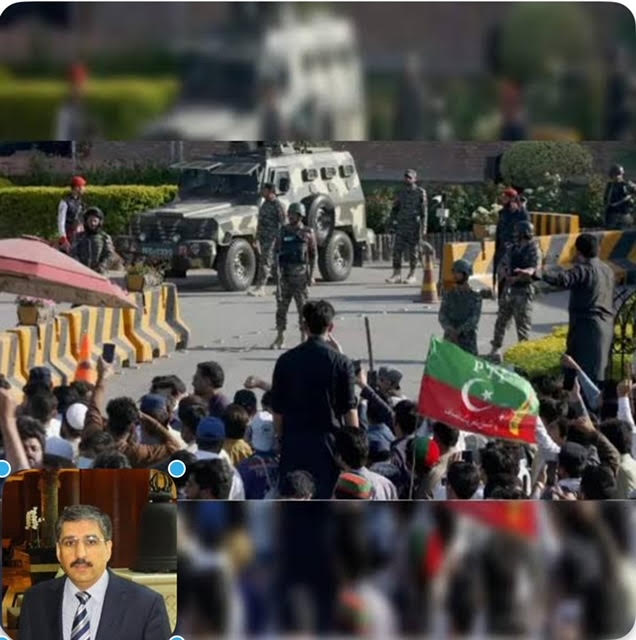

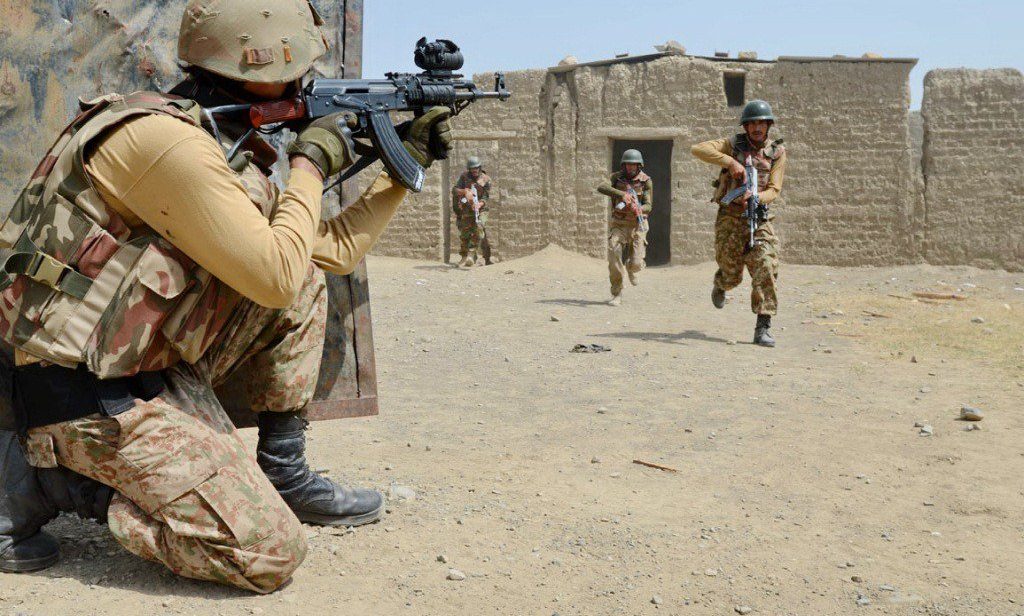
The periodic updates in “Security at a Glance” (published by The Strategic Brief) synthesize regional counter-terrorism (CT) operations, insurgent activities, and law enforcement updates across key security theaters.
Section-by-Section Dissection & Persistent Fault Lines
1. Khyber Pakhtunkhwa (KP) & Tribal Districts Theater
* Dissection:
* Focuses on kinetic intelligence-based operations (IBOs) against Tehreek-e-Taliban Pakistan (TTP) and localized militant networks.
* Details target eliminations, recovery of arms/explosives, and localized counter-insurgency responses following improvised explosive device (IED) attacks or targeted ambushes against security personnel.
* Persistent Fault Line: Cross-Border Sanctuary & Friction.
* The fundamental structural flaw remains the inability to neutralize external sanctuaries across the Durand Line (Afghanistan). Despite repeated domestic kinetic operations, militants easily withdraw across porous borders, rendering tactical military successes temporary without broader diplomatic or border-security resolution.
2. Balochistan Insurgency & Infrastructure Security
* Dissection:
* Examines separatist violence involving ethnic insurgent groups like the Baloch Liberation Army (BLA) and Baloch Liberation Front (BLF).
* Focuses on security measures protecting critical infrastructure, China-Pakistan Economic Corridor (CPEC) projects, transit corridors, and law enforcement posts.
* Persistent Fault Line: Grievance Exploitation vs. Purely Kinetic Strategy.
* Highlighting a heavy reliance on kinetic containment rather than addressing underlying socio-economic grievances and political marginalization. Relying primarily on force leaves security forces stuck in a continuous cycle of attrition against highly mobile asymmetric guerilla tactics.
3. Urban Security & Counter-Radicalization (Pan-National)
* Dissection:
* Reviews urban intelligence raids, sleeper cell disruptions, and illicit funding/smuggling networks.
* Tracks police and paramilitary intelligence sweeps targeting sectarian or ideologically extremist elements in major urban centers.
* Persistent Fault Line: Institutional Fragmentation & Judicial Bottlenecks.
* The gap between tactical intelligence captures and long-term prosecution. Weak criminal justice mechanisms, witness protection deficits, and inadequate coordination between federal and provincial intelligence bodies allow extremist networks to reconstitute over time.
4. Border Management & Transnational Crime
* Dissection:
* Evaluates border surveillance, anti-smuggling drives (arms, drugs, and currency), and border post management along Western borders.
* Persistent Fault Line: Socio-Economic Border Dependency.
* The socio-economic reliance of local border populations on informal cross-border trade creates a severe policy dilemma. Strict border militarization disrupts local livelihoods, feeding local resentment and creating an environment where criminal-militant nexus groups thrive.
Summary of Core Strategic Fault Lines
* Tactical Success vs. Strategic Stagnation: Operational victories (killing/capturing lower-tier operatives) do not break the organizational capability of militant groups as long as leadership structures and recruitment pipelines remain intact.
* Kinetic Over-reliance: Security strategy heavily relies on military and police force without matching progress in political reconciliation, institutional judicial reform, or socio-economic development.
* Geopolitical Border Realities: Geopolitical constraints along border corridors limit unilateral cross-border action, leaving national defense posture perpetually reactive to cross-border infiltrations.