Tariq Lodhi

The Pact
- With the slow and steady progress towards what some commentators call the Muslim NATO, the broader contours have become visible on the strategic plane of the region in form of The Makkah Joint Defence Agreement (MJDP), whose formation was announced on 07-Aug-2026 at Mekkah, Saudi Arabia.
- Looking back, NATO had extended its influence in Middle East and North Africa (MENA) since 1994, when the Mediterranean Dialogue and the Istanbul Cooperation Initiative was formed, including the mediterranean partners Algeria, Egypt, Israel, Jordan, Mauritania, Morocco and Tunisia. Later, in 2004, The Istanbul Cooperation Initiative was formed, in which all GCC states were invited, though Saudia Arabia and Oman did not join it[1]. Plenty of water has flown under the strategic bridges since then, and subsequently, with changing shapes of the strategy and coalitions in the region, that was plagued with terrorism, Hybrid Warfare and conflicts, came the emergence, of what today can be described as MJDP
- All the sates or stakeholders, in the region, perhaps excluding India and Israel, have been deeply concerned about their own securities, as Israeli and American war-waging against Iran had toppled the regional strategic-apple-cart. With all the respective spheres of influence in the region, colliding and crashing in wake of the warfare, it had pushed them to the precipice of strategic and economic chaos. All stake-holder states found themselves at the brink of serious-alteration of strategic posturing, rendering their plannings and investments of decades confronted with inevitable major losses. The American strategic and defence umbrella overclouding the Arab skies, proved to be no more than a Mackerel sky, without any results, except, perhaps a rumble here and a thunder there. The crashing and intruding drones and missiles, mostly unidentified, had driven the reality home, of Israel being the only protected entity by USA, at a great cost, ironically, to be borne by the Arab States, Iran and remaining world, through spiralling prices and crushing shortages. Further protection, or engineered Burden Transfer, even if it was with the transactional-last-moment contract of Interceptors from Ukraine[2], an established Israeli ally, and USA beneficiary, would be of no material solace. USA must be rethinking its ability and efficacy to continue absorbing economic, military-related political erosion, and waning international support for USA – Iran conflict over un-necessary prolonged period. The technological innovations and developments on both sides appear to have narrowed the gap between USA and Iranian technological tactical operability, and diminished chances of decisive conflict area breakthrough for either party.
- Ironically, these episodes of Hybrid Warfare laid exposed the rampant and non-stop use of False Flag Operations by Indo-Israeli HIAs for achieving military and hybrid objectives, without any qualms or consideration to the conventional warfare protocols.
- All this had cost money, and now would cost more, a reality forcing the Gulf States to make a Hobsons choice, and to either go to war, or get squashed during the Hybrid Conflict between USA and Russia through first tier proxies. But the Muslim states, apparently had had enough, and were warned much earlier of the New Sykes Picot arrangement[3], and probably had been waiting unintentionally, for this last straw, to break the back of the former Strategic Balance, to exercise the third option.
- Several Arab states, including Jordan, Saudi Arabia, UAE, Qatar, Kuwait, and even Oman, were inwardly grousing about USA not taking them in confidence while planning an attack against Iran, and had no consideration for the consequences USA’s wealthy allies will have to suffer; instead, USA made all decisions in Washington, where it preferred to discuss and comply with Israeli whims and desires. For this USA’s oversight, and Israel’s slyness, they have to pay heavy price in all sense. Their image as islands of peace and tranquillity has been shattered, their development has been retrograded, tourism has been upset, their divergence from hydrocarbons and economy has been perforated. It was too late in the day when the reality dawned on the Gulf States that any outbreak of conflict between Iran and Israel was to wreak havoc upon them, their economy, development, business, tourism, energy supplies, all would be badly affected. For KSA, it was a double jeopardy, on one hand it was being targeted by Iran, with whom only recently had improved its relations, on the other, USA, despite decades long relationships and alliances with KSA, instead of strengthening the position of KSA, had passively contributed to undermine its position. But it wasn’t a complete surprise, after all, already since the unidentified drones struck at Abqaiq ARAMCI Plant and Khurais Oil Field on 14-Sep-2019, and interrupted the flow of oil for quite some days, USA had obviously failed to, or did not want to, provide neither early warning, nor any protective air-defence cover. The Doha failure incident of 21-Jul-2026, left nothing to imagination, neither for KSA, nor for GCC, for that matter the whole Arab World, who were relying on the promises of security. The indicator was unmistakeable for KSA, who began to diversify its strategic interests, upgraded its strategic and defence relations with Pakistan. By 17-Sep-2025, Saudi Arabia signed a Strategic Mutual Defence Agreement (SMDA) with nuclear Pakistan. Saudi Arabia was to continue relying on military and technology supplies from USA, and rely on USA for support in its peaceful nuclear program, agreement of which was inked with USA on 23-Jul-2026, and maintain friendly relations, but it was going to hedge its defence priorities. Saudi Arabia, for last several years, had been developing relations with China without stepping on the American toes, and had diversified its trade and business matrix.
- Practically, the MJDP is burden-sharing model expected by USA, the one it had been emphasizing in case of EU and NATO, and as such, it can be safely considered that USA is on board, though, the MJDP, in its nascent and evolutionary phase is a deterrent only. But this is the most crucial stage and makes it attractive target for conspiracies by India and Israel who remain as the major rivals.
- We can also trace back the recent development from the time that Saudi Arabia had brokered a defense deal with Pakistan on 17-Sep-2025, before the outbreak of war between Iran and USA where both USA and Israel had jointly attacked Iran on 28-Feb-2026. This bilateral relation was layered with the MJDP on 07-Aug-2026, and is expected that it will contribute towards the diplomatic stabilization in the region as phase one, and in the phase two, efforts would be made to bring some balance in the equation between Iran and Israel. In the long term, the equation between USA, China and the Arab bloc could be reconstructed into a new status quo. But there are many a slip between the cup and the lips. Already, the dark counter forces have begun with their sinister machinations to bring in another wave of instability in the region. Indo-Israeli and like-minded HIAs have set on an enthusiastic spree to undermine the MJDP, and weaken its members, so that it crashes before take-off. The variable factors of the Syria situation, possible domestic changes in Iran, the issues in Israel and their combined effect on the Iran-Israel situation are coming under intense clandestine assaults using weapons forged in the crucible of 5GW and Hybrid Warfare foundries.
- Perhaps, as the momentum builds towards enlargement of the MJDP, which is already an option, and as Somalia silently and indirectly connected its strategic interests with those of Nuclear Pakistan[4], and was just in time to greet the signing of MJDP 72-hours later. It is likely that other regional countries will also join this defense platform with increasing possibilities for all those countries who had been together at the Gaza Board of Peace, at Turkey in Jan-2026, and had developed greater synergies and have already broken the ice towards developing a common approach. In backdrop of the challenges faced by Bab-el Mandeb, these moves carried tremendous strategic connotations, and also brightens the prospects of the MJDP becoming foundation of a much larger block, embracing major Muslim states. The nucleus, created in form of MJDP, could absolutely change the world’s the dynamics of the global strategy and could attract the regional support not only of the Muslim world but also Russia and its allied states.
- The absence of any single enemy or clear threat in the area for all the three joining countries, is reassuring and holds a promise of developing this foundation of a future robust defence mechanism, built around political consensus, and could prove to be a bastion of peace and stability in the region.
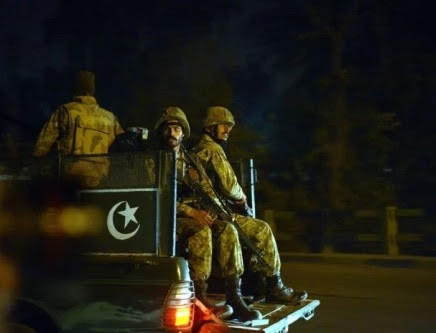
- Pakistan has largest and experienced military in the Muslim World, rapidly expanding defence industry, advanced missiles and nuclear capabilities; these, when seen collectively are packaged in a superior force in the region, next to none. Pakistan has successfully managed to impose ambiguity about its scope and extent of using its nuclear potential or capabilities. This unknown-unknown is a strong deterrent for those who choose to engage in armed conflict with Pakistan or either of the two of MJDP or the upcoming R4 members.
- Several individuals are trying to hold their candles to the sun, trying to add their own angles, in an attempt to diminish or over-shadow the achievements made by the Pakistani leadership. Various claims made by several individuals of playing the major role or being an arbitrator in the development of the Mekkah Joint Defense Pact, (MJDP), cannot diminish the fact that it had been tremendous effort of Pakistan’s current leadership, who, hand-in-hand with the leadership of Turkey and Saudi Arabia, has snapped together this agreement against all odds and adverse undercurrents.
- As such, the role clinched by Pakistan soon after the Indo-Israeli flopped-attempt to embroil Pakistan in deeper conflict in May-2025, has leveraged the country to attain the new strategic centrepiece importance, a feat that is definitely applaudable. Pakistan’s defence forces, government leadership, and the people at large, despite being on a slippery slope, had, skilfully and successfully anchored themselves firmly as a strong bastion of security in the region. With this new role, prospects of strategic economic breakthroughs, that spell general improvement of Pakistanis across board, have become a writing on the wall.
- At the same time, we must remain cognizant that this new reconstruction of the strategic landscape would be like waving a red rag to the staggering Indo-Israeli bull, who would try all the tricks of the trade, to undermine and weaken the strategic-lynchpin of Pakistan, as the tide turns away from their favour.
- “No permanent friends or permanent enemies, only permanent interests”; considering this 19-century phrase as a universal principle, perhaps, time has come where Pakistan could take a fresh look on the list of its friends and foes in perspective of the evolving strategic atlas, and make needed adjustments.
Challenges
- The MJMD would be stirring up quite a few hostile actors who would, while trying to undermine its further development or expansion, would also try to actively build up a counter-force and narratives, in order to restrict and confine the forum’s strategic freedom in the region. Indo-Israeli lobbies are already working 24/7 to spew out anti-MJDP propaganda, utilizing the most advanced, enlarged, and overheated 5GW Indian capabilities. Thaw or not, we must remain prepared for more sophisticated propaganda assaults, credible looking fake news, doctored satellite images, AI generated contents and such massive tools of propaganda and 5GW as Indo-Israeli treasuries loosen their purse-strings for their minions and proxies. But above all, we must remain vigilant of the most favoured Indo-Israeli tactics of building their narratives on False Flag Operations, which are being improvised as sequel episodes in the Hybrid Warfare theatre.
- Saudi Arabia, and Somalia, due to the geography, have influence over Red Sea corridor, though, the Houthis also have a foot in the gate of tears. If and when, Egypt joins, it could bring-in the clout of management of Suez Canal and domination over the distribution of the Internet services. It could also reduce the relevance of frequent Houthi threats of choking Bab-el Mandeb. However, the Indo-Israeli propaganda brigades have begun a blitz against this possible move, as these 5GW warriors continue to emphasise upon the differences between potential members, their respective affiliations, etc., and compatibility amongst member states.
- Several years ago, the Houthis, with foreign backing, ostensibly Iran, had succeeded in establishing control over the coastal areas of the Red Sea and also dominating the several small islands. In-between, they were indirectly helped by the forces deployed by UAE in support of groups operating against the common Yemenis enemy. This provided the Houthis an envious strategic position with immense nuisance value, as ironically, the battlefields in Yemen had three major actors who were operating through their proxies with Saudi Arabia backing up the presidential leadership council PLC while Iran was fully arming and supporting Ansarullah (Houthis) movement. Whereas in between, UAE had also discovered the gap and started supporting the Southern Transitional Council (STC), with conflicting interests with Saudi Arabia. Saudi Arabia had to first bomb Mukalla Port on 27-Dec-2026, where allegedly weapons and vehicles for the Houthis were being unloaded brought from UAE, and then adopt a stiff position to persuade UAE to pull its troops out of the territories on 30-Dec-2026, on one-day notice.
- The Houthis (Ansarullah) factor has been revved-up as if by invisible hands. On 11-Aug-2026, a cargo vessel named Tihamah, while navigating through Bab-el Mandeb Strait, was struck by at least three successive ballistic missiles, which the Yemeni government claimed was fired by the Houthis in a double-tap operation. As a result of the attack, fire broke out on the ship, killing four persons, three Pakistanis and one Indonesian, while injuring four others. When the rescue vessels approached, another salvo of missiles was fired, killing at least two rescue officials and injuring several others. Though Pakistan has given a stern warning, but it appears that the first gauntlet has been thrown to ensnare Pakistan and Saudi Arabia into the web of Hybrid Warfare. In an immediate response from the Houthi-run news agency Saba, it was claimed that the Houthis have attacked the Saudi ship, which was ostensibly carrying military equipment in Bab-el Mandeb. The Houthi sources, however, declined to name the vessel or its exact location.
- The joint Indo-Israeli partnership is, on one hand, emitting diplomatic signals, in which it is suggesting development of a counter-defense agreement, which, considering the previous trends and trajectories, could possibly include India, one of the Gulf states, who could be member of the Abraham Accord, and has sizeable investments with Israel and in India, and is generally at a tangent with the Saudi strategic ambitions, and Somali-Land, from whose shoulder both could fire to muddy the waters of Red Sea. With deep-planted assets by the Abraham Accord comrade, atleast the Yemeni side could be disturbed.
- Already, Gwadar, with its hammer head disposition in Arabian Sea’s deep waters, has morphed into the fabled Mjölnir, thehammer of Thor, as possibilities of its strategic application are becoming conspicuous in context of the shift of the strategic tectonic plates at Hormuz. For India and Israel, it constitutes an overbearing Pakistani outpost, that could impose security and safety in the Hormuz and Arabian Sea, and if need be, repel Indo-Israeli interference. The rising strategical importance of Gwadar, Mekran Coast as the potential access-point to warm waters by Russia, conversion of Balochistan in commerce and energy corridor crossroads, and the mineral wealth, in light of the added fortification provided through consolidating MJDP, makes it a magnet for clandestine conspiracies and plots, using all the tricks from the Indo-Israeli tool-kit of Hybrid-Warfare.
- While some people insist on looking at this development through the lenses of sectarian calculus, but considering the strategic costs paid, and the mistakes of the past, it is more likely that MJDP will become the core around which a number of other states, irrespective of sectarian complexities, wrap themselves to enhance the stability of the region. Iran had already shown need of a Muslim platform which is possible if constructed over and above the sectarian lines. Ignoring the toxic sectarian theories, in a media report of 12-Aug-2026, Iran had appreciated the formation of MJDP, and had expressed hope that all the six major Muslim countries would join this pact and strengthen unity amongst Muslims[5].
- To start with, India has already initiated coercive diplomacy to drag-in the smaller neighbouring states. However, the pre-emption by counter-forces in the region have already made this task difficult, as Nepal, Myanmar, Bangladesh, Sri Lanka and Maldives have repeatedly exhibited extensive political and diplomatic defiance to the Indian strategies and have tacitly supported and endorsed the One-China Policy, further strengthening the red lines they have set in their own strategic policies.
- The problem with the modern warfare is, that it swiftly escalates into existential threats for either warring party, and risks use of Weapons of Mass Destruction (WMDs) qualifying the issue to a major crisis situation. In this backdrop, the Indo-Israeli conspiracies also appear to be moulded in a way that they generate threats of existential threats against their adversaries, in order to provoke them towards deploying weapons with maximum destructive capabilities, and in return garnering international support for “pre-emptive” strikes. Iran was hit to pre-empt it developing weapon grade nuclear material, which never existed; just like Saddam Hussein’s nuclear device concealed in his bed-room cupboard, which was never found.
- Trying to decipher the simmering differences and the various jibes by President Donald Trump towards India, it is not difficult to put the strategic two and two together and make out the four! India appears to have seriously betrayed the trust of President Donald Trump, particularly towards his endeavour to broker peace in the region and resolve outstanding issues peacefully.
- It is my sense, the ongoing developments are preparing conducive circumstances for India to get off its high-horse, and come to the table for finding solace for its people, and enjoy the fruits of peaceful-coexistence. With the possibilities of several transit land-routes giving it an access to CAR markets, and options to significantly reduce its defence spendings, and genuinely contributing towards the peace, development and stability in the region.
- Should sanity prevail or should the rising awareness creep into India, it has an opportunity to reduce the schism that has been created. Mixed signals are already bouncing around emitted by the RSS leadership, and paying heed to these grey-haired seasoned leaders, India could reset on the path of peaceful coexistence and expand further the initiatives in the four directions around India, similar to the baby-steps they are hesitatingly taking towards Manipur’s Chandel district, adjoining Myanmar’s Kabaw Valley in the Sagaing Region.
- This, in our view, will collectively ripen the prospects of taking initiatives for the peaceful resolution of the outstanding disputes between India and Pakistan. With the nation’s trust bestowed upon them, this is entirely the leaderships prerogative to explore and adopt the course of action they consider best. China has already outlined the five golden principles in this context.
- But the story doesn’t end here. Tsunami of MJDP has sent shockwaves far-and-wide which is upsetting numerous game plans of the Great Game. We would be writing more about it in the next part.
[1] “Security experts offer a road map for NATO’s future in MENA region“, The Arab News, 10-May-2021, https://www.arabnews.com/node/1856841/middle-east;
[2] “Ukraine Seals Billion-Dollar Defense Partnerships with Saudi Arabia, Qatar, and the UAE“, by Dmytro Shumlianskyi, The Militarnyi, 29-Mar-2026, https://militarnyi.com/en/news/ukraine-seals-billion-dollar-defense-partnerships-with-saudi-arabia-qatar-and-the-uae/;
[3] “Turkish President Erdogan warns against ‘new Sykes-Picot order’ in Middle East“, by Merve Berker, Anadolu Agency (AA), 21-Jun-2025, https://www.aa.com.tr/en/middle-east/turkish-president-erdogan-warns-against-new-sykes-picot-order-in-middle-east/3606983;
[4] “Somalia and Pakistan Sign Defence Cooperation Memorandum of Understanding“, Ministry of defence, Somalia Hand Out, 04-Aug-2026, https://web.mod.gov.so/resources/NewsDetail/somalia-and-pakistan-sign-bilateral-defence-and-security-agreement-xq;
[5] “Iran urges Muslim powers to spearhead Islamic unity after Mecca Pact“, Edited By Nurbanu Tanrıkulu Kızıl, Anadolu Agency (AA), 12-Aug-2026, https://www.dailysabah.com/politics/diplomacy/iran-urges-muslim-powers-to-spearhead-islamic-unity-after-mecca-pact;
The author is former Director General Intelligence Bureau