
Sarah Adams
@sarahadams
The announcement went largely unnoticed, but it should not have. In late December 2025, Tehrik-e-Taliban Pakistan (TTP) formalized its 2026 military cabinet and, for the first time, declared the creation of an Air Force department. This is not symbolic. It signals an escalation in how TTP views future warfare and how it intends to project power, reflecting a deliberate shift toward greater operational complexity and a widening threat profile for the region.
Operational Purpose of TTP’s Air Force
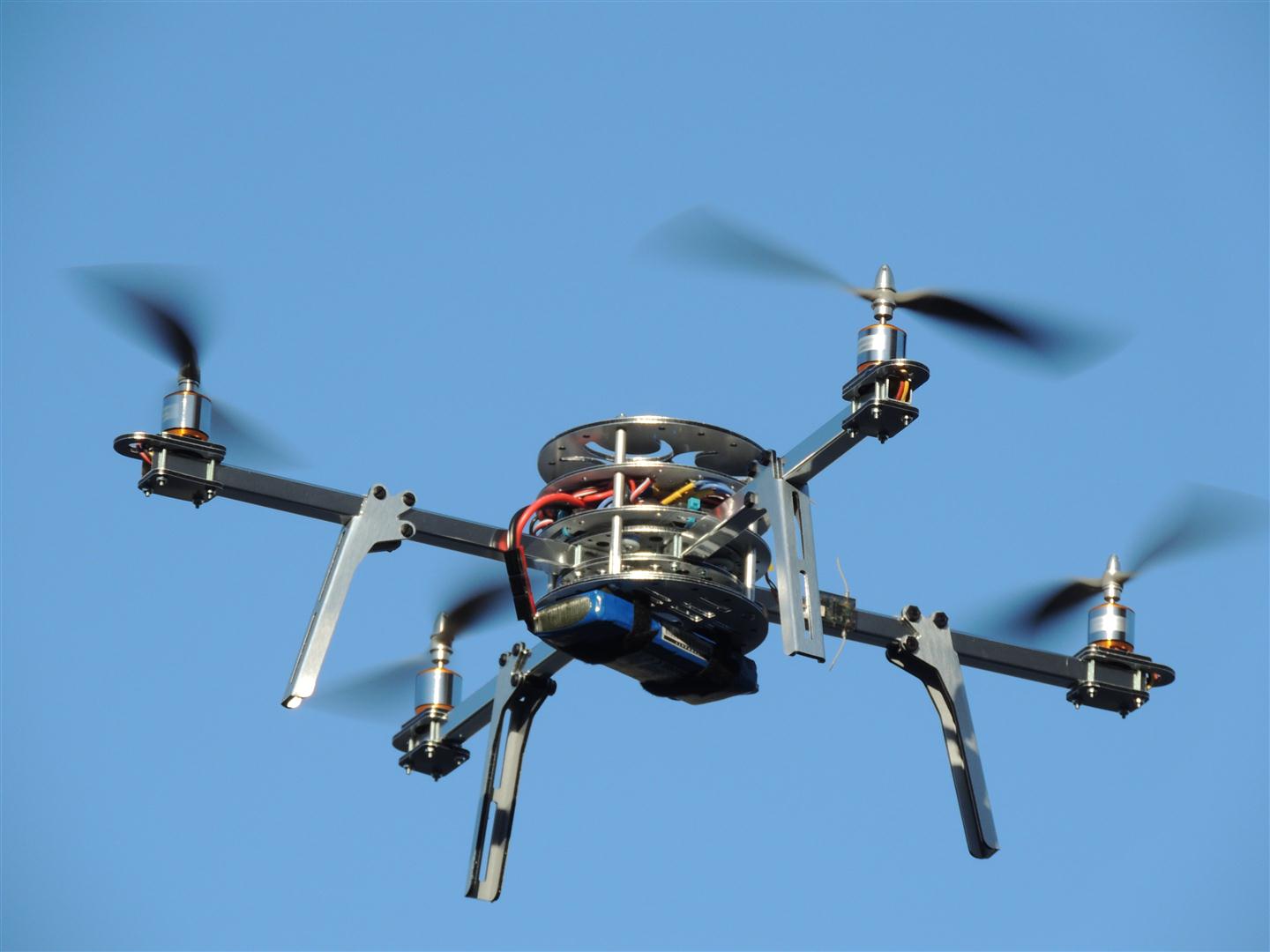
TTP’s Air Force is operational, not aspirational. Its primary mission is to carry out suicide drone attacks against Pakistani security forces in Khyber Pakhtunkhwa, Balochistan, and Punjab provinces. That geographic spread matters: it signals intent to project aerial capability into Pakistan’s settled areas, not just the border regions or the tribal areas.
The unit also serves a critical intelligence and reconnaissance function. Drones track army patrols, monitor deployments, and feed targeting decisions, providing persistent situational awareness while reducing reliance on vulnerable human networks. Defensively, the capability is deployed to protect the organization itself. In areas where TTP convenes senior meetings, drones monitor access routes and surrounding terrain, providing early warning against Pakistani Army or Counter Terrorism Department operations. Leadership survivability is now systematized.
State and Network Enablement
This capability did not emerge in isolation. Its creation was enabled directly by the Taliban’s Haqqani Network, which provided the technical and logistical foundation, in coordination with the core senior leadership of al-Qaeda, specifically the Saif al-Adel faction, which maintains long-standing ties to Iran’s Islamic Revolutionary Guard Corps (IRGC).
Iranian involvement is extensive. Two Iranian drone companies—Rayan Roshd Afzar Company and the Oje Parvaz Mado Nafar Company, also known as the Mado Company—supply direct technical support to the TTP under the supervision of Brigadier General Abdullah Mohrabi, head of the IRGC Aerospace Force Research and Self-Sufficiency Jihad Organization (SSJO).
This is tied to a broader intelligence and operational arrangement. In exchange for unrestricted access to Afghanistan’s fresh water reserves, guarantees against attacks on Shiite populations, and cooperation in narcotics trafficking—including heroin, opium, and crystal meth—Iran secures revenue that finances Hezbollah, the Houthis, and other Iran-aligned militias. In return, Iranian security services have agreed to target prominent anti-Taliban, resistance, and U.S.-aligned Afghan figures, primarily non-Pashtun commanders of the former Afghan Republic on Iranian soil, while also providing training and technical support to TTP’s Air Force.
TTP Air Force: Target Overview
Leadership of the Air Force
The leadership of TTP’s Air Force demonstrates how deeply this unit is embedded within the broader Taliban–Haqqani ecosystem. At its head is Mawlawi Salim Haqqani, also known as Barat Zadran, a resident of Zadran district in Paktia province. He previously served as the head of security forces for the slain Haqqani Network commander Mullah Sangin Fateh and is a long-time Haqqani military commander with close ties to now-deceased Hakimullah Mehsud. He joined TTP in 2017, but maintained his operational and organizational ties to the Haqqani Network. Both before and after joining TTP, Salim has remained an active Haqqani commander, training suicide bombers at Al Fatah Camp and serving as an assistant trainer for the Badri 313 unit.
Since February 2025, he has undergone specialized training for the creation of the Air Force at the Shikar Kala military base in Logar province, under Taliban control, and at the Haqqani Network’s 333 Special Forces center. This training was conducted by key commanders of Iran’s IRGC and included instruction from the two aforementioned Iranian drone companies, with an emphasis on converting conventional drones into suicide unmanned aerial vehicles (UAVs). With the start of 2026, he was formally appointed head of TTP’s Air Force. The unit currently has approximately 80 highly trained personnel and 30 suicide drones, with preparations ongoing for an additional 150. Importantly, none of these drones carry logos or identifying marks, preventing attribution during post-attack forensic investigations.
Shikar Kala Military Base located at 34°10’23.0″N 69°02’53.0″E.
Supporting him is Mawlawi Noor Wali Hamza, also known as Ahmad Musa Wazir, who leads the Power and Workshop Department. A former trainer of the Haqqani Network’s Al Fatah Force, he maintains dual membership in both TTP and the Haqqani Network, bridging the two organizations operationally.
In North Waziristan, the Air Force is commanded by Mufti Jannati, whose real name is Mufti Gul Hassan Madakhel, a key former member of the group led by the now-deceased Taliban commander Mullah Dadullah Lang, for whom he facilitated relocation and residence in Waziristan. Since 2022, Mufti Gul Hassan has received extensive technology-related training at a range of covert and overt Haqqani Network military bases and is credited with shooting down and destroying multiple Pakistani Army drones under the banner of TTP. South Waziristan falls under the authority of Mawlawi Saifullah, also known as Mufti Ghazi Muhajir, a resident of Sabari District in Khost Province, an area long recognized as a hub for transnational fighters.
The technical backbone of the Air Force is overseen by Mawlawi Ajmal Sahib, also known as Hafiz Asadullah Ashizi, who previously served the Haqqani Network as its representative to the Quetta Shura in the Southern Zone and now leads the Mechanical Department. Mawlawi Arif Sahib, also known as Lawang Waziristani, brother-in-law of the late Hafiz Badruddin Haqqani, then serves as head of the Maintenance Department.
Together, these leaders connect TTP’s Air Force operationally and organizationally to the Haqqani Network. Their combined expertise, historical ties, and technical training ensure that the Air Force is not only technically capable but also fully integrated into the broader allied terrorist infrastructure, making it a lethal, resilient, and professionalized unit.
Financing and Narcotics Networks
Funding for TTP’s Air Force flows through Afghan international narcotics traffickers with deep, long-standing ties to the Taliban. Many are affiliated with the Ministry of Mines and Petroleum and hold extraction and logistics contracts, yet they remain heavily involved in drug production and trafficking. Key figures include Haji Bashir Ahmad, son of Haji Mohammad Isa Noorzai; Haji Amanullah Alizai, son of Haji Bahram; Haji Abdullah Alizai, son of Haji Bakhtwar; and Qari Mohammad Shafiq, son of Haji Amandad Aka, among others.
Opium, heroin, and methamphetamine processing facilities continue to operate at scale across Farah, Nimroz, and Helmand provinces, providing the largest single financial support base for TTP’s Air Force. This financing is neither incidental nor peripheral. It functions as a protected, institutionalized pipeline that directly underwrites TTP’s aerial capabilities while also channeling revenue to Iran-aligned regional militant groups through a broader coordination framework involving TTP, al-Qaeda, the Taliban, and the IRGC.
Implications
TTP is not a fractured, local insurgency. It is a hybrid, networked force with state-level enablers, cross-border logistics, lethal technical expertise, and operational security that rivals some regional militaries. Treating it as a low-tech insurgent threat is a dangerous blind spot. Ignoring this evolution is no longer an option. The Air Force demonstrates that TTP is adopting state-style organizational structures, integrating drone warfare, intelligence, and force protection into a professionalized capability, all while remaining fully deniable and networked across Afghanistan, Pakistan, and Iran. Both TTP and IRGC-linked actors have previously targeted U.S. interests in the region, underscoring that this networked threat extends beyond local adversaries and is supported by actors with significant technical and operational capacity.
The author is former CIA operative.