
Kashif Bangash
Quetta, the capital of Balochistan, is in the eye of the storm. Militants and insurgents have been persistently targeting the city for many months. Earlier, terrorist attacks on Quetta were sporadic. However, in recent months, the frequency of terrorist attacks in different parts of the city has increased alarmingly.
The city of Quetta derives its name from the Pashto word Kwatkot or Kōta, meaning “fort” or “fortress.” Historically, the city was locally known as Shāl or Shālkot, reflecting its ancient identity before the modern adaptation of the name Quetta. Often referred to as the “Fruit Garden of Pakistan,” the city has historically held strategic, commercial, and military significance due to its geographical location linking South Asia, Central Asia, and Afghanistan.
According to the Gazetteer of the Quetta–Pishin District, the Kasi tribe was recognized as the original owner of the Shal Valley, controlling agricultural lands, grazing areas, and irrigation systems (karez) under customary tribal arrangements governed by local traditions and Islamic law. In 1709, the Quetta region came under the authority of the Afghan Hotak dynasty, and following the establishment of the Durrani Empire, Ahmad Shah Durrani formally incorporated Quetta into the Afghan state in 1747.
During the British colonial period, Quetta gradually emerged as a strategically important frontier settlement. The first recorded European visitor to the area was British traveller Charles Masson, who described Quetta in 1828 as a “mud-walled fort surrounded by three hundred mud houses.” Following the Second Anglo-Afghan War, British forces occupied Quetta, and in 1883 formal administrative control was established through a lease agreement with the Khan of Kalat. The British subsequently developed Quetta into a major cantonment and civil station, acquiring land primarily for military and administrative purposes.
Rapid urbanization during the late nineteenth and early twentieth centuries significantly increased land values in Quetta and led to rising disputes over immovable property, particularly within municipal and cantonment areas. Historical records suggest that many of these disputes involved traders, settlers, and government officials rather than the indigenous tribal landowners.
The city was almost entirely devastated during the catastrophic 1935 Quetta earthquake, which caused widespread destruction and heavy loss of life. Quetta was later rebuilt under British administration with improved urban planning and infrastructure. Following the creation of Pakistan in 1947, Quetta became the provincial capital of Balochistan and gradually evolved into the administrative, military, and economic center of the Province.
Today, the literal meaning of Quetta as a “fortress” increasingly reflects its prevailing security environment. In recent years, the city has become one of the principal targets of militant and insurgent violence in Pakistan. Its strategic importance, heavy deployment of security forces, complex political dynamics, deteriorating law and order situation, economic challenges, demographic pressures caused by migration and displacement, and competition over natural resources have collectively contributed to making Quetta one of the most sensitive urban centers in the country.
The city has witnessed a significant surge in militant activities led by insurgent groups, particularly the Balochistan Liberation Army and allied networks. These groups continue to target security installations, transportation infrastructure, government institutions, and civilian areas in an apparent attempt to destabilize the provincial capital and undermine state authority.
24 May, in one of the recent major incidents, at least 20 people were reportedly killed in a terrorist attack near the Chaman Phatak (Gate) area in central Quetta, including three personnel of the Frontier Corps (FC), while several others sustained critical injuries. The intensity of the explosion shattered windows of nearby buildings and residential apartments, and multiple vehicles caught fire following the blast.
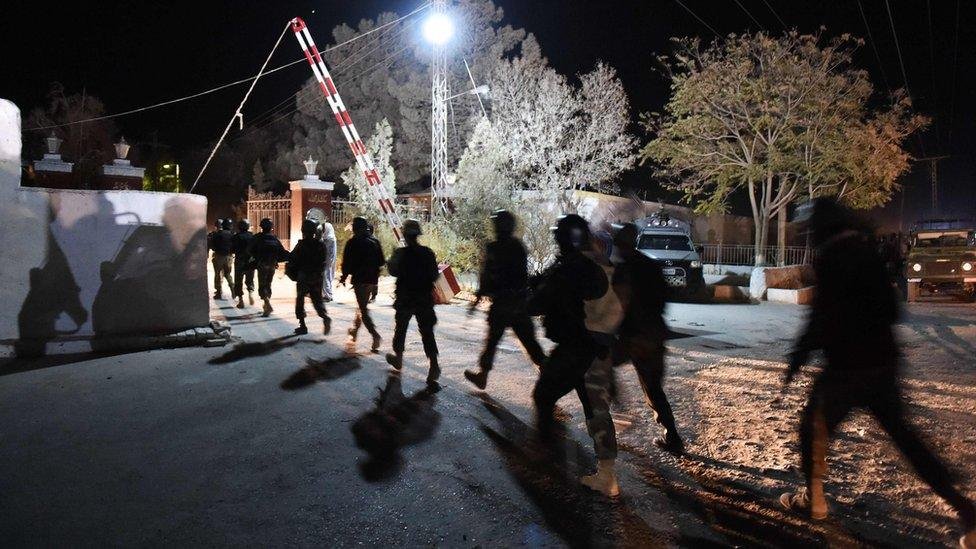
Only a day before the train-related terrorist incident, nine suspected militants were killed and four personnel of the Counter-Terrorism Department (CTD) lost their lives during a fierce gun battle on the outskirts of Quetta.
The incident once again highlighted the growing threat to the Provincial capital, which increasingly appears to be on the priority target list of militant organizations. Several major attacks in recent months have occurred in close proximity to Quetta, reflecting militants’ sustained intent to challenge state control, target critical security infrastructure, and create an atmosphere of insecurity across the province.
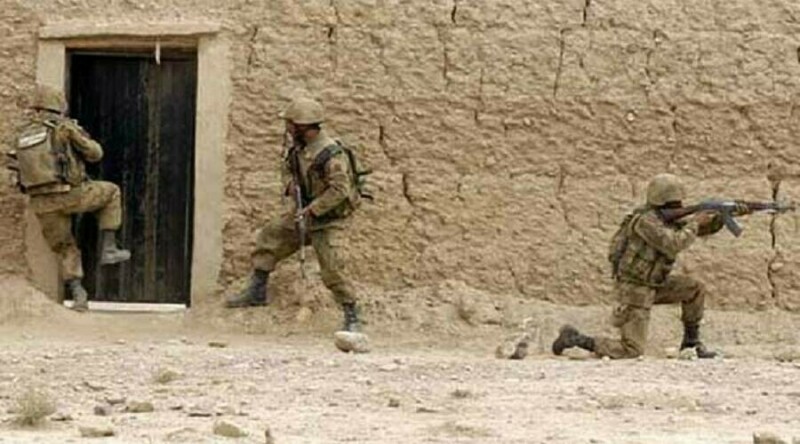
More than 35 militants have reportedly been killed in an ongoing IBOs in the Zarghoon Ghar area since 13 May 2026, while several militant hideouts and training camps have also been dismantled and key commanders apprehended. The operation is being conducted in the mountainous Zarghoon Ghar region, located east of Quetta district in Balochistan.
The latest High-Profile Operation, conducted on 23 May in the suburban areas of Kuchlak and Nohsar, involved CTD units supported by allied security forces. According to Provincial authorities, the raid reflected the operational preparedness and professional capabilities of law enforcement agencies operating in the province. Officials reiterated that security forces continue to make significant sacrifices in efforts to eliminate militancy and restore stability in Balochistan.
Despite the operational success, the militants reportedly offered intense resistance, resulting in the martyrdom of four security personnel and injuries to several others, who are currently receiving specialized medical treatment. Provincial authorities directed health institutions to ensure the best possible care for the wounded officials.
Earlier, on 21 May, Security Forces killed a key Afghan commander linked to the banned Fitna al-Khwarij network and arrested his Afghan accomplice during an operation in the Pishin district. According to security sources, the militant commander, identified as Basir, son of Noorullah, had allegedly planned and facilitated multiple attacks against security forces and also supervised infiltration attempts through the Shaban area.
The deteriorating security situation around Quetta remains a serious concern for authorities. Militants have previously targeted major security installations in the city, including the September 2025 attack near the Frontier Corps headquarters, in which heavily armed assailants launched a coordinated assault involving gunfire and a vehicle-borne improvised explosive device (VBIED). The attack resulted in the deaths of at least 10 individuals and injuries to more than 30 others.
Quetta Provincial authorities have reaffirmed that violent extremist elements will not be allowed to undermine peace and stability in Balochistan. Officials stated that intelligence-led operations and counterterrorism actions will continue across the province until militant networks are dismantled and the threat environment is brought under control.
Pakistan continues to face a sharp rise in terrorism related violence since 2022. Militant attacks reportedly increased from 658 incidents in 2022 to approximately 2,425 attacks in 2025, while attacks attributed to the banned Tehreek-e-Taliban Pakistan also increased significantly during the same period. Although KP remains the most affected province, Balochistan has emerged as another major theatre of militant violence, with attacks frequently targeting civilians, security forces, and strategic infrastructure.
In late April 2026 alone, insurgents reportedly carried out 27 attacks across Balochistan within a span of 10 days, resulting in the deaths of at least 42 security personnel. Authorities also claimed to have foiled a suicide bombing plot targeting Islamabad on 11 May, with investigators highlighting the growing involvement of women in militant activities and suicide operations.
The Insurgency in Balochistan has evolved from a mostly tribal resistance movement into a broader and more sophisticated militant campaign. Militant organizations continue to exploit long-standing grievances related to enforced disappearances, economic deprivation, state repression, and perceived inequitable distribution of natural resources. Despite possessing vast reserves of copper, gold, natural gas, and coal — including the globally significant Reko Diq Mine {Balochistan} remains among Pakistan’s least developed provinces.
Militant groups have increasingly focused on strategic messaging aimed at educated urban youth and women, portraying the insurgency as a nationalist struggle for political rights and control over local resources. The formation of alliances among separatist organizations, including cooperation with Sindhi militant factions, reflects an expanding ethno-regional militant network seeking to broaden both the geographic scope and operational reach of the insurgency.
To conclude, the recent counterterrorism operations around Quetta demonstrate that security forces continue to maintain operational pressure on militant networks in Balochistan. However, the frequency of attacks, the sophistication of militant tactics, and the continued targeting of security installations indicate that the threat environment remains highly volatile.
Quetta, due to its strategic and administrative significance, is likely to remain a primary target for both separatist and religiously motivated militant groups in the coming months.
The evolving insurgency in Balochistan reflects a combination of separatist militancy, cross-border facilitation, extremist infiltration, and exploitation of local socio-economic grievances. The increasing coordination among militant factions, including alliances between Baloch separatists and transnational extremist elements, may further intensify the security situation across the province and adjoining regions.
Although IBOs have disrupted Several Militant networks and eliminated key commanders, the persistence of attacks highlights militants’ retained operational capability and recruitment potential.
The security situation in Balochistan is therefore likely to remain fragile, with continued risks of HIGH PROFILE ATTACKS targeting security forces, critical infrastructure, Chinese interests, transportation networks, and urban centers, particularly Quetta and coastal districts.
The recent surge in militant attacks is likely to become a critical test for provincial security stakeholders in the days ahead, as they confront an increasingly complex threat environment requiring sustained operational readiness, intelligence coordination, and strategic resilience.
As the military principle states, “Preparedness is the key to security.” — a widely used military principle highlighting operational readiness” highlighting the importance of preparedness, vigilance, and proactive counterterrorism measures in maintaining stability and preventing further escalation.
The author is a former officer of Pakistan Armed Forces.