
(1–15 September 2026)
DOMESTIC
BALOCHISTAN
1. Security forces killed 21 alleged terrorists in Nokcha, Chagai, and Ziarat Cross, Pishin, during operations conducted from 31 August to 1 September, including 11 BLA/BLF-linked and 10 TTP-affiliated terrorists (1.9.26).
2. Security forces killed 12 armed attackers following a terrorist attack on a Reko Diq project convoy travelling from Chagai to Quetta (1.9.26).
3. Security forces reportedly killed 12 alleged BLA/BLF-linked terrorists during an intelligence-based operation in Kalat district (2.9.26).
4. Security forces killed 48 alleged BLA-, BLF- and TTP-linked terrorists in anti-terrorism operations across Mastung, Quetta, Kalat and Sibi (4.9.26).
5. Security forces killed 11 alleged BLA/BLF-linked terrorists and recovered 2.9 tonnes of explosives during operations in Kharan and Washuk (9.9.26).
6. Police constable Izzatullah was martyred and another constable was seriously injured when unidentified armed men attacked a police check post in the Kank area of Mastung district (10.9.26).
7. Unidentified armed motorcyclists martyred four NLC employees — Ghulam Mustafa, Sanam Masih, Kanwal Shehzad and Danish Iqbal — near Border Post No. 250 in Gwadar district (12.9.26).
8. Security forces and CTD police killed nine alleged terrorists, including Naqeeb, a commander affiliated with the banned BLA, in two separate operations across Mastung, Pishin and Qila Abdullah districts (13, 14.9.26).
ISLAMABAD
Police rescued four Chinese nationals who had been kidnapped for ransom from F-10/4, Islamabad, and were being held at a dairy farm in Bangial. During the raid, the kidnappers opened fire and the police retaliated, rescuing the victims, arresting six suspects and recovering weapons, while the gang leader escaped (5.9.26).
KHYBER PAKHTUNKHWA (KP)
1. Two minor siblings, Adna Bibi and Ayan, were injured in a suspected quadcopter strike in Azam Warsak, South Waziristan; another strike in the same district had injured a man and three children a day earlier (1.9.26).
2. Police and CTD personnel killed two terrorists, including Mubashar, during an exchange of fire in the Gol Banda Dargah Sheedan area of Lakki Marwat district (2.9.26).
3. Two minor brothers, Mehran and Ayaz, were killed and their nine-year-old sister injured in a suspected quadcopter strike in the Azam Warsak area of South Waziristan district (2.9.26).
4. CTD police killed four alleged TTP-linked terrorists, including commander Tahir alias Muawiya and an Afghan national, in the Badaber area of Peshawar (2.9.26).
5. Police killed three highly wanted Norey gang members, allegedly involved in terrorism and crime, in an alleged encounter in the Akhun Baba Cemetery area of Peshawar district (4.9.26).
6. Unidentified armed men abducted SHO Muhammad Khan from a mosque in the Tadarli area of Kurram district, with the TTP suspected of involvement (4.9.26).
7. Police constable Farooq Shah was martyred in a targeted attack by unknown gunmen in the Mattani area of Peshawar district (4.9.26).
8. A barber shop was destroyed and two other outlets damaged in a blast caused by unknown miscreants in the Salarzai area of Bajaur district; no casualties were reported (5.9.26).
9. Police foiled a suspected TTP attack on a check post in the Daraban area of Dera Ismail Khan district (5.9.26).
10. Security forces reportedly killed 21 alleged TTP-linked terrorists in engagements from 3 to 5 September, while 25 had been killed during an earlier infiltration attempt (6.9.26).
11. Two brothers, Faizan and Adnan, were killed by unidentified armed men in the Janikhe area of Bannu district (6.9.26).
12. Police constable Zafran was martyred and another constable injured during an attack by unknown gunmen on a patrol near the Shatakai Dam area in Karak district (8.9.26).
13. Security forces killed four alleged TTP-linked terrorists, including Afghan national Obaidullah Saad, during an operation in Kurram district (8.9.26).
14. Four unidentified bodies were found at separate locations near the Karam Bridge and Manjiwala Road areas in Lakki Marwat district (10.9.26).
15. CTD police killed five alleged terrorists, including wanted commander Imran alias Abdullah/Bilal/Abu Bakar, in the Shamto Refugee Camp, Peshawar (11.9.26).
16. Rehmatullah and Nurd Ali Khan were injured in a quadcopter attack at Shakir Chowk in the Bakakhel area of Bannu district (12.9.26).
17. A prayer leader, Maulana Mamoonur Rashid, was killed and another man critically injured during an alleged exchange of fire following a verbal dispute in the Miliano Kallay area of Charsadda district (13.9.26).
18. A cleric, Maulvi Waliullah, was shot dead during a jirga in Darra Pezu, Lakki Marwat district, following a heated argument over his preparation of amulets for women (13.9.26).
19. Following an alleged armed clash between two terrorist groups affiliated with the banned TTP and TTG over financial disputes and extortion money, commander Suhail Mughalkhel was killed in the Karizi Pal area of Wana Tehsil, South Waziristan district (13.9.26).
20. Unknown terrorists shot dead a man identified as Umaid near Shaheed Morr in Wana Tehsil, South Waziristan district (13.9.26).
21. As a result of an armed clash between Hathikhel Peace Committee members and suspected terrorists, a man identified as Khayal Wazir was killed and a woman was injured in the Domel Paing area of Bannu district (14.9.26).
PUNJAB
1. Safdar Mahmood, a member of the Ahmadiyya (Qadiani) community, was reportedly shot dead by unidentified assailants in Sufipura, near Eidgah Road, in Mandi Bahauddin district (2.9.26).
2. The NCCIA reportedly arrested two suspects, Arsalan and Ali Raza, in Lahore and seized devices containing nearly 3TB of sensitive data belonging to over 10 million citizens, allegedly linked to the illegal “Mini NADRA” data trade (8.9.26).
SINDH
1. Zubair Baloch, brother of outlawed Peoples Amn Committee chief Uzair Baloch, died of wounds sustained in an attack on 30 July in the Lyari area of Karachi (1.9.26).
2. ASWJ worker Sulman Saeed was shot dead in a targeted attack by unknown shooters in the New Karachi Industrial Area (1.9.26).
3. CTD police, with the support of an intelligence agency, reportedly killed an unidentified suspected TTP terrorist during an alleged encounter in Khudadad Colony, Karachi (1.9.26).
4. Two suspected TTP terrorists, Umer Farooq and Abdullah, were arrested by CTD police with the support of an intelligence agency in Karachi; the suspects had allegedly come from Afghanistan to plan attacks (2.9.26).
5. Rangers and CTD police, in a joint operation, killed Zia Rehman alias Qari Saifullah, a wanted terrorist allegedly affiliated with the TTP, in the Gulbai area of Karachi (13.9.26).
SECURITY
1. Interior Minister Mohsin Naqvi inaugurated an AI-powered Command, Control, Communication and Coordination Centre in Islamabad to integrate Safe City, police operations, field-force monitoring and emergency response (8.9.26).
2. The Sindh Assembly unanimously approved a one-year extension of the Pakistan Rangers’ deployment in the province under Article 147, continuing a deployment that began in 1989 (12.9.26).
3. Terrorists’ use of drones for surveillance and explosive attacks has increased the threat to police installations. Protective nets have been installed at sensitive police stations and check posts in Peshawar and other areas of KPK. The police have also established a specialised UAV Division in Peshawar to counter drone threats through surveillance, intelligence, electronic warfare and counterterrorism operations, particularly in DI Khan, Lakki Marwat, Tank and Bannu (14.9.26).
DEFENCE
1. The Pakistan Navy commenced Exercise SEASPARK-2026 in Karachi, with Naval Chief Admiral Naveed Ashraf overseeing the opening brief. The exercise focuses on multi-domain operations, tri-service integration and readiness against conventional and emerging maritime threats (2.9.26).
2. Field Marshal Syed Asim Munir, COAS and CDF, visited Quetta Garrison, reviewed Balochistan’s security and operational preparedness, and stressed continued coordination among state institutions to promote peace, stability and development (5.9.26).
3. Pakistan’s Armed Forces, led by Field Marshal Syed Asim Munir, together with the other service chiefs and the Commander, National Strategic Command, on behalf of the armed forces, paid tribute to the Shuhada, Ghazis and martyrs’ families on the 61st Defence and Martyrs’ Day. They reaffirmed their commitment to Pakistan’s sovereignty and peace, and to a decisive response to any aggression (6.9.26).
4. The Pakistan Air Force observed Martyrs’ Day on 7 September across its bases, honouring fallen personnel from the 1965 and 1971 wars, Marka-e-Haq and other operations, with Air Chief Marshal Zaheer Ahmed Baber Sidhu paying tribute to their sacrifices at Air Headquarters, Islamabad (7.9.26).
5. The Pakistan Navy observed Navy Day, honouring the valour and sacrifices of its naval warriors from the 1965 War, with Chief of Naval Staff Admiral Naveed Ashraf paying tribute to the martyrs and their families at Naval Headquarters, Islamabad (8.9.26).
6. Field Marshal Syed Asim Munir, COAS and CDF, along with the Air and Naval Chiefs and the Commander, National Strategic Command, on behalf of the armed forces, solemnly commemorated the 61st martyrdom anniversary of Major Raja Aziz Bhatti Shaheed, Nishan-e-Haider, paying rich tribute to his exceptional courage, leadership and supreme sacrifice (12.9.26).
7. Indonesian Navy Chief Admiral Dr Muhammad Ali met COAS and CDF Field Marshal Syed Asim Munir at GHQ, Rawalpindi, where they discussed regional security and bilateral defence cooperation, reaffirming enhanced collaboration in training, defence ties and joint exercises (14.9.26).
8. Lebanese Interior Minister Ahmad Al Hajjar met COAS and CDF Field Marshal Syed Asim Munir at GHQ, Rawalpindi, where they discussed regional security and bilateral relations, emphasising stronger institutional linkages and cooperation between security institutions (14.9.26).
DIPLOMATIC DEVELOPMENT AND ECONOMY
1. SCO leaders in Bishkek called for an inclusive Afghan government, stressing broad-based participation, stability, counterterrorism and action against drug trafficking; Pakistan assumed the SCO chairmanship and will host the 2027 summit. On the sidelines of the meeting, PM Shehbaz Sharif urged Uzbek President Shavkat Mirziyoyev to accelerate the Trans-Afghan Railway feasibility study, and witnessed a Pakistan–Kyrgyzstan trade agreement targeting $200 million in bilateral trade within two years (1–2.9.26).
2. Afghanistan’s Ambassador Sardar Ahmad Shakeeb, reportedly speaking at the National University in Islamabad, reiterated that Afghan territory would not be used against Pakistan and called for direct dialogue, while rejecting military action on Afghan soil (1.9.26).
3. Pakistan’s Foreign Office rejected India’s claims over Jammu and Kashmir, reaffirming its disputed status and calling for a UN-backed plebiscite and an end to rights violations (7.9.26).
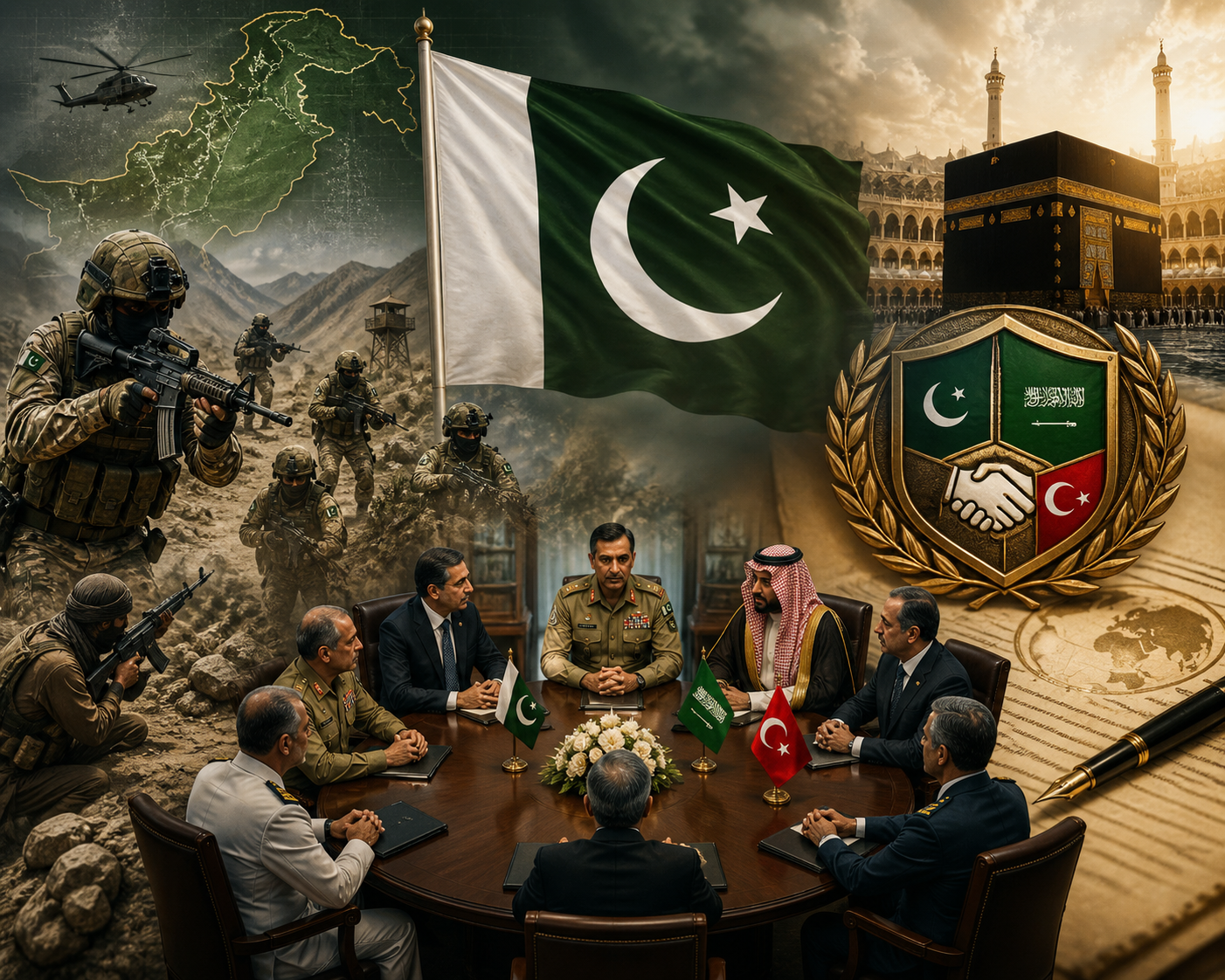
4. FO spokesperson Sajjad Haider Khan said the Makkah Defence Alliance is defensive in nature and that its expansion is not currently on the cards, as the three members focus on consolidation. However, the pact could later be opened to countries sharing similar views and perspectives (10.9.26).
REGIONAL
AFGHANISTAN
Law and Order / Security
1. Unconfirmed reports revealed that the Afghanistan United Front, led by Sami Sadat, claimed to have killed two Taliban vice-and-virtue officials in Nawa district, Helmand, following an earlier attack that reportedly killed at least nine Taliban members on 30 August. The Taliban has not commented. Separately, the National Resistance Front (NRF) appointed Commander Mukhtar Shoresh, a close associate of Hasib Panjshiri, as his successor following Panjshiri’s recent killing by the Taliban in Northern Salang (4.9.26).
Foreign Relations / Economy
2. Speaking at the 26th SCO Summit in Bishkek, Indian PM Narendra Modi stressed that peace in Afghanistan is vital to Eurasian stability and called for collective action against terrorism, drug trafficking and organised crime. He urged dialogue on the West Asia crisis and warned that terrorism cannot be used as an instrument of foreign policy or as a strategic asset (1.9.26).
3. Russian officials have intensified their warnings over Western military expansion in Eurasia. Alexey Shevtsov alleged that NATO’s activities and the proposed US-linked “Trump route” in Armenia could facilitate intelligence and military infrastructure near Iran, and urged stronger CSTO–SCO cooperation. Meanwhile, Ambassador Dmitry Zhirnov discussed stronger bilateral ties with Afghanistan’s Foreign Minister Amir Khan Muttaqi in Kabul. Defence Minister Andrey Belousov identified the strengthening of the Tajikistan border as a top security priority. Foreign Minister Sergei Lavrov also accused the US of using the post-9/11 counterterrorism framework to expand its geopolitical and military influence in Afghanistan and beyond (4, 9, 10.9.26).
4. IEA spokesman Zabihullah Mujahid said the Taliban government shares significant similarities with the Islamic Republic of Iran in expanding relations, as both political systems are based on their respective interpretations of Islamic law (6.9.26).
5. Afghanistan signed a $200 million, 25-year oil and gas exploration agreement with the Saudi Arabia-based Delta International Energy Company on 7 September 2026, covering the Kushk-Tirpul basin in Herat and Badghis. The project could boost investment and economic prospects, despite security and infrastructure challenges. Former US Special Envoy Zalmay Khalilzad, who attended the signing ceremony, later urged the US to re-engage with Afghanistan, warning that China and Russia could fill the vacuum. He stressed stability, economic development and counterterrorism, while criticising restrictions on women’s education and employment. He also met Foreign Minister Amir Khan Muttaqi to discuss stronger US–Afghan relations. Zabihullah Mujahid said the talks have made little progress because US policy remains unchanged (5, 10, 13.9.26).
Pakistan–Afghanistan Relations
Pakistan considers Taliban measures against the outlawed TTP insufficient and has urged Kabul to end terrorist safe havens and cross-border attacks. The Foreign Office in Islamabad welcomed China’s efforts to revive the Urumqi process and reaffirmed its readiness for dialogue, subject to firm Afghan action against the terrorists. Regarding Afghan medical students, Pakistan Foreign Ministry spokesperson Sajjad Haider Khan clarified in Islamabad that those holding valid visas may continue their studies, and that visa-extension requests remain under review (4, 10.9.26).
ILLEGALLY INDIAN OCCUPIED JAMMU AND KASHMIR (IIOJK) / LOC
1. The BJP protested against CM Omar Abdullah’s NC government over allegedly unfulfilled electoral promises, while the NC demanded the restoration of J&K statehood from the BJP. J&K was reorganised into two Union Territories in August 2019 after the Narendra Modi government abrogated Article 370; the Supreme Court upheld the move in December 2023 but directed that statehood be restored at the earliest (2.9.26).
2. JKLF chief Yasin Malik, imprisoned in Tihar Jail, reportedly told a Srinagar court that he would no longer contest the 1990 murder case of Kashmiri Pandit nurse Sarla Bhat and was willing to face the death penalty, while denying guilt and alleging that he had been politically implicated. He also reportedly announced his decision to divorce his Pakistani wife, Mushaal Hussain Malik. Analysts assess that prolonged imprisonment and allegedly harsh treatment may have contributed to Malik’s reported statement, reflecting frustration and despair after several years in Tihar Jail (3.9.26).
3. Former APHC Chairman and veteran Kashmiri religious scholar Mirwaiz Umar Farooq, along with Agha Syed Hussain and Molvi Imran Ansari, reportedly met Iranian President Dr Masoud Pezeshkian and Foreign Minister Abbas Araghchi on the sidelines of the BRICS Summit in New Delhi, expressing solidarity with the people of Iran and calling for an end to the war and aggression against Iran (13.9.26).
INDIA
(Defence)
1. According to a media survey report, India is upgrading its Agni and Akash missile systems, including the 2,000-km Agni Prime and the Akash-NG, while developing the 1,000-kg Gaurav Long-Range Glide Bomb, which has a demonstrated range of 100 km. The Indian Air Force (IAF) claimed a successful drop trial of the indigenous Khagantak-243 glide bomb on 2 September; its integration with the Su-30MKI, MiG-29K and Mirage-2000 could enhance long-range strike capability while reducing aircraft exposure to enemy air defences.
2. IAF Chief of Staff Air Chief Marshal Amar Preet Singh visited Headquarters Western Command, Chandimandir, and interacted with Lt Gen Pushpendra Singh and senior officers on operational preparedness, joint planning and Army–Air Force integration (4.9.26).
3. Japan’s Mitsubishi F-2 fighters, a variant of the F-16 operated by Pakistan, will make their Indian debut, with three aircraft participating in Exercise Veer Guardian 2026 (9–21 September); two JASDF C-2 transport aircraft landed at Jodhpur Airbase on 5 September. The IAF said the drill will enhance interoperability, operational synergy and mutual understanding, strengthening India–Japan strategic ties (5.9.26).
4. Air Marshal Jeetendra Mishra (retd), the newly appointed first CEO of the Shri Ram Janmabhoomi Teerth Kshetra Trust in Ayodhya, was commissioned into the IAF as a fighter pilot in December 1986 and logged over 3,000 flying hours during his distinguished career (3.9.26).
5. Defence Minister Rajnath Singh released ‘Raksha’, India’s 10-year roadmap for global defence partnerships, built around four pillars: strategic partnerships; capacity building and capability sharing with friendly countries; indigenous defence exports; and maritime security as a net security provider in the Indian Ocean (3.9.26).
6. Former Indian CDS General (retd) Anil Chauhan said that Asia’s stability depends on sustained India–China engagement, while Pakistan remains a key concern because of terrorism and proxy warfare. He noted that the Pakistan–Saudi Arabia–Türkiye Mecca Joint Defence Agreement, referred to as the “Macca Pact”, signed on 7 August 2026, could boost Pakistan’s confidence and therefore requires Indian vigilance. Analysts assess that the Macca Pact and the emerging India–UAE–Israel–Greece alignment, alongside the proposed IMEC, could create competing regional networks comprising largely pro-US and Western-friendly states. However, India retains strategic defence ties with Russia and Israel, while Pakistan maintains close defence ties with China and Türkiye, and Greece is a NATO member. These networks could modestly reshape regional security and connectivity amid a continued US–Western military presence and rising US–Israel–Iran–Yemen and Lebanon tensions (6.9.26).
7. Indian and Chinese military commanders reportedly held flag meetings along the LAC in Arunachal Pradesh on 6–7 September, focusing on maintaining border peace ahead of Chinese President Xi Jinping’s expected visit to India for the BRICS Summit. India was represented by Lt Gen Girish Kalia, GOC, 3 Corps, Eastern Army Command. The talks followed a recent misunderstanding near Taksing and built on the 2025 agreements and the discussions between NSA Ajit Doval and Chinese Foreign Minister Wang Yi (8.9.26).
8. According to the Federation of American Scientists (FAS), India’s nuclear arsenal is estimated at 190 warheads, including around 30 for new missiles under production, broadly matching SIPRI’s January 2026 estimate. More than 160 warheads are reportedly assigned to operational launchers as India continues modernising its land-, air- and sea-based nuclear capabilities (11.9.26).
Diplomatic Development, Economy and Politics
1. India rejected the Hague Court of Arbitration’s ruling on the Indus Waters Treaty (IWT), calling the tribunal illegally constituted and denying its jurisdiction over India’s sovereign decisions. The tribunal upheld the 1960 IWT as valid and binding, ruling that India’s April 2025 suspension was impermissible under the treaty and international law, while imposing interim restrictions on the Ratle hydropower project in Jammu and Kashmir. India maintains that the suspension remains in force following the April 2025 Pahalgam incident, in which 26 people were killed in IIOJK (1.9.26).
India–China Relations
Prime Minister Narendra Modi and Chinese President Xi Jinping, during talks on the sidelines of the BRICS Summit, stressed a strategic and long-term approach to bilateral ties, emphasising peace and tranquillity along the border, adherence to existing agreements, and dialogue to prevent differences from becoming disputes. Their 31 August meeting in Tianjin also covered trade, supply chains, market access and people-to-people exchanges. Xi’s visit, his first to India since 2019, signalled a cautious thaw following the 2020 Galwan Valley clashes in Ladakh. However, the unresolved 3,500-km border disputes, the trade imbalance and strategic rivalry remain key challenges to further improving relations, despite progress since their October 2024 meeting in Kazan. China’s reduction of forces along the LAC is a positive but limited move within the three-D framework of disengagement, de-escalation and de-induction (12.9.26).
Comments & Analysis: Analysts view Narendra Modi’s meeting with President Xi Jinping in the context of longstanding agreements aimed at maintaining peace along the LAC, which were severely strained by the 2020 clashes in eastern Ladakh and the subsequent military fortification, including in Arunachal Pradesh. Despite the two countries’ efforts, only limited progress has been made within the three-D framework of disengagement, de-escalation and de-induction. Indian defence and strategic circles remain concerned that substantial PLA forces and military assets are still deployed near the LAC, particularly given the strategic and terrain asymmetries. The pull-back signals improved stability, but should not yet be viewed as a genuine normalisation of China–India border relations, which may take more time. Nevertheless, diplomatic and trade relations have continued, albeit with some adjustments; despite its strategic partnership with the US and its rivalry with China, India continues to recognise the “One China” principle while maintaining commercial ties with Taiwan.
BRICS Summit in New Delhi
2. A two-day BRICS summit was held in New Delhi. The participating leaders, including Narendra Modi, Xi Jinping, Vladimir Putin and Masoud Pezeshkian, held talks in New Delhi on 13 September, focusing on global growth, trade and energy security. On 12 September, they issued a rare joint statement urging “maximum restraint” and de-escalation amid rising Middle East/Gulf tensions. Modi stressed cooperation, while India continued balancing its ties with Iran, Israel, the US and Russia amid the regional energy crisis. The BRICS joint declaration reportedly called for peace, dialogue and diplomacy, urging restraint amid Middle East tensions and reaffirming support for Palestine and a two-state solution. It condemned terrorism, opposed unilateral tariffs and sanctions, and called for stronger energy security, resilient supply chains and stable markets. The declaration supported greater Global South representation, cooperation in AI, technology, finance and sustainable development, and a stronger multipolar world order. China will chair BRICS in 2027 (12, 13.9.26).
IRAN
Iran–US–Israel Conflict
1. Iran claimed attacks on US bases in the UAE, Bahrain, Kuwait, Jordan and Erbil, while IRGC Gen. Yadollah Javani warned these states to expel US forces. Mohsen Rezaei threatened a new Iranian strategy, while Pakistan’s FO spokesperson Tahir Andrabi reaffirmed Islamabad’s diplomatic efforts to end the conflict (2.9.26). US Army Secretary Dan Driscoll reportedly resigned amid tensions with Defence Secretary Pete Hegseth. Washington appears to be extending its military power and diplomatic manoeuvres into 2027, indicating preparation for a prolonged conflict and raising readiness concerns, with unconfirmed reports of the deployment of about 50,000 US troops and 19 warships in the Middle East.
2. Israeli Defence Minister Israel Katz warned of strikes on Iranian energy, military and civilian infrastructure if Iran attacked again. US forces subsequently struck an Iranian tanker near Kharg Island. President Donald Trump defended the war, rejected an immediate deal with Iran and predicted that the conflict would end after the November US midterm elections. He also said oil prices would fall after the elections and justified continued strikes over Iran’s missile and radar activities.
3. Iranian Foreign Ministry spokesman Esmail Baqaei categorically denied US allegations of Iran’s involvement in the recent attack, launched from Iraqi soil, on Saudi Arabia’s East–West oil pipeline, accusing Washington of making false claims to deepen regional divisions and tensions.
4. Oman reportedly announced that a planned Iran–Gulf meeting in Oman on 14 September concerning Strait of Hormuz arrangements had been postponed to allow more time for regional consensus. Iran linked the delay to developments in Yemen, where escalating Houthi-related tensions have raised concerns among Gulf states. Iran’s Supreme National Security Council secretary Mohsen Rezaei, in Tehran, rejected talks with the United States, saying there would be no negotiations until Iran’s conditions were met (2, 3, 4, 9, 10, 14, 15.9.26).
MIDDLE EAST / TURKEY / PALESTINE–ISRAEL
1. China’s President Xi Jinping, during his 1 September visit to Egypt, called for a new Middle Eastern security architecture and greater regional strategic autonomy, consistent with China’s support for the Mecca Accord. China also pledged enhanced cooperation with Egypt in shipping security, counterterrorism, connectivity and space. Beijing has established a satellite facility near Cairo and provided Earth-observation and military-grade surveillance capabilities, with Chinese personnel reportedly retaining data access and a long-term presence (2.9.26).
2. Algeria severed diplomatic ties with the UAE, citing repeated “provocative or hostile” actions. The tensions stem from differences over Israel, Morocco, Western Sahara and competing interests in the Sahel. Algeria opposes normalisation with Israel, while the UAE and Morocco established ties with Israel under the 2020 Abraham Accords (10.9.26).
3. Israeli Defence Minister Israel Katz said on 3 September that Israel was ready, with US approval, to facilitate Palestinians’ departure from Gaza, reviving Trump’s 2025 proposal. Netanyahu said Israel controls about 60% of Gaza and would not withdraw, amid concerns over forced displacement. Following the statements, Pakistan, Egypt, Indonesia, Jordan, Qatar, Saudi Arabia, Türkiye and the UAE condemned proposals to forcibly displace Palestinians from Gaza. Later, in a separate statement, Katz threatened to “eliminate” anyone approaching the Ali al-Taher ridge in southern Lebanon, claiming that Israeli forces are preparing to maintain control of the strategic area and to prevent Hezbollah or other groups from re-establishing a presence there (3, 5, 14.9.26).
Civil War in Yemen Intensifies; Houthis Capture Strategic Mokha Port
The Houthis intensified their attacks on Saudi oil facilities after consolidating control over Hodeida and parts of the Bab al-Mandab coast, reportedly causing 73 casualties and prompting Saudi airstrikes. Saudi Arabia shut its 1,200-km East–West pipeline after a reported drone attack from Iraq, while the Houthis claimed over 300 Saudi airstrikes in Yemen and warned of intensified retaliation. As fighting escalated along the Red Sea, Crown Prince Mohammed bin Salman met US CENTCOM chief Admiral Brad Cooper to discuss regional developments. It is learned that Iranian Foreign Ministry spokesman Esmail Baqaei denied any Iranian involvement in the Houthis’ strikes on Saudi Arabia, stating that the group is independent and that Iran does not interfere in Yemeni affairs. Earlier, Pakistan had reportedly conveyed Saudi Arabia’s concern to Iran, recently urging it to use its influence over the Houthis to restrain them, reflecting Pakistan’s defence ties with Saudi Arabia and Türkiye (9, 10, 11, 12, 13, 14, 15.9.26).
Comments & Analysis:
(a) The capture of Mokha and the reported Houthi movement toward the Hanish Islands and Bab al-Mandab could significantly enhance Houthi maritime leverage. Fighting intensified on 14 September as Yemeni government forces attacked Houthi positions along the Red Sea, while the Houthis launched missile and drone attacks toward Saudi Arabia, reportedly causing two injuries and damage to buildings. The government vowed to reinforce the coast, while fighting in Mokha, Dhubab and Taiz has displaced over 82,000 people since early September and brought the Houthis closer to the US base in Djibouti.
(b) An unconfirmed report says the Houthis intend to keep Bab al-Mandab open to maritime traffic except for Saudi Arabia. Combined with reduced Strait of Hormuz traffic, disruption at both chokepoints could threaten Gulf energy exports, raise shipping costs and strengthen Iran-aligned influence. Although Houthi advances remain within Yemen, further gains could prompt stronger Saudi action and greater US CENTCOM involvement; direct US or Israeli intervention remains unconfirmed.