
Domestic
BALOCHISTAN
- FIA intensified its crackdown on illegal petroleum trade by inspecting stock and records at fuel depots in Quetta. Meanwhile, the Balochistan government fixed the price of Iranian petrol at Rs 280 per litre. Strict action will be taken against anyone charging above the set rate. Authorities also banned its transport outside the province (3,5.4.26).
- Home Minister Mir Ziaullah Langove, along with the Chief Secretary and DIG CTD Police, while addressing a press conference in Quetta, claimed the arrest of three terrorists affiliated with a banned TTP, including their commander Habibullah, who received training in Afghanistan (5.4.26).
- Three people—Ahsan (from Kasur, Punjab), Aziz Ahmed, and San—were killed in separate shootings in Jhal Magsi and Kachhi districts (6.4.26).
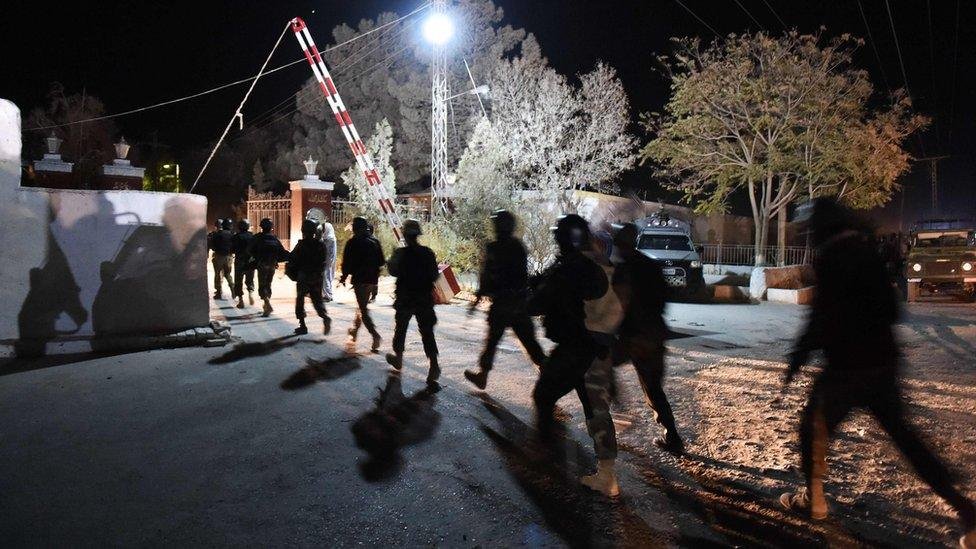
- Security forces killed six suspected terrorists in a targeted operation in the Kirdgab area of Mastung district (7.4.26).
- Unidentified armed men abducted primary school teacher Muhammad Bachal Bhatti from a classroom in the Chatter area of Nasirabad and fled after forcing him into a vehicle (8.4.26).
- Over 10,000 Pakistanis returned from Iran to Pakistan via the Taftan border between 28 February and 8 April 2026, following the US-Israel attack on Iran, as stated by FIA Director Muhammad Bahram Khan in Quetta (10.4.26).
- A gas pipeline was blown up by unknown miscreants in the Talli area of Sibi district, disrupting gas supply to the town and nearby areas (10.4.26).
- Unidentified armed men killed two people—Muhammad Ali and Naseer Ahmed—on the spot and injured a woman passerby on Sariab Road, Quetta (11.4.26).
- Two people from the Hazara community were killed and three others injured by unknown assailants near the Hazara Ganji Vegetable Market in Quetta (12.4.26).
- Unknown gunmen killed three people—Muhammad Haroon, Abdul Ghaffar, and Naseebullah—and injured two others travelling in a vehicle near Faizabad in Quetta. The victims were returning from a court hearing (14.4.26).
- Unknown assailants shot dead one Khuda Bakash on Qambrani Road in Quetta (14.4.26).
KHYBER PAKHTUNKHWA (KP)
- Ten terrorists were killed by security forces on 30 March during an exchange of fire in the Bara area of Khyber district (1.4.26).
- Three terrorists were killed on 30 March by security forces during an operation in Bannu district (1.4.26).
- Security forces killed eight terrorists during an operation in North Waziristan district (1.4.26).
- Nine people, including four police officials, were injured in an IED blast in the Serai Naurang area of Lakki Marwat district (1.4.26).
- Armed persons/miscreants razed an abandoned police check post in Shakardarra, Kohat, to stop illegal gold mining in Kohat district. They reportedly used excavators and seized 30 vehicles, fuel, and equipment during a recent crackdown (1.4.26).
- Two suspects, Haris and Musa Khan, were reportedly arrested by police over a plot to target former Deputy Speaker of the KPK Assembly, Mahmood Jan, and his cousin during a raid in Peshawar (1.4.26).
- Unknown armed men martyred Police Head Constable Dilnawaz Khan and Constable Amir Khan in an attack on a police van in Bannu (2.4.26).
- Police claimed to have foiled a terrorist plot targeting Wargarey police station in the Bittani subdivision of Lakki Marwat district (3.4.26).
- Two policemen—Sher Mohammad and Rafiullah—and a private security guard, Gul Shah Noor, were martyred by armed gunmen in separate terrorist attacks on Miryan Road and the Bakakhel area, respectively, in Bannu district (6.4.26).
- At least five policemen, including an officer, were reportedly injured in an IED blast carried out by the banned TTP on the Bannu–DI Khan section of the Indus Highway in Lakki Marwat district (7.4.26).
- Guards foiled an early-morning attack on ANP leader Ayub Khan Ashari’s residence in Swat, with all family members safe. Earlier, an 8-kg bomb exploded near ANP leader Mumtaz Ali Khan’s house in Matta on 31 March, causing no injuries (7.4.26).
- A roadside IED went off near Badaber Ghaz Stop on the outskirts of Peshawar, with no loss of human life (9.4.26).
- Prayer leader Maulana Khalid Yameen was gunned down by armed assailants in Serai Naurang town of Lakki Marwat district (9.4.26).
- The district administration demolished seven abandoned Afghan refugee camps in Kohat—Ghamkol 1, 2, 3, Ublan, Cheechana, Ghulam Banda, and Shindand—and one in Hangu (Kata Kanari). Earlier, on 25 October 2025, the federal government had ordered the de-notification of the last 28 Afghan refugee camps in KP, ending over 40 years of temporary settlements in the province (10.4.26).
- Unknown assailants martyred policeman Qadar Khan in the Hassankhel area on the outskirts of Peshawar. A day earlier, in a separate incident, Suhail Nawaz was shot dead by unknown persons in the Mattani area of Peshawar (10,11.4.26).
- An individual was injured when a mortar shell fired from an unknown location landed in a hilly area of Salarzai tehsil in Bajaur district. In a separate incident, gunmen killed a man identified as Ferozuddin in the Sadiqabad area of Bajaur district (11,12.4.26).
- Unknown terrorists opened fire on a police team heading for polio duty near Chapri Waziran in Hangu district, injuring three police personnel (13.4.26).
- Policeman Munsif Azam was kidnapped and later martyred; his body was recovered from Hassankhel in Peshawar. A day earlier, another policeman, Qaddar Khan, was also martyred by armed assailants in the same area (12,13.4.26).
- Police Bomb Disposal Squad (BDS) foiled a sabotage attempt by defusing around 15 kg of explosive material planted in a plastic drum on the roadside in Kakki tehsil of Bannu district (13.4.26).
- Members of a local committee in the Merka Bera mountainous area exchanged fire with suspected terrorists, forcing them to retreat in the Wazir subdivision of Bannu district (13.4.26).
- A government boys’ primary school in Kot Gulan, Tank district, was damaged in an explosion after unidentified miscreants planted and detonated explosives; no casualties were reported (14.4.26).
PUNJAB
- An LPG cylinder blast in a rickshaw on Muzaffargarh Road in Multan killed three people and severely injured 14 others (5.4.26).
- The Border Military Police (BMP) seized 112 kg of smuggled silver worth around Rs 80 million at the Khar check post in Dera Ghazi Khan district, arresting one suspect and impounding his vehicle (12.4.26).
- FIA recovered 505 passports and arrested four human traffickers running an illegal recruitment network during a raid on Aziz Middle East Trade Test Centre in Hafizabad (14.4.26).
SINDH
- Police registered a terrorism case after a civil judge in Karachi received an envelope containing a 9mm bullet and a threatening note in his chamber; investigations are underway (4.4.26).
- Four AC coaches of the Shalimar Express derailed near Shahdadpur railway station, disrupting operations on both tracks; however, no casualties were reported (8.4.26).
- Three armed motorcyclists martyred Police Constable Asim at a restaurant in Sector 15-B, Buffer Zone, New Karachi (11.4.26).
- Sindh Police decided to establish an Aerial Surveillance Division (ASD), with IG Javed Alam Odho forming a committee in Karachi to develop SOPs and its operational framework (11.4.26).
- A suspected TTP terrorist, Noor Alam alias Wafadar, was arrested in a joint Rangers and CTD raid in SITE, Karachi. He was linked to attacks in South Waziristan and had previously fled to Afghanistan (12.4.26).
DEFENCE AND SECURITY
Army
- Pakistan and Egypt launched the two-week Joint Exercise Thunder-II at the Special Operations School in Cherat to enhance counter-terrorism skills and strengthen military cooperation (6.4.26).
- COAS & CDF Field Marshal Syed Asim Munir presided over the 274th Corps Commanders’ Conference at GHQ, Rawalpindi, paying tribute to martyrs and commending the Armed Forces for professionalism and counter-terrorism efforts. The forum reviewed internal and external security, reaffirmed Operation Ghazab-lil-Haq, condemned attacks on KSA, rejected Indian disinformation, highlighted human rights concerns in IIOJK, and directed commanders to maintain readiness to safeguard Pakistan’s sovereignty and stability (7.4.26).
Air Force
- Chief of Naval Staff Admiral Naveed Ashraf, addressing the PAF cadets’ passing-out ceremony in Risalpur, said Pakistan’s armed forces are ready to deter any aggression and give a befitting response. He also highlighted the 2025 Marka-i-Haq conflict, praised the armed forces’ performance, and stressed modernization, vigilance, and readiness to face evolving security challenges (14.4.26).
Navy
- Pakistan Navy inducted its second Milgem-class corvette, PNS Khaibar, built under a 2018 contract with Turkey’s ASFAT (two ships in Türkiye and two in Pakistan). Naval Chief Admiral Naveed Ashraf stated that Pakistan’s strategic location requires a strong navy to protect maritime trade routes and national interests (4.4.26).
- Deputy Chief of General Staff of the Turkish Armed Forces, General Levent Ergün, visited Naval Headquarters Islamabad and met Chief of Naval Staff Admiral Naveed Ashraf to discuss regional maritime security, bilateral defence cooperation, and joint training, highlighting the strong strategic partnership between Pakistan and Türkiye (7.4.26).
- The Pakistan Navy rescued 18 crew members, including foreign nationals, from the merchant vessel MV Gold Autumn in the North Arabian Sea after a distress call. PNS Hunain carried out the operation, providing medical aid and safely evacuating the crew to Karachi for treatment and repatriation (10.4.26).
DIPLOMATIC DEVELOPMENT, ECONOMY AND SIGNIFICANT EVENTS
- Technicians and regulators from Asia and Africa began a month-long nuclear safety training course at the Pakistan Nuclear Regulatory Authority in Islamabad. The program, led by the International Atomic Energy Agency, highlights Pakistan’s role in promoting nuclear safety and international cooperation (3.4.26).
- Experts at a seminar organised by the Centre for International Strategic Studies, Islamabad, warned that India’s evolving strategic posture could impact regional and global stability. Former CJCSC General (r) Zubair Mahmood Hayat stated that rising Hindu nationalism is reshaping India’s policies, increasing risks of conflict and a shift toward hard power. Speakers noted the growing influence of the Rashtriya Swayamsevak Sangh and Bharatiya Janata Party under Narendra Modi, contributing to a more assertive and militarised policy direction (3.4.26).
- At least 20 Pakistani nationals from Gujranwala and Gujrat were among dozens feared dead after a migrant boat capsized off Italy. The International Organization for Migration reported over 80 missing, 32 rescued, and two bodies recovered. Authorities, including the FIA, are tracing human smuggling networks; particularly, six key human trafficker agents from Mandi Bahauddin, Sialkot, Gujranwala, and Gujrat are suspected, though affected families remain reluctant: Dawn News (7,8.4.26).
- Saudi Arabia pledged an additional $3 billion deposit for Pakistan and extended its $5 billion facility for three years, according to Finance Minister Muhammad Aurangzeb in Washington, D.C. Pakistan will also repay a $3.5 billion loan to the United Arab Emirates this month, putting pressure on reserves, while the revised Saudi arrangement may affect IMF programme targets set by the International Monetary Fund (14.4.26).
US–Iran Peace Talks in Islamabad
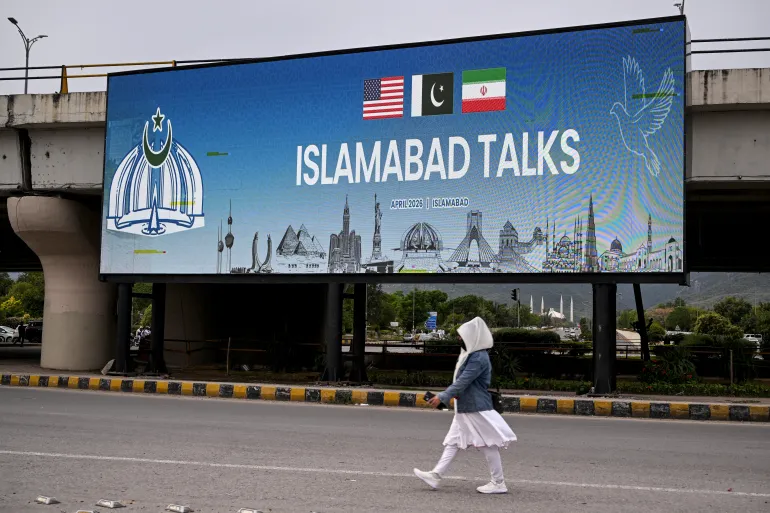
- The 21-hour U.S.–Iran peace talks mediated by Pakistan in Islamabad on 21 March ended without agreement, with U.S. Vice President JD Vance leading the American delegation and Iranian Parliament Speaker Mohammad Bagher Ghalibaf representing Iran. The talks were largely positive but two key issues remain unresolved i.e. Iran’s nuclear program and the Strait of Hormuz. JD Vance stated that the U.S. presented its “final and best offer,” while Iran urged Washington to avoid “excessive demands” and respect its rights, though Iran is still reviewing the proposal. Both sides left room for future talks and praised Pakistan’s leadership, including Prime Minister Shehbaz Sharif, Field Marshal Asim Munir, and Deputy Prime Minister Ishaq Dar, for facilitating the process. Meanwhile, President Donald Trump told the New York Post and Fox News that new Iran–U.S. talks could take place soon in Islamabad and stated that the war is “close to over,” while suggesting Pakistan may again host negotiations amid increased U.S. naval pressure on Iran (12,13,14,15.4.26).
Comments and Analysis: Even after the Iran–U.S. peace talks ended without tangible results; Prime Minister Shehbaz Sharif stated that efforts were ongoing to resolve the conflict. He added that the ceasefire still holds, while unresolved issues are being actively addressed. Analysts noted ongoing regional efforts to bring the United States and Iran back to negotiations after the Islamabad talks stalled, with diplomacy continuing and a fragile ceasefire holding. Masoud Pezeshkian stated that a deal remains possible, while Donald Trump also signalled willingness if Tehran changes its approach and meets Washington’s expectations. According to Reuters, the United States and Iran may resume talks soon in Pakistan despite tensions following a U.S. blockade of Iranian ports. CNN reported that JD Vance may lead upcoming U.S.–Iran talks, joined by Steve Witkoff and Jared Kushner, signaling strong U.S. commitment. Next round is expected soon.
- Prime Minister Shehbaz Sharif, along with a high-level delegation, arrived in Jeddah on an official visit to Saudi Arabia. He is also scheduled to visit Saudi Arabia, Qatar, and Türkiye from April 15 to 18. He will meet Saudi Crown Prince Mohammed bin Salman to discuss strengthening bilateral ties and regional issues. He will also attend the Antalya Diplomacy Forum in Türkiye and present Pakistan’s position on global issues (15.4.26).
- COAS and CDF Field Marshal Asim Munir, along with Interior Minister Mohsin Naqvi and a delegation, arrived in Tehran as part of ongoing mediation efforts, ISPR reported. The visit followed Iran’s statement that indirect exchanges with the U.S. via Pakistan continued after inconclusive talks in Islamabad (15.4.26).
Regional
AFGHANISTAN
- A former Australian SAS decorated soldier, Ben Roberts-Smith, was arrested in Sydney and charged with five war crimes over civilian deaths in Afghanistan during his deployment from 2006 to 2012. He was denied bail until the next hearing scheduled for April 17, 2026. Police allege the victims were unarmed civilians killed under his orders or in his presence. He has denied wrongdoing, although a defamation trial earlier found him involved in civilian killings (8.4.26).
- India delivered 13 tonnes of tuberculosis vaccines to Afghanistan. Randhir Jaiswal stated that the aid supports the healthcare system and reflects India’s ongoing humanitarian commitment. Central Asia and Afghanistan increased fuel imports from Russia and Belarus by over 50% in the first quarter, reaching 3.347 million metric tons, as disrupted Middle East supplies and Russia’s redirected exports reshaped regional energy flows (13,15.4.26).
China-Mediated Pakistan–Afghanistan Talks (Optional)
- The Pakistan–Afghanistan armed conflict involves recurring border clashes along the Durand Line, disputes over security control, and mutual accusations regarding militant groups such as the outlawed TTP, BLA/BLF, and other insurgent networks. Tensions have escalated since 2021, leading to military operations, diplomatic strain, and allegations of cross-border support for banned organizations. Reports also describe China facilitating dialogue in Urumqi, Xinjiang province, between Afghan Taliban Government representatives and Pakistani officials, where discussions were reportedly constructive and focused on security, counter-terror cooperation, and regional stability (1,8,10.3.4.26).
Comments and Analysis: The Urumqi talks between Pakistan and Afghanistan were described as constructive, with all sides agreeing on de-escalation, border stability, and continued dialogue. China stated that both countries committed to avoiding escalation and pursuing further talks under its mediation, while Afghan officials termed the discussions useful. Pakistan confirmed participation in security-focused engagement; however, no official or public statement has come to notice in this regard. These talks reportedly produced a preliminary understanding on de-escalation and agreement to continue confidence-building measures under Chinese encouragement. However, no formal peace treaty has emerged so far, and the process remains dependent on continued negotiations and follow-up high-level engagement. Overall, the meeting appears to have helped ease tensions but produced no final agreement, with follow-up negotiations planned.
Pakistan has one basic demand from the Afghan Taliban to bridle Tehreek-e-Taliban Pakistan (TTP) terrorist group which is based in Afghanistan and its leadership keeps planning and facilitating the its militants inside Pakistan. Afghan Taliban have been supporting them morally and materially. Unless this demand is met de-escalation cannot take place for long period.
Law and Order / Security
- Four armed motorcyclists killed 11 people and injured several others belonging to the Shiite community in Deh Mehri village, Injil district, in Herat province. Although ISIS-K is known for attacks on religious gatherings, particularly Shiite Muslims, no group officially claimed responsibility for this attack. In a separate incident, at least four people were killed and three injured when armed individuals opened fire inside a mosque during prayers in Khwaja Khajan district of Baghlan province; two suspects were arrested (10,14.4.26).
BANGLADESH
The Bangladesh Foreign Minister, Dr. Khalilur Rahman, visited India on 8 April 2026 and met External Affairs Minister S. Jaishankar in New Delhi. He also held discussions with National Security Adviser (NSA) Ajit Doval and other senior officials. The talks covered trade, water sharing, border security, extradition issues, and visa/consular cooperation between Bangladesh and India. According to The Hindu, he formally reiterated Dhaka’s demand for the extradition of former Prime Minister Sheikh Hasina under the existing extradition treaty during these meetings. The Bangladeshi side stated that the request was part of ongoing legal and judicial processes following her conviction, while India stated that it is examining the matter within its legal and diplomatic framework. Both sides described the talks as constructive and agreed that the extradition issue would not derail broader bilateral relations and cooperation (10.4.26).
CHINA
- According to unconfirmed reports, the People’s Government of Xinjiang Uygur Autonomous Region has established Cenling County under Kashgar Prefecture, near the border regions of Afghanistan and both Azad Jammu and Kashmir and Illegally Occupied Jammu and Kashmir. The area lies close to the strategic Karakoram Mountains and the Wakhan Corridor, a sensitive region linking China, Afghanistan, Tajikistan, and Pakistan. Analysts state that the move reflects China’s efforts to strengthen border security and counter concerns over militant movement, particularly the outlawed East Turkestan Islamic Movement, while also reinforcing the importance of Kashgar in the China–Pakistan Economic Corridor (CPEC), which connects western China with the Arabian Sea through Pakistan. Indian media widely highlighted the development (12.4.26).
- President Xi Jinping met Russian Foreign Minister Sergei Lavrov in Beijing amid visits by global leaders, including Spain’s Pedro Sánchez and Abu Dhabi’s Crown Prince Mohamed bin Zayed Al Nahyan, during the ongoing Middle East crisis. Lavrov stated that Russia could help offset China’s energy shortages caused by disruptions in the Strait of Hormuz, while tensions continue to push global energy prices higher. Xi emphasized China’s role as a mediator, calling for peace talks and stronger international cooperation, and warning of global “chaos and turmoil.” Both sides stressed deepening China–Russia strategic trust and discussed the US–Iran conflict, regional security issues, and future leadership meetings. Analysts noted that while cooperation is strong, diverging interests and the Middle East war may shape their evolving partnership (15.4.26).
ILLEGALLY INDIAN OCCUPIED JAMMU AND KASHMIR (IIOJK) / LOC
- Police claimed to have arrested several Kashmiri youth, including Hurera, Usman, Mohammad Naqeeb Bhat, Adil Rashid Bhat, and Ghulam Mohammad Mir, under alleged militancy charges across 19 locations in IIOJK, Rajasthan, and Haryana. Two IIOJK government employees, Farhat Ali Khanday and Muhammad Shafi Dar, were terminated over alleged links to militancy (7,8.4.26).
- Following the announcement of the Iran–US ceasefire brokered by Pakistan, celebrations erupted across Kashmir, particularly in Shia-dominated areas, with people calling it a “victory” for Iran. In Saidakadal, Zadibal, Budgam, Baramulla, Ganderbal, Pulwama, and Bandipora, residents waved Iranian flags, burst crackers, and distributed Kashmiri kehwa. Earlier, fundraisers in solidarity with Iran highlighted the deep cultural and religious ties between Kashmir and Iran (8.4.26).
INDIA
Defence and Security
Army
- A number of postings and transfers were made in the Indian Army, including Lt Gen Sandeep Jain assuming command of Southern Command, succeeding Lt Gen Dhiraj Seth, who took over as Vice Chief of Army Staff at Indian Army HQ in New Delhi. Lt Gen Abhijit S. Pendharkar will join as Director General of Military Operations (DGMO).
- CDS Gen Anil Chauhan reviewed LoC security in IIOJK, praising troops and emphasizing multi-domain operations. Project Chetak’s 47th Raising Day highlighted its role in border infrastructure, logistics, and troop movement, maintaining over 4,000 km of roads and 260 km of bunds in Gujarat, Rajasthan, and Punjab. An Indian Army special forces contingent participated in Exercise Cyclone in Egypt to enhance cooperation. COAS General Upendra Dwivedi visited ASC Centre Bengaluru and reviewed advancements in logistics training and operational preparedness (1,2,4,6,8.4.26).
Air Force
3. India plans to enhance air combat capabilities with indigenous stealth UCAVs under the Ghatak program, featuring 13-tonne DRDO-developed drones carrying 1.5 tonnes of weapons for deep strikes, SEAD, and coordinated missions (6.4.26).
- Indian Air Force Chief ACM Amar Preet Singh met U.S. Air Force Chief Gen. Ken Wilsbach in Washington on 8 April to strengthen defence cooperation, focusing on modernization, Indo-Pacific security, MQ-9B integration, and joint training interoperability (10.4.26).
- U.S. Air Force Chief Gen. Ken Wilsbach hosted Indian Air Force Chief Amar Preet Singh on 8 April in Washington to strengthen defence cooperation, focusing on modernization, Indo-Pacific security, and expanding joint training and interoperability. The visit included meetings at the Pentagon, discussions on MQ-9B integration, and engagements at U.S. bases such as Peterson Space Force Base and Nellis Air Force Base (10.4.26).
Navy
6. India boosted its naval strength by inducting ASW craft Agray, commissioning INS Dunagiri, launching Shachi NGOPV, and adding Sanshodhak for hydrographic roles. It also commissioned INS Aridhaman to reinforce nuclear deterrence and deployed INS Sunayna to secure Indian Ocean sea lanes amid regional tensions in West Asia and disruption in the Strait of Hormuz. INS Aridhaman is India’s third indigenous nuclear-powered ballistic missile submarine, commissioned on 3 April, enhancing the nuclear triad with improved stealth and eight missile tubes. It strengthens sea-based deterrence under the ATV project, following INS Arihant and INS Arighat (1,2.4.26).
- India handed over 100 INSAS rifles and 50,000 rounds to the Kenya Navy aboard INS Trikand in Mombasa, with Vice Admiral Krishna Swaminathan presenting them to Major General Paul Otieno to boost defence cooperation and enhance Kenya’s operational capabilities (1,2,4,9.4.26).
- According to unconfirmed reports, India deployed INS Dhruv to monitor Pakistan’s possible missile test, highlighting a shift toward real-time intelligence and air defence competition. The move created a rare maritime standoff focused on tracking and intelligence within a 415–450 km exclusion area (9,14.4.26).
DIPLOMATIC DEVELOPMENT, ECONOMY AND SIGNIFICANT EVENTS
- India’s External Affairs Ministry (IEA) welcomed the ceasefire in West Asia, expressing hope for lasting peace and stressing that de-escalation, dialogue, and diplomacy are key to ending the conflict, which has caused human suffering and disrupted global energy and trade. It also emphasized the need for free navigation through the Strait of Hormuz and supported broader peace efforts, including in Ukraine (8.4.26).
- The Iranian Embassy in India opened donation accounts to aid civilians in the Israel–Iran conflict but could not transfer funds abroad due to Reserve Bank of India (RBI) regulations and international sanctions. The accounts were later closed, with the embassy thanking supporters and requesting people not to send further donations (10.4.26).
IRAN
- The Washington Post reported that Chinese firms are using AI, satellite data, and open sources to offer real-time intelligence on U.S. military movements, signalling a rise in commercial battlefield intelligence (4.4.26).
- President Donald Trump stated that U.S. forces, in a special operation, rescued two F-15 pilots in Iran, with reports suggesting heavy asset losses, including aircraft and helicopters, despite the successful mission (5.4.26).
- Iran and the U.S. agreed to a temporary two-week ceasefire brokered by Pakistan after tensions escalated over threats to Iranian infrastructure and access to the Strait of Hormuz. Abbas Araghchi confirmed safe passage if hostilities stop, while Benjamin Netanyahu backed a pause limited to Iran. The crisis deepened after failed talks, with Donald Trump announcing a naval blockade targeting Iranian oil exports, prompting strong warnings from Iran and global concerns over energy routes. Leaders such as Keir Starmer called for international coordination. Reports also suggest indirect support to Iran from China and Russia, with Vladimir Putin engaging Iran diplomatically amid rising fears of wider regional escalation (8,13.4.26).
- President Donald Trump stated that there is still “plenty of room” for a deal with Iran despite a U.S. naval blockade following failed talks in Islamabad. President Masoud Pezeshkian stated that a deal is possible if the U.S. respects Iran’s rights, while Pakistan urged continued diplomacy amid rising tensions in the Strait of Hormuz. Chinese Foreign Minister Wang Yi told his Iranian counterpart that China supports maintaining momentum in ceasefire and peace talks, describing them as being in the fundamental interests of Iran and the wider international community. He added that Beijing is willing to continue playing a constructive role in promoting peace in the Middle East following the failed Iran–U.S. talks in Islamabad (14,15.4.26).
MIDDLE EAST
- Lebanon and Israel reportedly began rare direct talks in Washington, D.C., hosted by U.S. Secretary of State Marco Rubio, with ambassadors leading cautious efforts toward possible agreements after decades of hostility. The discussions come amid ongoing conflict with Hezbollah, complicating progress as both sides technically remain at war with unresolved border and maritime disputes. While the talks signal renewed diplomatic efforts, skepticism from key actors and fragile security conditions mean any breakthrough will face significant challenges (14.4.26).
- Israeli military chief Lt Gen Eyal Zamir stated that he has ordered all areas south of Lebanon’s Litani River to be designated a Hezbollah “kill zone” as Israeli forces intensify offensive operations in southern Lebanon (15.4.26).