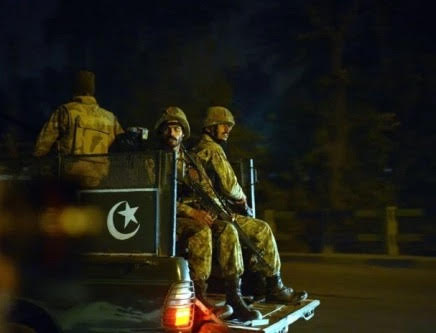

Domestic
BALOCHISTAN
- Kharan Deputy Commissioner Munir Ahmed Soomro was released on Friday after nearly two weeks in captivity, following negotiations between tribal elders and his captors. He had been abducted along with his friend, driver and security guard while travelling from Quetta to Kharan (2.10.26).
- Two children, Arman and Amal, were killed and three others injured when an explosive device detonated while they were playing in Fateh Ali Bazar, Panjgur district (3.10.26).
- Police recovered five bullet-riddled bodies from Khuzdar and Surab districts; three of the victims were identified as Zafarullah, Shafi Muhammad Jamalzai and Nadir Khan Mangi, while two bodies remained unidentified (4.10.26).
- Security forces killed five suspected BLA terrorists during an operation in Mastung district (7.10.26).
- Armed men attacked and set ablaze two trailers outside a police station in Turbat’s Nasirabad area, while a separate grenade attack on a mobile phone shop in Gwadar’s Jannat Bazaar injured three people (8.10.26).
- Eleven labourers abducted from an SMC Construction Company camp in Duki on 26 September were released by their kidnappers. The attackers had killed a guard, injured another and set four vehicles ablaze (9.10.26).
- CTD police killed 10 suspected BLA militants during an operation in Barkhan district (10.10.26).
- Security forces killed five terrorists allegedly affiliated with the defunct BLA during an operation in Washuk district (14.10.26).
KHYBER PAKHTUNKHWA (KP)
- Police and CTD destroyed suspected terrorist hideouts during a joint operation in Banda Aman Kot, Gurgari and nearby mountainous areas of Karak district (2.10.26).
- Four residents of the Dogar Umarzai area — Hazrat Ali, Kamran, Rehmatullah and Abuzar — travelling in a vehicle were killed in an IED blast in the Kharsind area of Bannu district (2.10.26).
- Two people were killed and seven injured when a house collapsed following a crude oil pipeline explosion in the Alwargi Banda area of Karak district during a reported attempt to steal oil (2.10.26).
- Two bodies were recovered from Circular Road near Lora Bridge, within the jurisdiction of Haved Police Station in Bannu district (2.10.26).
- Police Constable Shah Mast Khan was martyred by unidentified assailants in Mehr Gul Kallay, Mira Kachori area, Peshawar district (3.10.26).
- Security forces killed eight suspected TTP terrorists, including three commanders, during an operation in Dera Ismail Khan district (4.10.26).
- Unidentified armed men reportedly killed four FBR personnel near Abhaya Bridge in Dera Ismail Khan district (5.10.26).
- Unidentified gunmen reportedly killed a constable and injured another in an attack on a police patrol near Bannu Road in Dera Ismail Khan district (5.10.26).
- Security forces killed five suspected TTP terrorists and injured two others during an operation against their hideouts in North Waziristan district (6.10.26).
- An IED blast partially damaged the residence of JUI-F leader Maulana Misbahullah in Hasukhel, North Waziristan district; no casualties were reported (6.10.26).
- Police recovered five bullet-riddled bodies, including those of Sher Ayaz Khan, Adnan, Karim Khan and Saadullah, from separate locations in the Fatehkhel and Nar Bostan areas of Bannu district (6.10.26).
- Unknown armed masked men allegedly kidnapped the brother of former CM adviser and MPA Abdul Karim Tordher, along with three guards, from his residence in Swabi district (7.10.26).
- Security forces killed nine suspected TTP terrorists, including their commanders Khalid Raza, Kamran, Musa and Maftoom, during an operation in North Waziristan (8.10.26).
- SHO Daud Khan and his gunman Farhad were killed, while a passer-by was injured, when unidentified assailants attacked a police patrol in the New Karp area of Karak district (8.10.26).
- Police launched a search operation in Nowshera district to recover three personnel of Nizampur Police Station who had reportedly gone missing a day earlier (9.10.26).
- Unknown gunmen killed Police Constable Kamran Khan near his home in the Jamrud area, while in a separate incident the body of policeman Bahadur Shah was found near Sakhi Pul in Khyber district (9.10.26).
- A suspected terrorist quadcopter reportedly dropped an explosive near Paharkhel Pacca Mor Road in Lakki Marwat during evening prayers, causing panic but no casualties or damage (9.10.26).
- Security forces reportedly killed seven suspected TTP terrorists during an operation in North Waziristan district (9.10.26).
- Afghan commander Barbad Afghani, allegedly linked to the defunct TTP’s Shamshad group, was reportedly killed in clashes between rival factions in Lower South Waziristan, while a police station in Birmal, in the same district, faced a quadcopter attack (9.10.26).
- Police and Peace Committee personnel killed a suspected terrorist, Zainullah alias Salar, during an operation in the Ghoriwala area of Bannu district (10.10.26).
- Security forces foiled an infiltration attempt by alleged TTP terrorists along the Pakistan–Afghanistan border in Kurram district, killing 12 militants; Afghan Taliban posts reportedly provided supporting fire, while Naib Subedar Hidayat Aman was martyred in the exchange of fire (10.10.26).
- A policeman, Irshad, was martyred by unidentified gunmen in Barang tehsil of Bajaur district (12.10.26).
- Five persons — Muhammad Shafique, Muhammad Ajmal, Qudratullah, Umar Farooq and Arslan — were reportedly killed and three others injured by unknown armed men near a girls’ school in Malana village, Dera Ismail Khan district, while they were on their way to attend a wedding ceremony (13.10.26).
- CTD police killed five alleged terrorists during separate operations in the Kuram Gali, Mamondkhel and Sabri Kala Bhrat areas of Bannu district (13.10.26).
- Police Constable Noorullah was martyred and two civilians injured by unknown gunmen in Khar tehsil of Bajaur district (14.10.26).
PUNJAB
- Police foiled drone attacks by Fitna al-Khawarij terrorists on the Jhangi and Lakhani check posts in Dera Ghazi Khan district along the Punjab–KP border, leaving one police official slightly injured (3.10.26).
- NCCIA Lahore Zone, led by Additional Director Atif Ameer, arrested 281 suspects, including 21 foreign nationals and 20 women, during raids on seven illegal call centres over alleged fraud, online harassment and honey-trapping, seizing hundreds of digital devices and SIM cards; three suspects were also arrested in child pornography cases (9.10.26).
- Acting on information from CTD police, the Bomb Disposal Unit defused two live explosive devices at Basti Khanowali near the Eastern Bypass, Bahawalpur City (13.10.26).
SINDH
- A Sui gas pipeline burst near Barija Stop in Bhan Syedabad after unidentified individuals allegedly tampered with it, causing loud, explosion-like sounds and disrupting gas supply in parts of Dadu and Jamshoro districts (4.10.26).
- The NCCIA raided an illegal scam call centre near Hotel Metropole in Karachi, arresting 33 suspects, including its owners, and seizing laptops, mobile phones and other equipment (7.10.26).
- CTD police claimed to have arrested suspected terrorist Fazal Haq, allegedly linked to the Baloch Republican Guards (BRG), and recovered a grenade from his possession during a raid in Karachi (11.10.26).
- CTD police claimed to have arrested three suspected terrorists, identified as Yusuf, Shaukat Ali alias Shoki and Dad Muhammad alias Adil, allegedly affiliated with the outlawed BLA and TTP, during separate operations at Lasbela Chowk and in the Old Sabzi Mandi area of Karachi (13.10.26).
DEFENCE
- Field Marshal Syed Asim Munir, COAS and CDF, chaired the 277th Corps Commanders’ Conference at GHQ, Rawalpindi, reviewing the security situation and reaffirming counter-terrorism readiness. The forum resolved to strengthen intelligence-based operations, governance and police capacity; to counter any 9 May-like unrest; welcomed the Makkah Joint Defence Agreement; condemned Houthi attacks on Saudi Arabia; reaffirmed support for the Kashmiris of IIOJK; and stressed the modernisation of combat capabilities (2.10.26).
- Pakistan successfully test-launched the extended version of its indigenously developed Fatah-4 Ground-Launched Cruise Missile, validating its advanced avionics, navigation, accuracy and survivability. The President, Prime Minister, COAS/CDF and Services Chiefs commended the successful launch and the dedication of all those involved (6.10.26).
- Pakistan Navy Ship YARMOOK conducted two successful counter-narcotics operations in the Arabian Sea, seizing approximately 850 kg of ice and 2,000 kg of hashish/cannabis, worth around US$96 million, from two intercepted dhows (7.10.26).
- UN Secretary-General António Guterres met Field Marshal Syed Asim Munir at GHQ, Rawalpindi, to discuss regional security, Jammu and Kashmir, the Indus Waters Treaty, terrorism originating from Afghanistan, UN peacekeeping and Pakistan’s contributions to international peace and stability (7.10.26).
- A high-level Belarusian delegation led by Lt Gen Aleksandr Volfovich met Field Marshal Syed Asim Munir at GHQ, Rawalpindi, to discuss regional and global security, matters of mutual interest and ways to strengthen bilateral defence cooperation, appreciating both countries’ roles in promoting regional peace and stability (7.10.26).
- Bahrain’s Foreign Minister Dr Abdullatif bin Rashid Al Zayani met Field Marshal Syed Asim Munir at GHQ, Rawalpindi, to discuss matters of mutual interest, regional security and bilateral defence cooperation, reaffirming Pakistan–Bahrain ties and their shared commitment to regional peace and stability (8.10.26).
- A Pakistan Army Aviation Mushshak training aircraft crashed near Nawan Killi, Quetta, owing to a technical fault, claiming the lives of both pilots — Instructor Pilot Major Husnain Shehzad Humayun and Student Pilot Captain Abdul Samad — who embraced martyrdom in the crash (12.10.26).
- A high-level Brazilian delegation led by Admiral Renato Rodrigues De Aguiar Freire, Chief of the Joint Chiefs of Staff of Brazil’s Armed Forces, met Field Marshal Syed Asim Munir at GHQ, Rawalpindi, to discuss regional security, matters of mutual interest and the strengthening of bilateral defence cooperation. The delegation reaffirmed its commitment to closer military ties and regional peace and stability. The Brazilian dignitary separately met Chief of the Naval Staff Admiral Naveed Ashraf and Air Chief Marshal Zaheer Ahmad Babar Sidhu in Islamabad to discuss bilateral defence cooperation (12–13.10.26).
- The Pakistan Army successfully test-launched the Fatah-2 Extended Range (ER) hypersonic ballistic missile, equipped with advanced navigation and avionics for precision strikes and for overcoming enemy missile defence systems. Senior military officers and scientists witnessed the launch, while the President, Prime Minister, military leadership and Services Chiefs congratulated the scientists and engineers (13.10.26).
- Russian Interior Minister Vladimir Kolokoltsev called on Field Marshal Syed Asim Munir at GHQ, Rawalpindi, where both sides discussed regional security, bilateral cooperation and Pakistan–Russia relations. The visiting dignitary appreciated Pakistan’s role in regional peace and stability and the sacrifices of the Pakistan Armed Forces in the fight against terrorism (14.10.26).
DIPLOMATIC DEVELOPMENTS, ECONOMY AND SECURITY
- DG ISPR Lt Gen Ahmed Sharif Chaudhry rejected India’s claim that former Pakistan Army soldier Mohammad Asif, alias Hashim Moosa, had been killed as an LeT terrorist on 29 September in IIOJK, presenting him alive and calling the incident an Indian “false flag operation” (2.10.26).
- Pakistan’s Information Ministry dismissed as “fake and fabricated” a New York Times report alleging that PAF aircraft were being used against Yemen’s Houthis, urging international media to avoid speculative reporting (8.10.26).
- PM Shehbaz Sharif urged UN Secretary-General António Guterres to seek action against the defunct TTP and other terrorist groups operating from Afghanistan, while stressing dialogue and regional stability. Guterres praised Pakistan’s contribution to global peace (7–8.10.26).
- Pakistan’s Foreign Office clarified that troops deployed in Saudi Arabia under the Makkah Joint Defence Agreement would defend Saudi territory but would not enter Yemen to attack the Houthis. Pakistan’s UN envoy reaffirmed support for Saudi sovereignty and condemned the Houthi attacks (9.10.26).
- Sindh Governor Nehal Hashmi distributed cheques totalling Rs26 million to the families of three Pakistani sailors — Mahmood Ahmed Ansari, Syed Kashif Umar and Rafiullah Khan — who were killed while in Somali pirate captivity aboard the hijacked oil tanker MT Honour 25 (9.10.26).
- Pakistan’s Interior Minister Mohsin Naqvi and Türkiye’s Interior Minister Mustafa Çiftçi signed an agreement in Istanbul to strengthen cooperation against terrorism, drug trafficking and organised crime through a joint working group (9.10.26).
- Air links between Quetta International Airport in Pakistan and Zahedan and Mashhad in Iran were restored. Iran Air flight IRA 0827 arrived from Zahedan and departed carrying 80 passengers. The routes, inaugurated in December 2025 but later suspended, have now resumed in order to strengthen Pakistan–Iran trade, business ties and passenger travel (14.10.26).
- During his four-day visit to Pakistan, Russian Interior Minister Vladimir Kolokoltsev met Prime Minister Shehbaz Sharif and Foreign Minister Ishaq Dar in Islamabad to discuss trade, investment, energy, tourism and cooperation through the Shanghai Cooperation Organisation (SCO). He also met Field Marshal Asim Munir at GHQ, Rawalpindi, to discuss defence and regional security. In a separate meeting, Interior Minister Mohsin Naqvi and Kolokoltsev agreed to finalise an extradition treaty and to enhance cooperation against organised crime, terrorism, drug smuggling, cybercrime and illegal migration. Both sides also discussed visa facilitation, the exchange of skilled manpower and police cooperation, noting that approximately 1,300 Pakistani students were studying in Russia (14.10.26).
Regional
AFGHANISTAN
- The Taliban-led Afghan Government inaugurated a 121-km gravel road from Broghil in the Wakhan Corridor to the Chinese border, built at a cost of $5.5 million, to boost trade and transit with China, although customs, infrastructure and security arrangements remain necessary (4.10.26).
- The Taliban government rejected ICC arrest warrants against its supreme leader Hibatullah Akhundzada and three senior officials over alleged gender-based persecution, stating that Afghanistan follows Islamic Sharia rather than foreign courts (5.10.26).
- Uzbekistan’s State Security Service (SSS) reported intercepting 48.5 kg of hashish and opium allegedly smuggled from Afghanistan through the Hairatan border crossing in Surkhandarya province (8.10.26).
- Afghan Taliban spokesperson Zabihullah Mujahid said Afghanistan was offsetting the closure of key border crossings with Pakistan, including Torkham and Spin Boldak, by expanding trade through Iran and Central Asia. Previously valued at $2.35 billion annually, Afghanistan–Pakistan trade has been disrupted since the October 2025 clashes. According to the World Bank, in August 2026, 48% of Afghanistan’s imports came through Central Asian routes, 46% through Iran and almost none through Pakistan (14.10.26).
Afghanistan–Iran Relations
- Afghanistan’s Deputy Minister of Finance and Administration Mohammad Naeem met Iran’s Deputy Foreign Minister Hamid Qanbari in Kabul to discuss political, economic and trade ties, including cooperation on railways, mining, electricity, infrastructure and migration. In a separate statement, Iran’s Foreign Ministry spokesman Esmaeil Baghaei denied reports that Iranian territory at Chabahar had been transferred to Afghanistan, clarifying that no formal proposal had been made and that Iran was only exploring port access for landlocked countries (6, 12.10.26).
Afghanistan–Russia–India Relations
- An Afghan Taliban military delegation led by Mawlawi Nasibullah Madani reportedly participated in Russia’s Centre 2026 exercises at several locations, including Chelyabinsk, from 28 September to 3 October. The delegation reportedly met North Korean and other foreign military representatives to discuss training and the sharing of experience (6.10.26).
- Russian Foreign Minister Sergey Lavrov rejected NATO’s military presence in Afghanistan and neighbouring states, warning of regional instability. He urged cooperation against IS-K, noted a 90% decline in Afghan opium production since 2022, and highlighted food shortages affecting over 17 million Afghans. He and Deputy PM Alexei Overchuk discussed bilateral ties, trade, energy, transit, investment, regional security and counter-narcotics cooperation. According to Afghanistan International, envoy Zamir Kabulov said the eighth Moscow Format meeting had ended without a joint statement owing to Taliban–Pakistan disagreements over references linking Afghanistan to terrorism, although the format would continue (5–8.10.26).
India–Russia Talks on Regional Tensions
- India and Russia held security talks in New Delhi, co-chaired by Indian Deputy NSA Pavan Kapoor and Russian Security Council Deputy Secretary Aleksandr Venediktov, who also met NSA Ajit Doval. Russia’s envoy Zamir Kabulov offered assistance in easing Afghanistan–Pakistan tensions, while India reaffirmed Afghanistan’s sovereignty and territorial integrity. Russia expressed readiness to facilitate an end to the Afghanistan–Pakistan conflict amid continuing tensions. On the same day, Afghanistan’s Foreign Minister Amir Khan Muttaqi met India’s chargé d’affaires Yatin Patel in Kabul to discuss strengthening bilateral trade, economic, political and humanitarian cooperation, Ariana News reported (14.10.26).
Pakistan–Afghanistan Relations
- IEA spokesperson Zabihullah Mujahid urged Pakistan to address its internal crises instead of blaming Afghanistan, warning that such accusations could undermine diplomacy and regional stability. Intelligence chief Abdul Haq Wasiq vowed to defend the Taliban administration against foreign aggression amid rising tensions and reports of Pakistani airstrikes in at least six Afghan provinces over three weeks. Analysts warn that escalating Afghanistan–Pakistan tensions, anti-Taliban attacks by groups such as the Afghanistan Freedom Front, and restrictions on human rights and political activity could risk renewed civil war. China-led mediation in Urumqi and efforts by Türkiye and Qatar have made little visible progress, while Pakistan accuses Kabul of sheltering the banned TTP, a claim the Taliban denies. Further deterioration could trigger low-intensity civil conflict (12.10.26).
ILLEGALLY INDIAN-OCCUPIED JAMMU AND KASHMIR (IIOJK) / LOC
IIOJK Chief Minister Omar Abdullah criticised the Waqf Board’s reported plan to prescribe uniform Friday sermons across the Union Territory, calling it BJP interference in Muslim religious affairs and urging the chairperson to halt the exercise. The Muttahida Majlis-e-Ulema (MMU), headed by Mirwaiz Umar Farooq, also opposed the proposal, asserting that sermons fall under the authority of religious scholars and institutions. PDP president Mehbooba Mufti called for the Waqf administration to be transferred to the elected government and urged that the MMU be allowed to vet Friday sermons (13.10.26).
INDIA
(Defence)
- Lt Gen Akhilesh Kumar assumed command of 1 Corps at Mathura, Lt Gen Mohit Seth took over 16 Corps in IIOJK, Lt Gen V. Hariharan became DG Defence Intelligence Agency and Deputy Chief of Integrated Defence Staff (Intelligence), while Lt Gen P.K. Mishra moved to a staff appointment (1.10.26).
- IAF Chief ACM AP Singh said India needs 36–40 fighter jets annually, expressed concern over Pakistan–China fifth-generation fighter cooperation, and hoped to finalise the deal for 114 French Rafale jets within the current financial year (3.10.26).
- The India–UAE joint exercise MOUNTAIN GUARDIAN 2026 commenced at Chaubatia, Uttarakhand, running from 5 to 18 October and involving 92 personnel in mountain warfare, drone operations, surveillance and tactical drills (5.10.26).
- Former CDS General (Retd) Anil Chauhan became Director of the Vivekananda International Foundation (VIF), succeeding Arvind Gupta at the strategic research think tank founded in 2009 (5.10.26).
- An unconfirmed report said India may decide on the 114 Rafale jets by year-end while prioritising the AMCA; the Tejas Mk2’s first flight is planned for mid-2027, while BrahMos exports, German submarine cooperation and additional Scorpène submarines remain under consideration (5.10.26).
- India reportedly appointed Air Marshal Ashutosh Dixit as the next IAF Chief, to succeed ACM AP Singh upon his retirement on 31 October (6.10.26).
- DRDO reportedly flight-tested its indigenous High-Altitude Platform System (HAPS), reaching 21 km and sustaining an altitude of 20 km for over 30 minutes in support of surveillance, intelligence and communications (6.10.26).
- Defence Minister Rajnath Singh highlighted technology and trust at the multinational air exercise Tarang Shakti in Jodhpur, involving 40 countries; ACM AP Singh said there was no official US F-35 offer and no decision on Russia’s Su-57 proposal, while Rafale, Su-30MKI and F-35 aircraft featured in the exercise (10.10.26).
- The Indian Navy commissioned the indigenously built INS Mangrol in Mumbai, enhancing coastal defence and underwater surveillance through its capability to detect and engage submarines in shallow waters (12.10.26).
- Indian Navy warships INS Trishul, INS Tarkash and INS Sahyadri are conducting separate bilateral and multilateral naval exercises with partner navies in the UK, Brazil, South Africa and Russia. INS Trishul is participating in Exercise Konkan 2026 in the UK, where India’s High Commissioner P. Kumaran visited the ship on Sunday and highlighted growing India–UK defence cooperation and maritime ties.
- The Indian Army’s 50 (Independent) Parachute Brigade conducted a high-altitude combat exercise in Ladakh involving airborne drops, reconnaissance, surveillance, the neutralisation of enemy positions and counter-offensive manoeuvres to validate readiness along the LAC, using aircraft, helicopters and mechanised forces in rugged terrain (13.10.26).
- Indian Defence Minister Rajnath Singh and Czech First Deputy Prime Minister and Minister of Industry and Trade Karel Havlíček agreed to expand defence industrial cooperation through joint ventures and the India–Czech Joint Defence Committee, promoting Make in India in Bengaluru and Mumbai (13.10.26).
Diplomatic Developments, Security and Politics
- Indian police detained CJP chief Abhijeet Dipke and two senior leaders ahead of protests against alleged electoral-roll irregularities. The party claimed mass detentions and over 133 million exclusions from the draft voter lists. AAP chief Arvind Kejriwal condemned the crackdown, while BJP president Nitin Nabin accused the opposition of attempting to destabilise the country. A court later ordered the leaders’ release, and the CJP announced plans for nationwide protests (9–11.10.26).
- Chinese Foreign Ministry spokesperson Mao Ning told state-owned Xinhua in Beijing that China does not recognise the Union Territory of Ladakh unilaterally established by India, and opposed India’s naming of 28 locations, in response to India’s announcement that it had identified 28 locations in Ladakh by their standard names on an official map. She called the move “illegal, null and void” and claimed that the western sector of the China–India boundary belongs to China, as reported by The Tribune. India’s External Affairs Ministry rejected the Chinese statement. Ladakh was separated from the former state of Jammu and Kashmir in August 2019, following Parliament’s amendment of Article 370, which revoked J&K’s special status and created two Union Territories — Ladakh and Jammu and Kashmir — out of IIOJK (14.10.26).
IRAN
Iran–US–Israel Conflict
(a) US–Iran indirect negotiations continue through Qatar and regional partners despite a seven-month deadlock. Iranian Foreign Ministry spokesperson Esmaeil Baqaei accused French President Emmanuel Macron of double standards over France’s nuclear weapons and Iran’s peaceful nuclear programme. US President Donald Trump ruled out attacking Iran before the 3 November midterm elections, citing productive talks, while 60% of Americans reportedly disapproved of his Iran policy. Iranian Deputy Foreign Minister Kazem Gharibabadi said Tehran was finalising its response to US proposals while preparing for both diplomacy and military confrontation. UK Prime Minister Andy Burnham reportedly blamed Iran’s Islamic Revolutionary Guard Corps (IRGC) for a security scare at a British airbase used by the US military. Meanwhile, the US and 28 other countries, including Britain, Australia, Canada, France and Germany, reportedly warned Tehran against hostile acts.
(b) Israeli Prime Minister Benjamin Netanyahu opposed a pre-emptive strike against Iran before Israel’s 27 October election but threatened a forceful response to any Iranian attack. IRGC spokesperson Hossein Mohebbi announced that Iran had acquired more advanced weapons and warned of a stronger response to any renewed US aggression. The US military has developed plans to use the GBU-43/B “Mother of All Bombs” against Iranian energy and nuclear sites if President Donald Trump orders renewed combat, CNN reported. Meanwhile, speaking in Montana, United States, Trump said the war with Iran would end “very soon”, that oil prices would fall sharply, and that Washington was uncertain about its Iranian negotiating counterparts, Anadolu reported (6, 9, 11, 12, 14 & 15.10.26).
GULF / MIDDLE EAST
- Saudi-backed Yemeni forces advanced toward Mocha as clashes near the Bab el-Mandeb Strait killed over 270 government troops and Houthi fighters. The Houthis also claimed attacks on key Saudi sites, although these remained unverified (6.10.26).
- The Trump administration sanctioned the International Criminal Court (ICC), citing prosecutions of Americans and the arrest warrant for Israeli PM Benjamin Netanyahu. The move followed the Nobel Peace Prize recognition of former ICC judge Navi Pillay, highlighting international justice amid political pressure. The ICC condemned the move, warning of threats to judicial independence and international justice (9.10.26).
- Syrian President Ahmed al-Sharaa met Crown Prince Mohammed bin Salman in Riyadh to discuss cooperation, reconstruction, investment and security. Syria reportedly considered limited defensive assistance to Saudi Arabia but prioritised domestic stability amid regional tensions (9.10.26).
- A Pakistani national was killed when a projectile struck Terminal 4 of Riyadh’s King Khalid International Airport, causing a fire. Saudi forces intercepted missiles and a drone, while Trump considered joining Saudi-led strikes against the Houthis (11.10.26).
- The Houthis warned airlines and travellers against using Saudi airports and airspace, exempting Mecca and Medina. The Saudi and Iranian foreign ministers discussed de-escalation, while Saudi Energy Minister Abdulaziz bin Salman vowed a serious response. On 15 October, the Saudi-led coalition claimed to have intercepted a cruise missile over the Madina region, but the Houthis denied targeting that Saudi territory, calling the claim false, AFP reported (12, 15.10.26).
- Israel’s Transportation Ministry’s Aviation Security Operations Centre has barred pilots and cabin crew from countries without official diplomatic relations with Israel from serving on flights entering Israeli airspace, following an alleged hijacking attempt on a Flydubai flight from the UAE to Israel on 30 September, in which Indian Captain Smit Machchhar was injured (15.10.26)
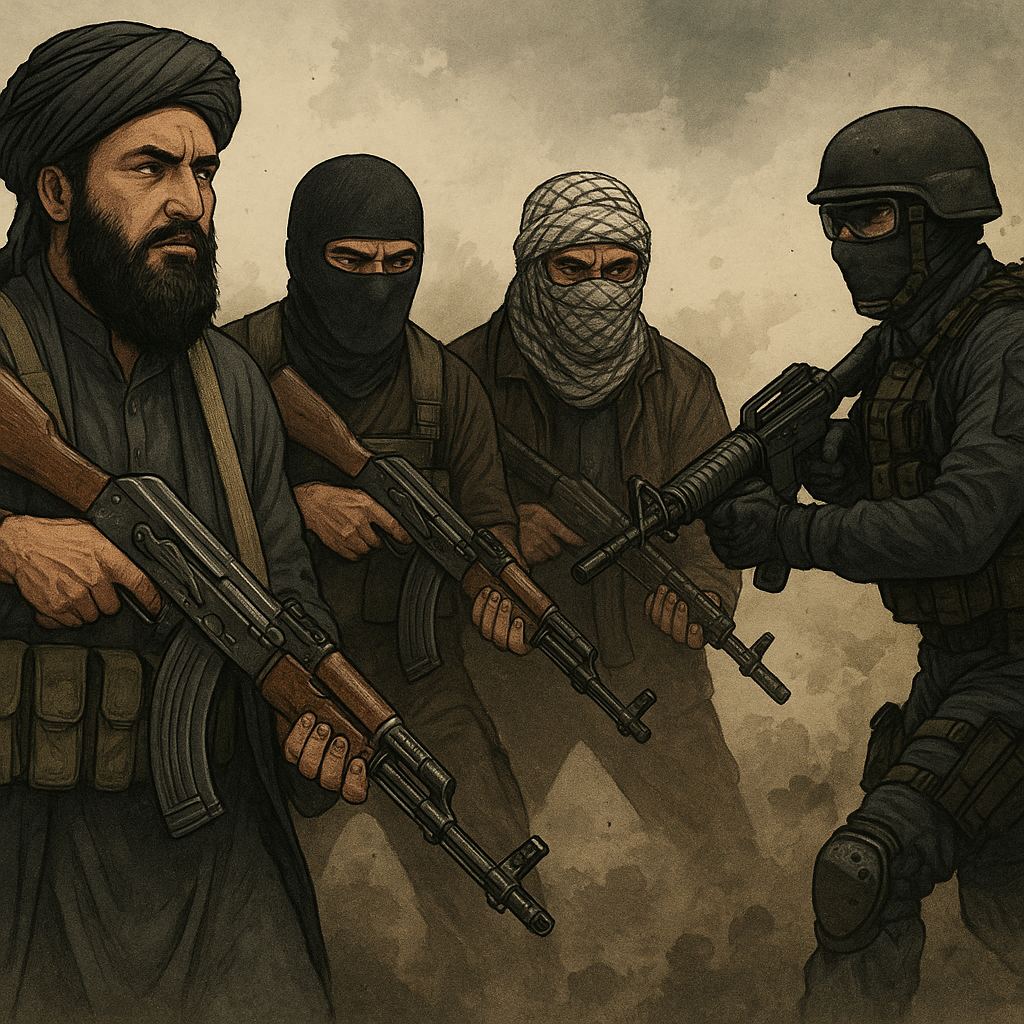
Sectional Critique: Security at a Glance (1–15.10.2026)
Publications like The Strategic Brief’s periodic “Security at a Glance” offer granular chronological data on counter-terrorism (CT) operations, militant movements, and law enforcement actions across volatile theaters (such as Balochistan, Khyber Pakhtunkhwa, and broader cross-border/regional domains).
However, looking at the structural and analytical framework of these bi-weekly reporting logs reveals three critical blind spots from a sectional critique perspective:
* The Kinetic-Attrition Trap (Tactical Over Strategic):
* Critique: The data heavily prioritizes body counts, localized search-and-destroy operations (IBOs), and tactical police responses. While these metrics illustrate operational tempo, they rarely translate into long-term strategic containment.
* Consequence: A strictly kinetic approach ignores the socioeconomic drivers, political alienation, and governance deficits that fuel insurgent recruitment, locking the state into a perpetual, reactive cycle of attrition.
* Siloed Geography vs. Transnational Realities:
* Critique: Incidents are compartmentalized neatly into domestic provincial headers or regional adversary silos (e.g., KP, Balochistan, IIOJK, India Defence).
* Consequence: This compartmentalization obscures the porous, deeply intertwined transnational networks—such as cross-border militant sanctuaries, illicit narcotics-for-weapons financing routes, and regional blowback from shifting great-power alignments—that actually dictate local security failures.
* Absence of a Predictive Policy Matrix:
* Critique: The logs function largely as retrospective event registers rather than analytical forecasters.
* Consequence: Without evaluating why specific protective measures (like checkpoint hardening or convoy systems) fail or succeed under shifting political economies, the briefs risk becoming mere data dumps rather than actionable security intelligence.
Linking Think Tanks to Foreign & Security Policy Paradigms
In a fragmented, multipolar world, the utility of strategic briefs, research centers, and think tanks depends entirely on their relative independence and capacity to challenge orthodox security paradigms.
1. The Crisis of Monolithic Security Narratives
In unipolar or rigid bipolar eras, domestic foreign and security policies were largely orthodox—aligned with overarching Cold War or post-Cold War hegemony. In today’s multipolar reality (defined by US-China strategic competition, middle-power hedging, economic fragmentation, and non-state actors), monolithic security doctrines fail. States can no longer rely on singular security umbrellas or blunt military responses.
2. The Role of Independent Think Tanks as Epistemic Catalysts
For a state’s foreign and security policy to evolve constructively, think tanks must occupy a critical space of relative independence:
* Challenging Groupthink: Independent analysis breaks the echo chambers of security establishments. By critiquing heavy-handed domestic kinetic policies, independent research forces policymakers to re-evaluate internal friction (such as provincial marginalization) as a core component of external vulnerability.
* Navigating Multipolar Hedging: In a multipolar world, foreign policy is about agility, minilateralism, and economic resilience rather than rigid bloc alignment. Independent think tanks provide the intellectual architecture required for middle powers to diversify diplomatic, economic, and security partnerships without triggering systemic friction.
* Democratizing Security Discourse: National security has historically been treated as the exclusive domain of state security apparatuses. Independent think-tank critique bridges the gap between state-centric threat perceptions and human security (food, climate, economic stability), ensuring that foreign policy is responsive to holistic realities rather than just border defense.
Conclusion
For security reportage and strategic commentary to move past mere tactical observation, they must anchor themselves in a broader paradigm: recognizing that internal stability and external foreign policy are two sides of the same coin. Only through structurally independent critique can think tanks help policy elites evolve from reactive, kinetic crisis-management toward proactive, resilient grand strategies suited for a multipolar century.